The earliest harvest in 32 years. Some thoughts on heat.
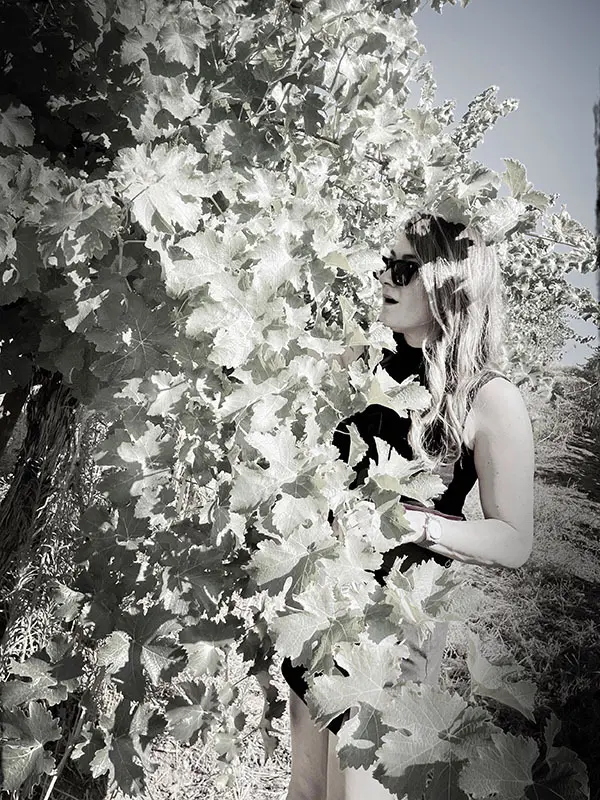
SUMMER IN THE VINEYARDS:
Thinking about Heat and Epigenetics
I wanted to send you the briefest report, but there is a lot on my mind. It's been hot here, for months. We had one of the warmest and driest Springs ever, and the last month has been brutal in Los Angeles, and all over most of California. As I write this, Sunday morning, it's more than 100 in the sun. It is actually too hot to work outside; my laptop shuts down.
It's is nothing compared to Europe, and I will come back to that. But for now, the odd thing that I want to convey to you is: the hot weather here has not been a bad thing for grape growing. Against all expectations.
1. Early ripening in California
First, you need to know that the warm weather in the Spring sped up the metabolism of the plants. We understand so little about this: for instance, is there such a thing as a kind of metabolic momentum? Once the metabolism is sped up, does it inevitably continue at an accelerated rate, or, does it slow down if no continued accelerant (for instance, no more unusual heat) is applied? Is the increased speed bad? We think that we know that there are certain parameters that cannot be exceeded— but what about in the gray area in between? Before we hit the speed limit?
In Raj's vineyards in Cambria, the coldest vineyards I know anywhere in California, the Spring warmth made the vines move through their annual cycle twice as fast as normal. The vines were doing things in June that they would not normally do in until July, or August. In June, he could project that even if temperatures returned to normal, he would be harvesting in August, not September or October. Will this be a bad thing?
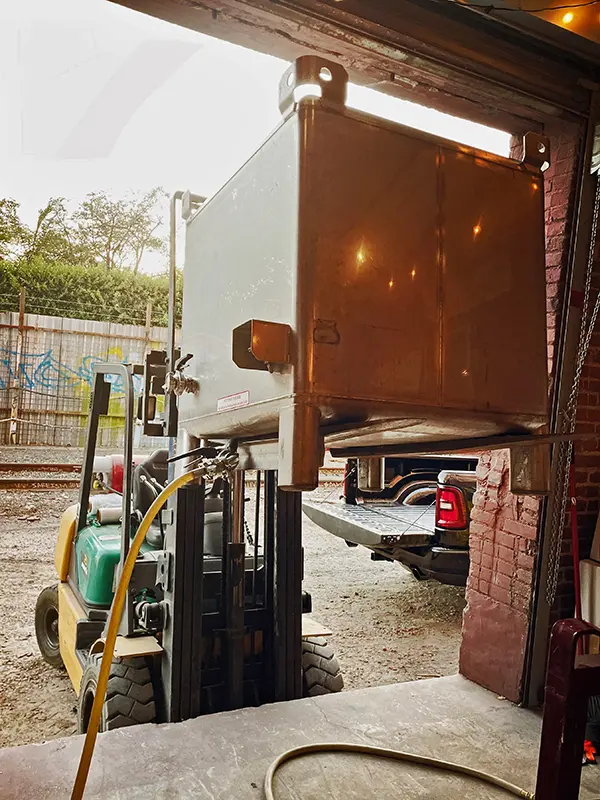
In Napa, it is the earliest harvest in 32 years. In some parts of California, the earliest ever. A Chardonnay vineyard in Santa Barbara that we harvested on October 1 last year was picked in July. We harvested Sauvignon Blanc last week in the Sierras, 3 weeks ahead of normal. But here is the amazing thing that I want to tell you: no one is noticing a diminution in quality. Our Sauvignon Blanc, for La Severità, if anything, seems to be better than last year.
Because we understand so little about plants, we import lots of heuristic devices to explain them, even just to talk about them descriptively. I appealed to a "speed limit" above. We say things like: "it was a summer of beautiful, unhurried, ripening." How do we know that faster ripening is anything like our being hurried or rushed? Perhaps we can taste it in the fruit? The flavors are less developed, less complex, less intense? This seems like something that goes beyond metaphor and that is actually verifiable, confirmable…
Let me put all of this another way: there is a definite and detectable difference between ripe and unripe. But is there a difference between quickly ripened, and leisurely?. We are just beginning to find out. So far, it looks like the plants can achieve in 70 or 80 days what we previously thought took 100 or 110. The key thing, and perhaps this has always been true, is to keep tasting the grapes, and not to rely on numbers— or metaphors.
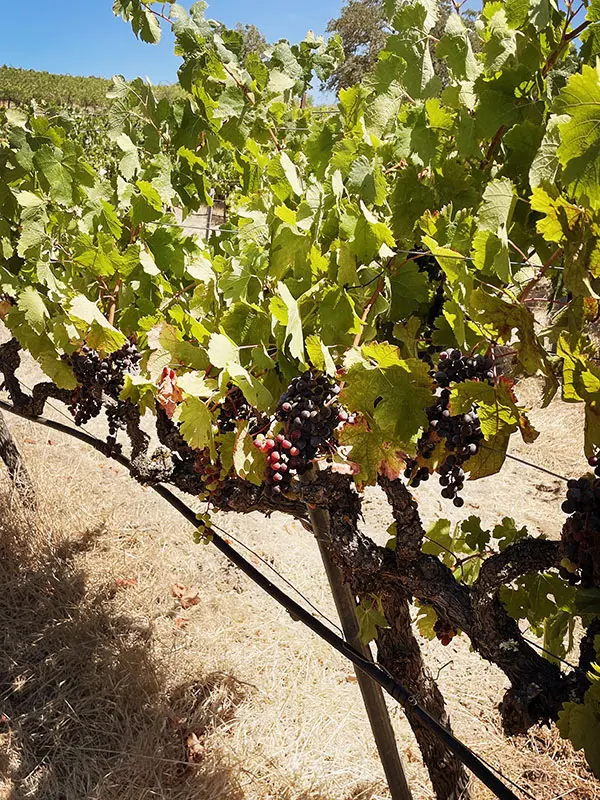
We are 10 days to two weeks away from our first harvest for red wine. Perhaps this will change everything: perhaps the ripening of juice for a white wines is profoundly different from the ripening of seeds and skins and stems for a red wine. There is something immediately plausible and appealing about this: woody material takes longer to ripen than light and delightful aromatic material… Hmm. I will keep you posted.
There is one other consideration about time and ripeness that I want to broach before I move on. A couple of years ago, an Austrian winemaker that I admire tremendously, Johannes Zillinger, made the following remark to Kaeley when he was visiting the winery:
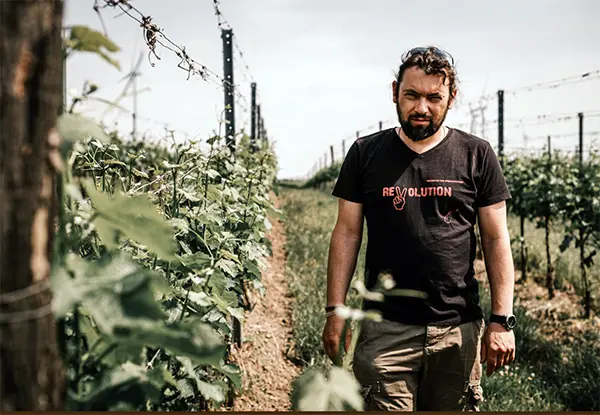
He said that perhaps (actually, he never says "perhaps") the reason why there are so many more fucked up wines in the era of natural wine is precisely because people are harvesting earlier. I was dumbfounded and felt sure that I misunderstood him. Beginning about 2012, I started thinking the opposite: namely that as we let fruit hang longer on the vine to ripen more thoroughly, we were inviting more and different microbes to colonize the skins and stems— with negative consequences for winemaking.
For Johannes, a careful and committed biodynamic farmer, the situation was the opposite: that the "natural wine" inclination to harvest earlier, to make lighter, more playful, less ponderously alcoholic, wines was actually depriving the microbiology of the clusters of the opportunity to come into balance— thus leading to a more precarious, more bacterial, microbiology than you would find on properly ripened fruit.
My point is not whether Johannes is right or wrong, it is that questions about time and the ripeness of grape clusters are blindingly complex! How in the world is this year's speeded up grapevine physiology affecting the grape cluster microbiome?
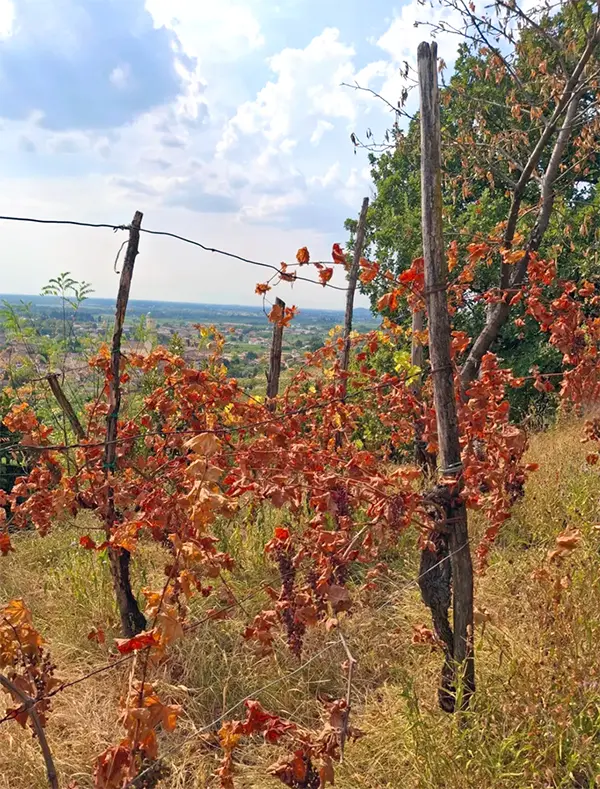
2. Devastation in an Italian vineyard
The earliest harvest in 32 years in Napa. And no signs yet that it will affect quality negatively. Too hot out, too hot to ship, too hot to sit outside. I want to put all of this into perspective.
Harvest is beginning earlier all over Europe also. I remember a time when I could consider completing harvest here, packing up some heavy shirts and a winter jacket, and heading to Champagne to join harvest there. No longer. Harvest here and there now begin at the same time. Even when we are weeks ahead of normal California timing.
I learned of a vineyard yesterday where the heat is not just a question of timing, where there is no leisurely opportunity to speculate on the relation between the passage of time and grape quality. Because this vineyard has been destroyed by heat. No fruit. Some vines will actually perish this year; some few will come back next year.
This vineyard belongs to Marta Venica, a young grape grower and winemaker in Collio, in Friuli. She posted remarkable and heart-breaking photos on Instagram yesterday. The photos show what her vineyard looked like on August 7, and what it looked like three weeks before, in July. It was thriving in July, devastated in August. It is the first and only time I have seen anything like it, but there is no reason to think that it will be the last. I am sorry to share these images and these thoughts, but it seems so important to take a wider perspective on this. There is something essentially international and not parochial about winemaking… Perhaps the extraordinary specificity of place involved in working with vineyards also makes viticulture and winemaking borderless. Its international character is something that we all cherish about the world of wine.
Let me close with a related thought— one more positive, hopeful, perhaps even beautiful.
3. Grapevine Epigenetics
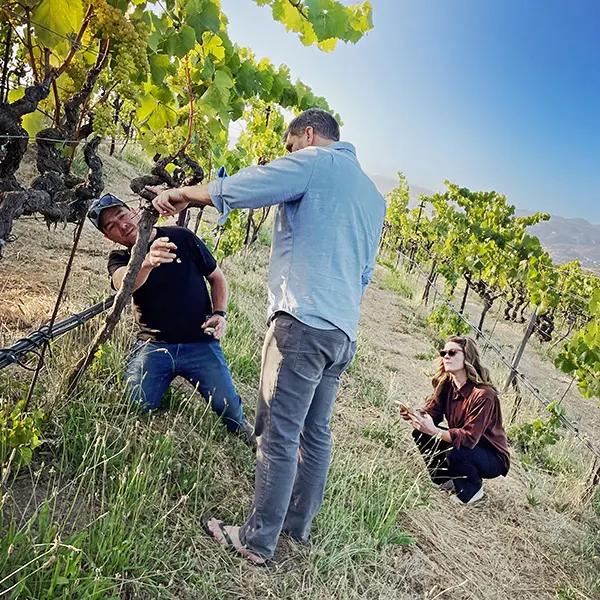
A few weeks ago, when harvest seemed distant, a colleague from Australia came to visit. Dylan Grigg. He is a viticultural consultant, but also grape grower, and winemaker. He prunes his own vineyard. I learned about him first from Instagram, because of his work on old vines in Europe and South Africa. Even on Instagram, his understanding and intellect towered.
A few years ago, when Raj was facing some problems in his vineyard that completely defeated our understanding, I suggested that we bring Dylan in— remotely, via zoom and iphone photos. We did, and even remotely, his insight was so powerful that it was like having Moses lead us out of Egypt.
So I was so happy and excited when Raj proposed hosting Dylan— not just to see the vineyard he had benefited, but to meet all of us, and to tour vineyards near Raj and in Napa and Sonoma. It was my honor to be his chauffeur and bodyguard for the Napa and Sonoma part of the trip. I learned so much from Dylan during these days, that even after 20-something years of inquiry and paying attention in vineyards, I felt like a new world of depth and complexity was opened up for me…
This is what I am beginning to understand about grapevines from Dylan. It flows from pioneering research he did for his doctoral dissertation— you could say that it was a very precise explanation of what makes old vines so special. You can read his dissertation here.
Take a hundred year-old vine. Make a cutting from the same vine and plant it next to it. On the other side of the old vine, extend a shoot till it droops on the ground. It will put out roots, and, in 2-3 years it will have established a new daughter plant. We see this all of the time at Lone Wolf. In a normal, modern, vineyard, you would never see it, so you would have to stage an experiment. Before the advent of phylloxera and the necessity of grafting onto hybrid rootstock, it was a very common way to propagate vines and renew vineyards.
Farm each plant as well as you can. Around year 5, sever the self-rooted daughter plant. Collect data for 5 or 10 more years. You will notice that the self-rooted daughter vine will behave almost exactly like the mother plant (under certain conditions, it might replace the mother plant; we see this also at Lone Wolf). It will produce the same amount of fruit, of the same quality; most crucially, it will have the same degree of drought and disease resistance. The daughter vine will have all of the virtues of the older, crisis-hardened, mother plant.
The other daughter plant, made from the cutting, will behave like any other young plant in the vineyard, whether grown from a cutting or brought in from a nursery. It will have no drought resistance, limited disease resistance, and will take longer to produce the same amount of fruit as the self-rooted vine. Dylan wasn’t the first person to notice this; he was the first person to begin to piece together a causal account of how and why this happens. The account depends on DNA and goes all the way back to a paper that I first read at St. John's College in 1982 and got to teach again in 1997 and 1998.
The mother vine produces a library of epigenetic responses to its 100 years of growing conditions— responses not just to climate, weather, but to disease, and even to the habits of its farmers. The self-rooted daughter vine has access to this library and so has all of the benefits of what you might call the experience of the 100 year-old mother vine. Even after severing, it has the genome of a 100 year-old plant, not of a young vine. The other daughter vine, made from a cutting, is a DNA clone of the mother— but with none of the epigenetic switches turned on. This daughter starts her life with a tabula rasa vis-a-vis the growing conditions in the vineyard and has to form all of the same beneficial responses from scratch.
This is why Lopez Zinfandel can laugh at 100 degree days and 90 degree nights and still produce brilliant fruit. It is not invulnerable— there are speed limits. But there is something wonderful that Dylan's research has provided: by revealing the library of epigenetic resources that the noble vines of Lopez and Lone Wolf can deploy, we learn something not merely metaphorical about the wisdom of the old vines.
Thanks so much for your extraordinary patience.
Abe
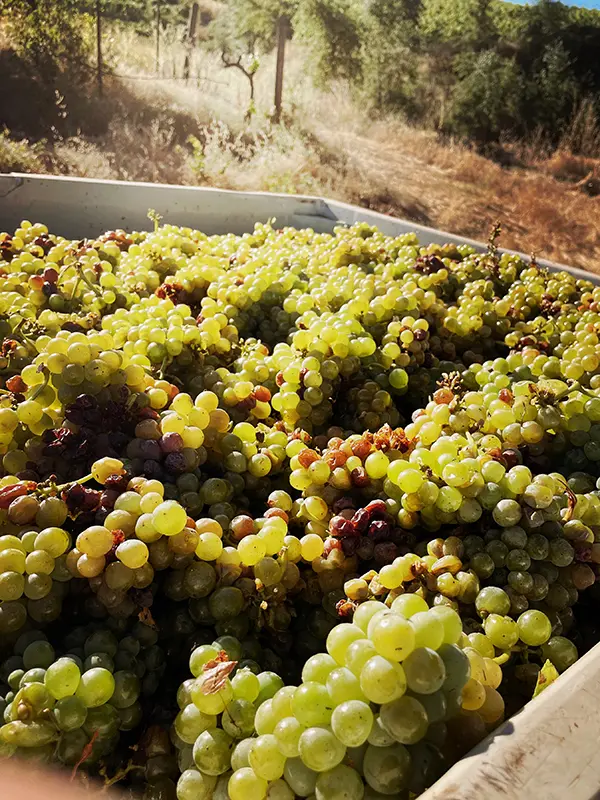
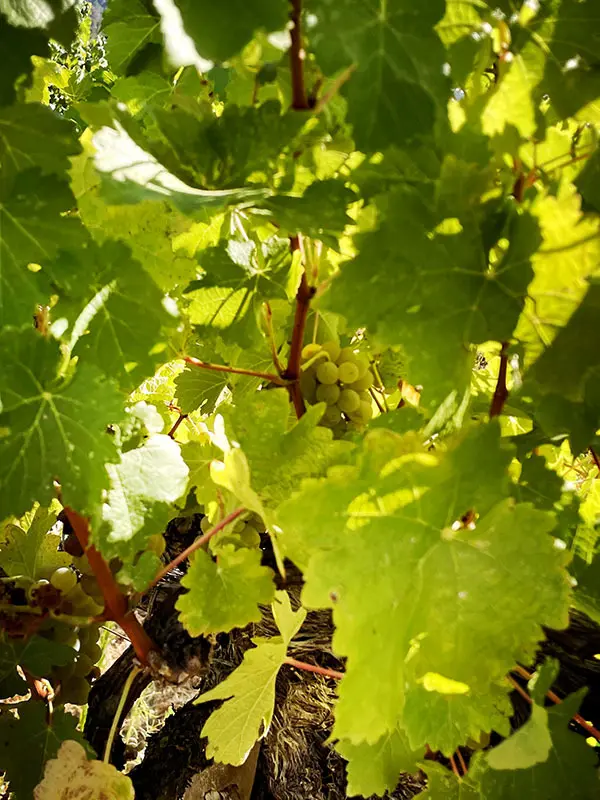
PS: a glimpse of the fruit from our Sauvignon pick. You can see some berries beat up by heat, but most of the clusters were pristine, berries still bright green, taught, springy, delicious. I am sitting in the winery now; the juice is fermenting and it smells great.