A special release focused on Oxidative Chardonnay
2022 The Sylphs and 2023 MTV Chard Edition II
ON OXIDATIVE CHARDON-NAY
there is the release of new wine tucked in here
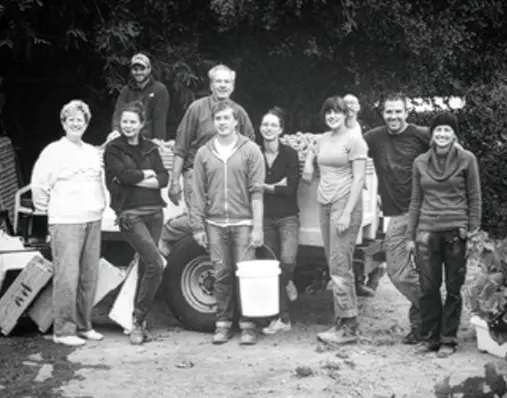
This photograph is from harvest 2011. We had just finished harvesting the Guman vineyard, for a wine that we called "The Sylphs."
The photo is truly from another era: even what you could call its material is from another time. In 2011, digital photos were not very high res, so it looks a little fuzzy to us now. I like that. In some way, it announces the era that it records.
There are 10 people in the photograph. I took it. John and Fay Guman own the vineyard. The other 8 in the photo are friends and colleagues. We had just finished harvesting the vineyard, and it was an exhausting harvest. Four of the 8 friends are winemakers now, another runs a fancy winery. The Guman vineyard was a very special place for us, a kind of nursery for winemakers.
THE HISTORY OF GUMAN
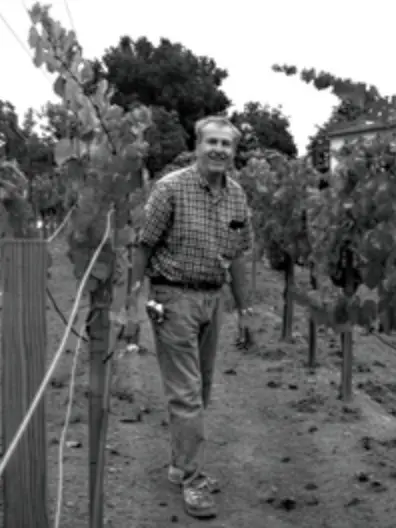
In the Summer of 2002, Annie Favia, who has helped to plant and manage some of the great vineyards of Napa since the beginning of the 2000s, reached out to me. She is also a great teacher and a great friend. She knew of a very special vineyard in Napa that was about to become available, and she thought that I was a perfect fit for it. I was still very much at the beginning of becoming a winemaker, and I was flattered and deeply interested.
The vineyard was small, less than an acre. It was farmed by the man who had planted it, and farmed according to his ideas— not according to what you might call conventional wisdom. The vineyard was planned and put in the ground in 1982 by John's friend and fellow parishioner, Nathan Fay. It was 100% Chardonnay, but did not look exactly like Napa Valley Chardonnay— mostly really small clusters with small berries, but no uniformity in the vineyard. A few years later, Steve Matthiasson discovered that Nathan had sourced the bud wood for the vineyard not from some nearby Napa Chardonnay, nor from a nursery, but by driving all over Northern California, from Sonoma to Livermore, to source cuttings from the best and most interesting old time vineyards that he knew. The tiny vineyard was his careful, tight-focus, construction of what Chardonnay could be in Napa.
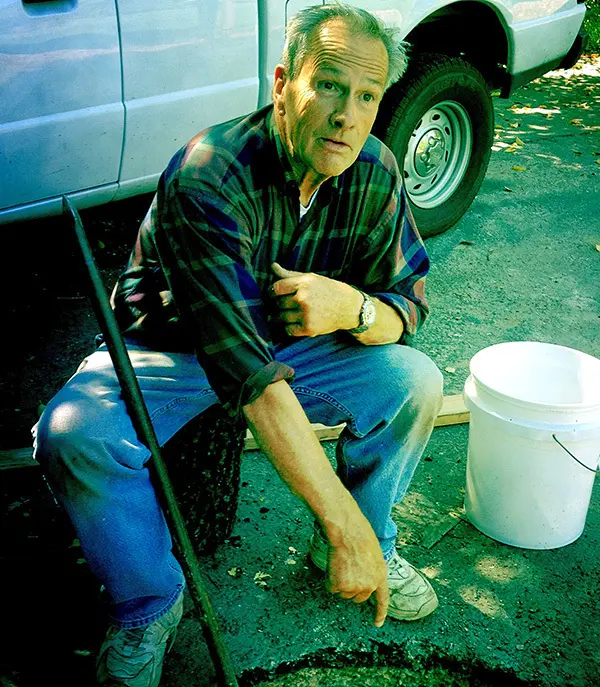
The winery that had been buying the fruit, Pahlmeyer, was giving it up even though they loved it— because it was so slight, too much work for the quantity of fruit. John was deeply passionate; the vines were 20 years old and still strong, the quantity they would bear seemed perfect to me. We came to quick agreement.
I worked with the vineyard until 2022, when it finally succumbed to a legion of idiosyncratic pathologies, all intensified by our absence during the pandemic.
I learned more in this vineyard, and because of this vineyard, than in any other one that I have worked with until we encountered Lone Wolf. Only Lone Wolf is its equal as a kind of grand university.
Many great teachers helped me to understand the vineyard and to try to care for it well: John Kongsgaard, whose Judge vineyard was not far away, and who worked with Nathan Fay at about the same time Nathan planted the vineyard; Steve Matthiasson, who discovered that the vineyard was selection massale and who also helped us see that the vineyard had Oak Root Fungus and Phylloxera; Tegan Passalacqua, Julia Van der Vink, Graeme Macdonald, who all worked in it at various times, especially helping with pruning…
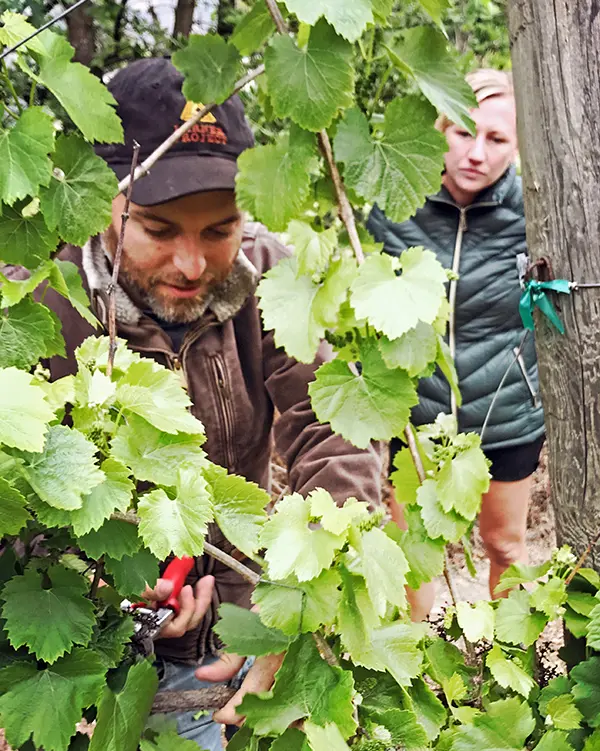
Let me give you an example of our learning. By 2008, yields in the vineyard had been going down constantly and the vines were getting visibly weaker and weaker. John kept leaving more positions for shoots during pruning, hoping to hang more clusters. Graeme and I put our heads together, with Tegan's help, and even a distant Chris Howell's, and we decided that what the vineyard really needed was to be pruned back radically and to leave fewer shoot positions, not more. We were going to get the vines off the trellis lines that demanded linear extension, and prune them in the shape of old-vine goblets, as you would find in centenary Grenache vineyards in Spain or France…
It does not sound like rocket science or discovering penicillin to any of us now, but at the time, it felt like a momentous and radical conclusion. Bush vine Napa Chardonnay! We convinced John Guman, who hated the idea, to let us try the scheme by offering to pay him for the tonnage that he wanted— no matter what the vineyard actually produced.
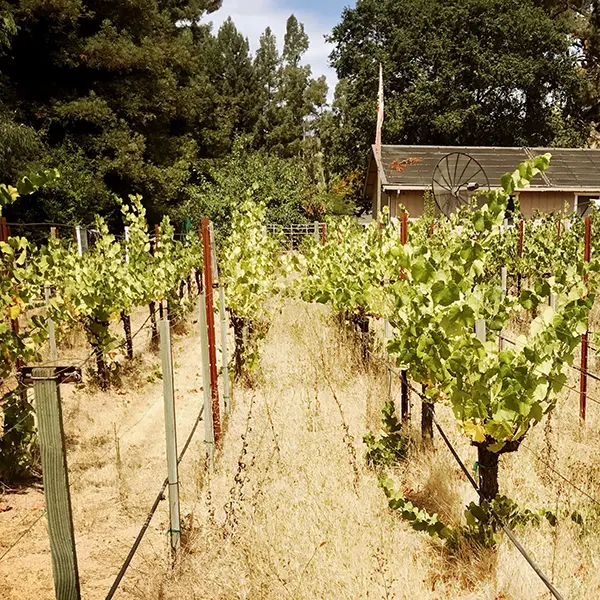
We put the pruning into effect in 2009 and doubled the yield in the first year. I will tell you in a future missive why some of the cuts that we made that year were beneficial in the first year, but deeply harmful in the long run. Graeme's current pruning in his family's ancient Cabernet vineyard in To Kalon is influenced by our success with this scheme— and by our recognition of our mistakes.
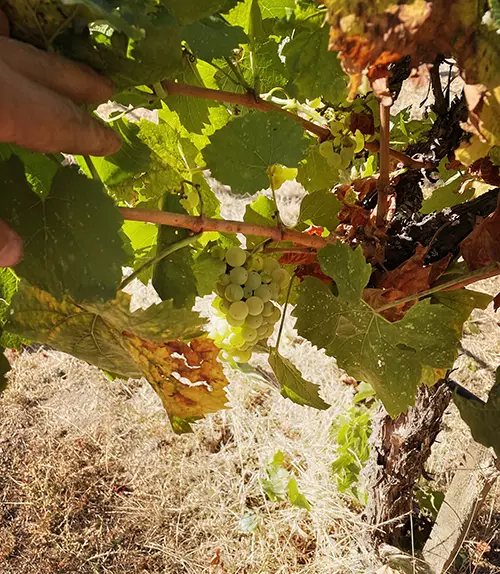
Here is the vineyard around 2020; older and weaker, but still bush-vine, head-trained, Chardonnay.
2002 SYLPHS
Now it is the Fall of 2002 and we are approaching our first harvest of this new vineyard. The fruit is ripening slowly; it looks like it might be the last thing that we harvest— even though anything else remotely like Chardonnay was already in and off the vine.
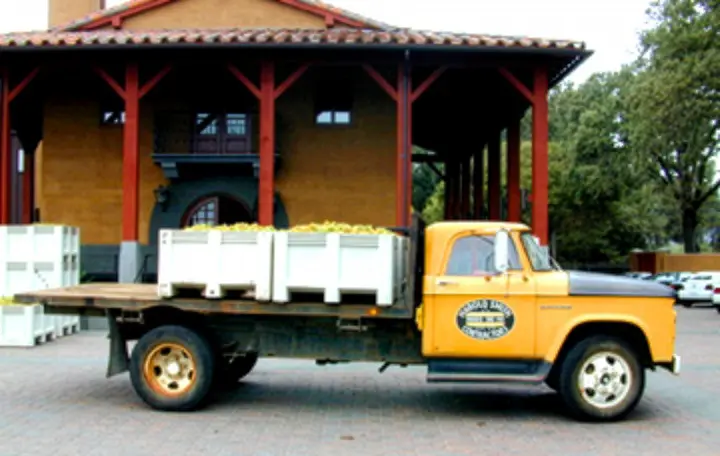
When the fruit was finally ready, we hired a crew of workers to harvest the vineyard. I did not yet grasp the importance of working with friends, or have the temerity to make the requests for help. John Kongsgaard found this amazing old construction vehicle to haul the fruit. We pressed it at Luna and put the juice in used Kongsgaard barrels. I had decided to experiment with using no SO2 at all, I think for my first time with a white wine.
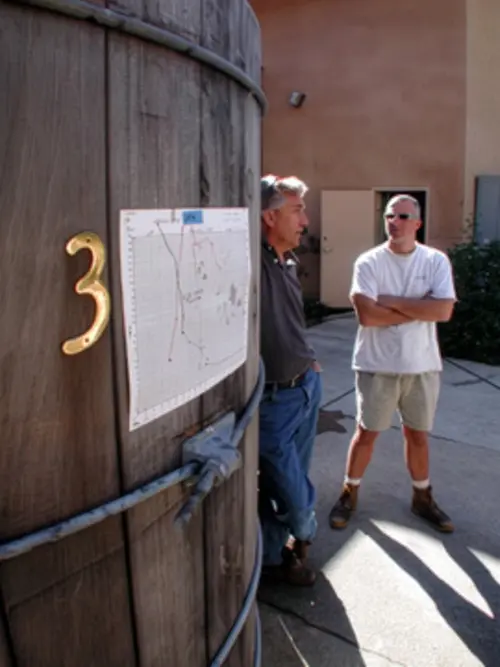
My general principle was to take what I was learning from John and to push it further. He was using much less SO2 than anyone else around, and he was topping less frequently. Both of these procedures were treated like inviolable natural laws— not in the realm of choice or discretion. For example, we topped the Luna barrels every 3 weeks; John's barrels, aging in the same cellar, we topped 4 times per year or so. I thought with this wine: let's see what happens if we do even less. Not because I thought that it would be better (what did I know?) — but to learn what would happen. Scholium: Study, inquiry.
The wine began fermenting strongly and then crashed to a stop after about a month— with about 1% residual sugar remaining. A few months later, I moved all of my wine from Luna to White Rock Vineyards. The barrels were still sweet. In the Spring, I moved them outside, hoping that the sun would warm them and that the general Goethian awakening of Spring would inspire the yeasts. It was around this time that I decided to stop topping the barrels completely, so now I had two barrels of sweet Chardonnay outside, evaporating slowly.
My hosts and colleagues at White Rock thought that I was crazy: "Do you know that there is wine in those barrels?"
Soon, the wine started producing small amounts of carbon dioxide; the fermentations had awakened somewhat! This made me even more confident about not topping, and so the barrels stayed outside, in the sun. Harvest 2003 came and went, and the barrels remained outside. Harvest 2004, the same. Now it is January 2005, and finally, in the Napa winter, the wine goes dry! I plan for a Spring bottling.
The wine! There was nothing like it. It was big and strong, slightly tannic, with a kind of gravelly minerality— like you could feel the tiny grains of the sandy soil. It was a dark, burnished, gold to look at, but fairly fresh the mouth— not exactly oxidized. Some of my Napa colleagues thought that it was flawed; many did not like it at all; John thought that it was extreme, even for his operatic taste; a worthwhile exercise, but if he was going to drink something— probably not this.
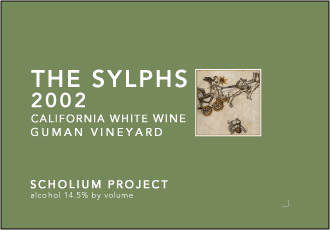
I called it "The Sylphs," in homage to the airborne and invisible yeasts that made the wine what it was, fairy-like entities following their own courses, not ours. I thought at the time that the word came from Shakespeare, but I think now that I made it all up, and mixed together, in a philogical blender, a Latin word found in Paracelsus, and a French word, used in the titles of a few ballets in the 1800 and 1900s.1
I felt that this version of Chardonnay was something very good, something that I wanted to pursue. I knew that you could not count on the fermentation taking nearly 3 years, but you could still impose a certain period, and character, of élevage. In 2005, after bottling the 2002, I purchased a fleet of 100 liter barrels, less than half the size of a normal barrel, to quadruple the surface to volume ratio and so magnify the rates of evaporation of wine and the coordinate penetration of oxygen. We projected a standard protocol of élevage: two years without topping; top once at the beginning of the third calendar year, bottle a few months later, before the third harvest.
GANEVAT
From 2005, when I bottled the first vintage, I thought that this was the most serious wine that I was making, and the one with the best, if nebulous, claim to some kind of nobility. But it was also difficult to explain— I have found that analogies and parallels are supremely helpful in understanding, and especially in explaining, wines. I was at something of a loss finding parallels for this wine: the most that you could say is that it was descended from John's Chardonnays, but as if reflected through a fun house mirror.
And then.
In Spring of 2011, I hosted a dinner party at my new home on the Napa River. We drank, as we always did, many of the wines blind. The next day, cleaning up, I found an unopened bottle, sealed with blue tape in a paper bag. A blind wine that had gotten lost the night before. It was cool out. I did not even know whether it was red or white. I left it out until I cooked dinner outside that night and then opened it.
I felt like I knew the wine immediately, but not that it was familiar. What I mean is: it was somehow transcendent, explosive— and so not regular, not familiar in that sense. Yet also familiar, maybe even close to home. A beautiful golden white wine, with age, penetration by oxygen. Lots of power, and a kind of unctuous granularity— like when ground pepper floats in a beautiful gravy. The wine was aromatic, nearly perfumed— yet the perfume was not fresh— more like dried chanterelles than fresh cut fruit or flowers. Long, like the river flowing in front of me. I was knocked out.
I don't have a memory for wines that allows me to say, "This is x." But I can be pretty good at guessing. I thought that from the ripeness and power that it was a warm climate wine— perhaps Napa? Perhaps Eben Sadie in the Swartland? I thought that from its color and its composure that the wine was no longer young, that it was just beginning to mature…
If it was Napa, it was John's. It could still be Eben's, but seemed too fierce, too unruly. Also, the golden color. A wine penetrated by oxygen, perhaps made without SO2. Eben was more protective, his wines more girded.
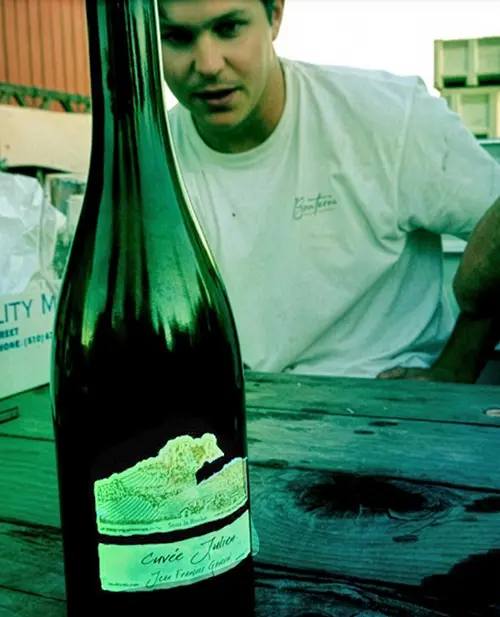
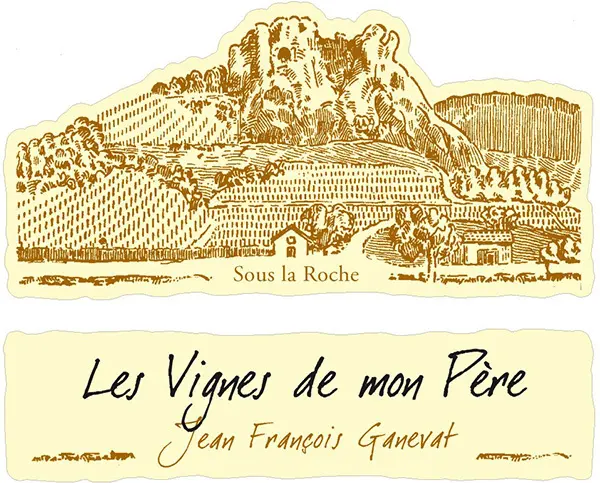
I had tasted every vintage of John's The Judge Chardonnay. I decided that this was a bottle of the 2005 vintage. I was already congratulating myself as I pulled the paper bag off. And saw my first bottle of Ganevat. It was 2005 Côtes du Jura “Les Vignes de Mon Père.” 100% Savagnin. Not Chardonnay. I had never had Savagnin. I don't think that I had ever had a wine from the Jura before.
Now I felt that I had a model for The Sylphs, a paradigm to shoot for, an analogical structure to work in. An example of what excellence, in this particular kind of wine, looked like— tasted and smelled like.
I also felt, for the first time, that I had a certain kind of colleague— not a colleague with whom I shared a goal, but one who had picked out and hewed to a particular pathway— a pathway that I could now consider shared. That feeling gave me confidence and comfort.
Let me put this one more way, at the risk of too much autobiographical psychology: now I had a model that made the Sylphs no longer a caricature of my teacher's wine. That was a benefit, to be sure: I was perhaps too concerned with taxonomy and hierarchy, but it made so much more sense to me to be able to think: "Sylphs is second-order Ganevat," not second-order Kongsgaard.
And then I learned that Ganevat's winemaking was probably exactly like John's— but that like John, he was an outlier in his own region. His wines were "ouillé", topped, a necessary designation since in his whole region, it was traditional not to top. The rule among his colleagues and neighbors was "non-ouillé"— and it was so universal that no one bothered to mention it.
It was amazing for me to learn and consider a culture of winemaking in which the radical interaction of the wine with oxygen could be a matter of choice and deliberation— the result of a conscious and daring decision, not a just a reflexive and automatic obligation. I don't mean that I learned merely "you don't have to top," but that you could work in an oxidative tradition and somehow topping does not spoil everything… It was kind of mind blowing. Seeing the world of Jura winemaking through the lens of Kongsgaard and Ganevat changed my winemaking life.
2022 SYLPHS, THE LAST VINTAGE
We made the Sylphs every year from 2005 to 2019. The wines were always truly excellent: deep, long, complex. They were sometimes funky and unconventional; sometimes, as in 2016, straightforward, classical.
In 2019, the vineyard began to truly gasp; Alex Kongsgaard, especially among the little tribe that cared for the vineyard, thought that we had to somehow replant it; there was no saving the vineyard simply by pruning carefully. We harvested no fruit in 2019; it all burned up on the vine one hot day, before it could ripen. In 2020 and 2021, we harvested a tiny amount of fruit, and made a tiny amount of wine. I don't think that we sold any. I have one more bottle of the 2020 at the winery. In 2022, we were especially careful at pruning and shoot-thinning, and held out hope for one last vintage. Kaeley and Matthew and I traveled north at the end of August 2022, after all of our LA wines were done, and harvested our last fruit from Guman on August 31 2022.
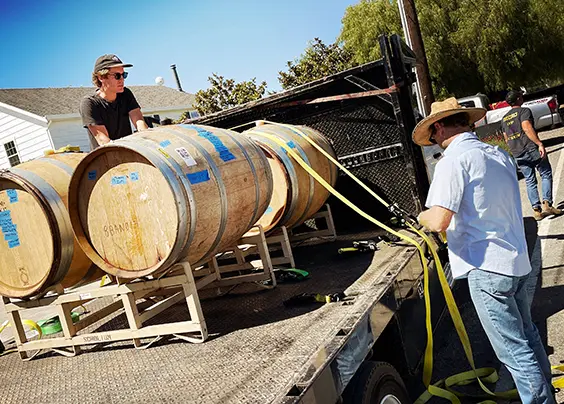
We took it to the Tenbrinks winery and pressed it there, where we had made 11 previous vintages of the wine. There was so little fruit that we had to press it on top of some of their Chardonnay just to fill the press up enough to get some traction. We got about 30 gallons of juice, that we brought home to Los Angeles in a an old Kongsgaard Chardonnay barrel, half-full. Once in the winery, it sat there, almost forgotten, until after harvest this year. I tasted it, saluted its crazy magnificence, refreshed it with a little 2023 wine, and planned to bottle it. We will make the final blend later today. Once racked off the lees, we expect about 29 gallons or 12 cases. 144 bottles.
CONCLUDING THEORETICAL EXCURSUS: WHY OXIDATIVE CHARDONNAY?
First, a little more history.
I first thought of making a wine like this in 2000, working under John at Luna. I had the opportunity to buy, under him, some Chardonnay grown by his friends, the Maldonado Family, in an unheralded, very cool, canyon at the south end of Napa. As part of my education, I was completely in charge of a four-ton harvest. If it went well, we would split the wine that I made— most would go into Kongsgaard Napa Valley Chardonnay, and I would get two barrels, to do whatever I wanted with them.
It went well, and, in the summer of 2002, I prepared to bottle my first wine.
I thought (I am quoting myself of 23 years ago) that the problem of Napa Valley Chardonnay was too much fruit. I did not yet know what the solution was, but I had a hunch as to the cause of the problem: the sun. I blamed the sun for the fruity exuberance of California Chardonnay, and its predilection for candied aromas and flavors.
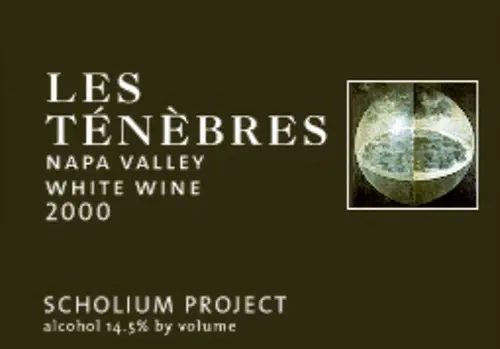
You can see from the alcohol of this wine that it was plenty ripe. In fact, John faulted my picking decision and told me that the fruit was not ripe enough— to be precise: that it was not powerful enough for Kongsgaard Chardonnay. So, in another step in my education, I went out and bought a bunch of bags of sugar and began a chaptalization trial on our 10 barrels of wine, at five different levels of chaptalization, from 0 to 2.0 added degrees of potential alcohol.
In June of 2002, four of us sat down and tasted the results of the trials, blind. No one had a distinct preference for any level of chaptalization and there was no statistical favorite among the levels. Most of us correctly identified the extremes (0 and 2.0 degrees of added alcohol) but still did not declare a preference based on our putative identifications. John pointed out that the creation of alcohol was in fact a dilution: the alcohol comes from the added sugar, and its fermentation adds almost nothing to the wine except for alcohol. And this alcohol is a liquid and a solvent. Its new presence in the wine is directly measurable by a change in the volume of the wine. The most chaptalized barrels picked up more than a gallon in volume! Yet, we did not find the chaptalized barrels diluted…
The final blend of the 10 barrels was a beautiful wine. I have one magnum left of it at the winery. But it did not yet fix the problem with Napa Chardonnay. How could it? The aim of the exercise was to make a wine that John could use. I had to wait for my next wine to attack the problem. I named this wine "Les Ténèbres" in an attempt to make the wine what I wanted through the act of naming it:
"Les Ténèbres"— The Shadows, from the Latin Tenebrae, an old Catholic liturgical ceremony that gradually extinguishes candles until the shadows replace their light. The shadows that I desired were only at the edge of the wine; in the center, bright, powerful, California fruit.
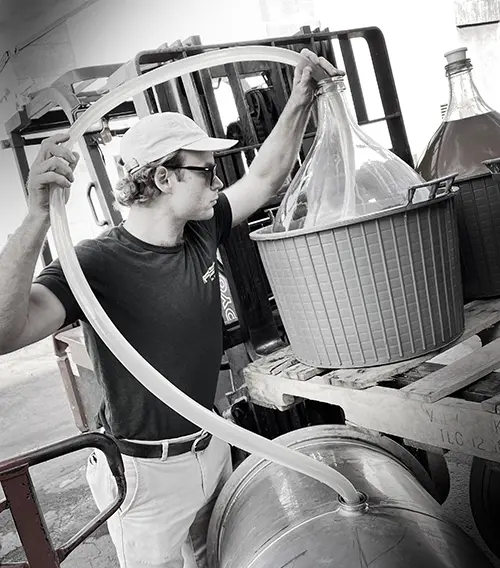
This is where the experience with the 2002 Sylphs comes in. As the wine aged, untopped, and sat outside in the sun, and evaporated, the wine changed. It shed its baby fat— but it also began to shed its fruit. The fruit aromas did not vanish or evaporate, they metamorphosed in exactly the way that one would expect: they turned into the aromas of nuts, dried citrus skin, dried grasses, even dried mushrooms. Oxygen.
And something else began to happen: as the wine sat for months on its lees, the yeast began to break down. In Champagnes, one learns to identify "yeastiness" or "brioche" from the extended lees contact in bottle. In this wine, by contrast, the flavors that the yeast released, perhaps under the influence of oxygen, seemed to skip the fresh bread stage and move directly to porcini.
And, lastly, as the vibrant and attention-grabbing fresh fruit faded, the wine seemed to reveal a new depth: a quiet but strong phenolic structure underlying everything. The wine, carefully whole-cluster pressed without skin contact, had an unforeseen tannic spine. And, at the same time, one began to taste, or at least sense, something stony, what I called "granular" above. One might call this "minerality"— in any case, my feeling is that it is a product of yeast breakdown under undisturbed lees contact, and that under what one might call normal winemaking, it arises less readily, and is more easily blotted out by charming fruit aromas and flavors.
There is another simple way to put this: what I discovered with Sylphs was a hyper-accelerated aging process, a protocol to allow a wine to go to bottle with certain characteristics that one would normally find in a wine with a decade of age. The idea stops being to make "White Burgundy" and becomes: "Make 10-Year Old White Burgundy."
And yet NOT White Burgundy of course. A beautiful corollary of this insight is that ripeness ceases being the enemy. One may now embrace the natural, sunny, ripeness of Napa fruit and cease longing for the (erstwhile) cool, moist, cloudiness, of a distant Burgundy— or any other exotic region. One embraces, instead, oxygen and lees contact as a joint method for transmuting the products of our California sun into something more subtle, more quiet. Not a stripping away or a simplification but an exploration of another complex realm, more shadows than bright light. Tenebrous.
Chiara Pepe and I have discussed this at 12 Seats: she spoke once about the nobility of ripeness and the fear that leads to picking unripe in a warm region. I leave this for another missive.
THE OFFERING
Now you have the theory and the personal and practical history that gave rise to it. I am releasing today the two newest wines in this history, the most recent explorations and instantiations of the theory: THE 2023 MT. VEEDER CHARDONNAY, EDITION II and
THE 2022 GUMAN VINEYARD THE SYLPHS.
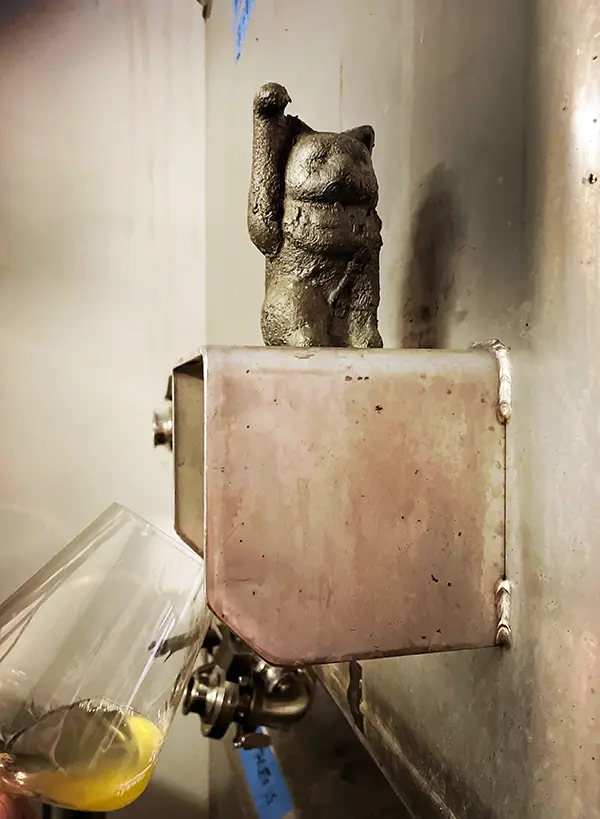
To make the first wine, I took half of our production of 2023 Mt. Veeder Chardonnay and bottled and released it to you. I took the other half and racked it to a stainless steel tank, now filled half full, and allowed it to sit there on its lees for 6 months. The aim was to see the effect of a calm and quiet oxidative elevage on a beautiful but traditional wine that was already at its non-oxidative peak. I think that you will find this wine marvelous and thought-provoking. Tenebrous, not sunny.
I have already described the 2022 Sylphs. It is excellent too, and somehow magical. It is more like a dry Oloroso sherry than a California Chardonnay; one feels all of the history wrapped up in it.
Lastly, I am releasing one more 2024 wine that I have not offered previously. At the same time that I explored oxidative Chardonnay with The Sylphs, I was also learning how to make non-oxidative wines, often without malo-lactic fermentation, and often matured in stainless, not wood: Naucratis and La Severità di Bruto— both from more aromatic grapes, not Chardonnay.
I am also releasing today the non-oxidative 2024 La Severità,
made from Sauvignon Blanc from the Oleta Vineyard. It is rich and ripe and clean and direct in a way that the two Chardonnays are not— a really good wine in itself and a great opportunity to see the effects of the two winemaking strategies vis-à-vis oxygen.
I have put together various packages of the wines here, with built in discounts.
We will begin shipping these wines after the holidays.
Thanks so much for your extraordinary attention in reaching this far. I hope that you have enjoyed this journey. And that it will spark you to try the wines…
Happiest Holidays
Abe
SHIPPING UPDATE:
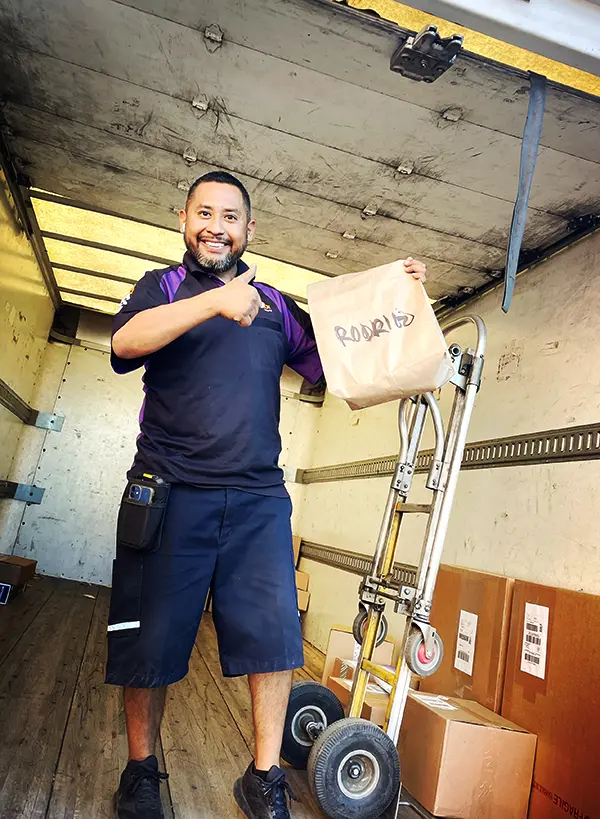
If you are still waiting on any oil or wine ordered before or during the Saturnalia, we are shipping today and tomorrow. Everything should be out or ready to go by the time that Rodrigo pulls away tomorrow. Fedex says that anything on this truck will reach its destination in the continental US by Xmas eve! Anything ordered after yesterday, including these wines, will go out after the holidays.
FOOTNOTES:
1. See this somewhat harsh opinion on Paracelsus' use of the word: "Paracelsus' word seems to be an arbitrary coinage, but perhaps it holds a suggestion of Latin silva and Greek nymph, or Greek silphe "a kind of beetle," but Littré and other French etymologists propose a Gaulish origin.
The Century Dictionary comments that, "to occultists and quacks like Paracelsus words spelled with -y- look more Greek and convincing." The idea itself seem to have come from the air-spirits of Cabbalism."
This source also provides this helpful note: The meaning "graceful girl" is recorded by 1838, on the notion of "slender figure and light, airy movement." [OED, 2nd ed. print, 1989]"
The ballets that I had in mind were probably Michel Fokine's Les Sylphides, based on music by Chopin; and La Sylphide, choreographed by Bournonville. I probably ran into these poking around the music library at St. John's in my former life.