Mt. Veeder Fantasia: Variation 2
The flight from Napa
ROME AND ITS ANTITHESES
VARIATION II IN THE MT. VEEDER FANTASIA
It is worth saying, and repeating, and insisting on, something rather obvious: grape growing on Mt. Veeder has a history.
It has not taken place for all eternity, nor even for the smallest fraction of the period of human agricultural activity on earth— unlike, for instance, grape growing on Santorini. In fact, it has existed, by the best accounts, only since about 1860, when Stalham Wing acquired land and planted grapes in what is now known as Wing Canyon, between Dry Creek and Mt. Veeder Creek. One hundred and sixty five years. This canyon, these creeks, have existed for hundreds of thousands of years; the mountain itself, for at least 5 or 10 million years. The vineyards : 165 years.
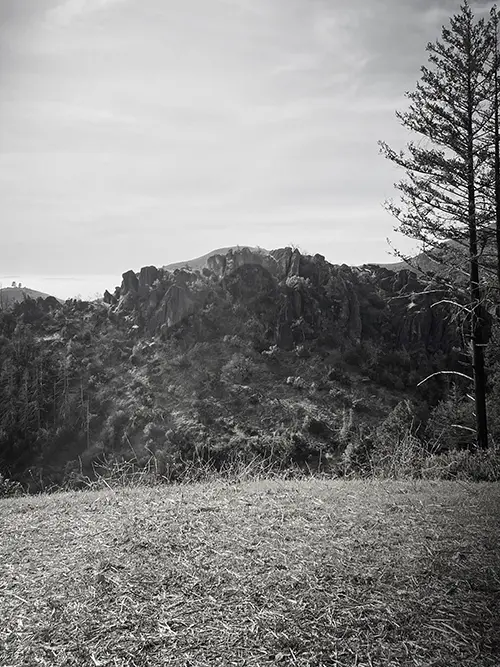
My point is not simply what a brief period of time this is, but to emphasize how historical grape growing on Veeder is— how rooted it is in a brief and narrowly circumscribed historical moment. And having taken this into account, it is worth reflecting what a tremendous accident it is, what a tremendous coincidence, that we are alive and thinking during the as yet brief and narrowly circumscribed historical period in which Mt. Veeder, as a grape-growing area, has existed.
It is also worth remembering that wine making itself can be thought of as crisply historical activity. I almost said a moment ago that winemaking is simply a human activity, that as long as there have been humans, they have been making wine. This might be roughly true, but it also worth considering a complete different perspective, the perspective of the book of Genesis. This is a profoundly historical book, in the sense that it insists on, and even explains, radically distinct eras in human history. It insists on the before and after of history, the timeline, beginning with the account of the 6 days of creation: “And then on the next day … and then on the last day… Time flows in only one direction: forward and irreversible.
In Genesis, there is no winemaking on earth until after the flood: “Noah became the first man of the soil, and he planted a vineyard.” The first vineyard, from which he made the first wine. According to Genesis, there was a period in human history in which there was no wine. Wine has a beginning in time. It is not eternal. And, in a certain sense, that beginning is the flood.
This was the insight that I had in Napa, in 1999, and that Brother Robert congratulated me on in my brief return to the College.
When, in 1998, I came to Stag’s Leap Wine Cellars, I had no intention, ever, of making wine.
In 1999, when I worked under John Kongsgaard at Luna Vineyards, I was surrounded by young colleagues, who also worked in the cellar under John, but who also all made their own wines. It was taken for granted that this was part of the reason we were there. “So what are you going to make?” people asked. “What is your fruit?” I did not even know what they meant. “Fruit?”
That year, I made some Sangiovese. My “fruit” was Voyager. Turns out that this was the expression for your fruit source, where you were getting the grapes from to make your wine. “Voyager” was the name of a not especially well-regarded local vineyard. My fruit was “Voyager Sangiovese.”
In 2000, John told me I should make wine. He meant “from now on.” He hooked me up with some fruit to start with. Good fruit: Maldonado Chardonnay. We all took it for granted that our fruit was from Napa. No one even wondered. No one’s mind turned outward. It was much like being inside the walls of Rome. Why would you look outside to land of the barbarians? It is perhaps even more like the attitude of the Japanese towards rice. Why in the world would you ever even consider rice grown elsewhere? What could you gain?
In 2001, I was still working at Luna and there was pressure from the board to make our Pinot Grigio less expensive. I was given the task of finding much more Pinot Grigio, and other white grapes that we could blend in, from all over California. As long as I brought our fruit costs down. This meant leaving Napa.
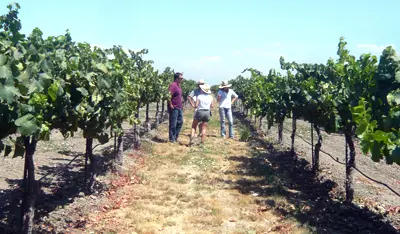
I started making regular excursions beyond the walls. I learned that if I followed around Randall Grahm’s grower relations (= fruit sourcing) person, as she crisscrossed the state in her Outback, I could find the best, most interesting, fruit sources. She didn’t mind as long as I got there second (always) and didn’t outbid her. It was a tremendous education, akin to being given a horse and the opportunity to follow Herodotus around as he immersed himself in the worlds of the Egyptians, the Persians, the Scythians…
In 2002, the best lot of Pinot Grigio that we made came from a truly barbarian vineyard in the Sacramento River Delta. By comparison to the detailed horticulture of a Napa vineyard, this plot of land was farmed by negligent savages.
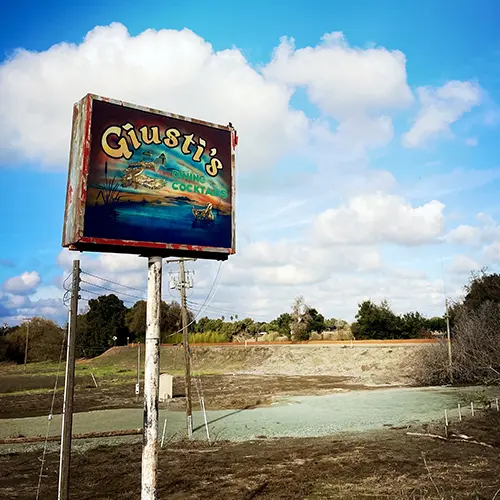
I learned about this vineyard while seated at a bar with a floating dock on a flood channel of the Sacramento River. The bar no longer exists; a ghostly memory known only to Alex & Steph Pitts and Eden Foley and perhaps a handful of other Napa residents. Only one person I knew had ever even been to the Delta, even though it was only 60 miles east of Napa. I slowly began to embark on a new way to make wine, a new way to think about what I was doing. This was the same year that I decided to not return to St. John’s College, and instead, to stay in Napa and create the Scholium Project. I never said this to anyone out loud, but I knew that the mission that I was about to devote myself to was to explore the land outside of Napa— to make Barbarian wines from within the walls of Rome. Thus my two most important wines were named for cities in antithesis to the Eternal City: Babylon, enemy not only to Rome but to Jerusalem, and Naucratis, an exotic metropolis, the main city of the Nile Delta.
Thanks so much. Next week, I will tell you about a new project on the slopes of Mt. Veeder.
Abe
Notes:
- You may find the first variation in the Mt. Veeder Fantasia here.
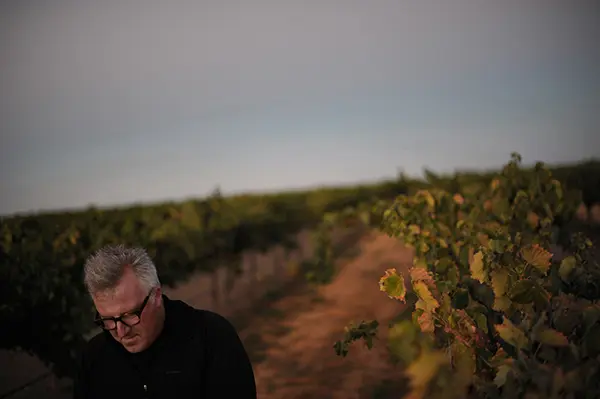
- The lead photo above is by our friend Erik Castro. Me in the Pinot Grigio vineyard in the Delta at dusk. Harvest 2012. Used with kind permission.