The Fires
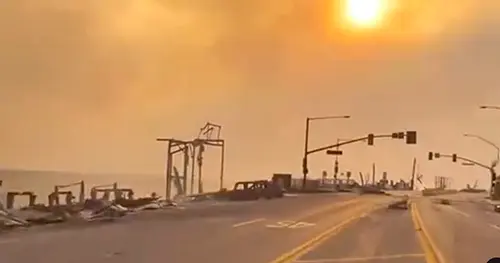
THE FIRES
It's Monday of the second week. We are OK. The winery is fine. Kaeley and Matthew and I are all far from any danger.
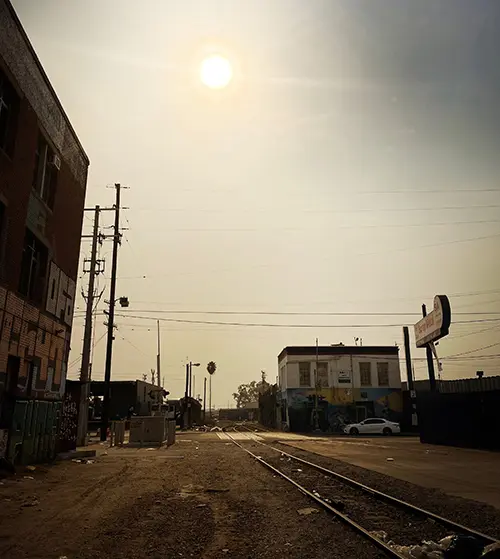
I began writing this on Wednesday of last week, after the first full night of fires. I took the train into the city. I felt like I had to make sure that the winery was Ok, even though I knew that it was miles from any present conflagration.
The sky in the city was brown and orange and opaque. You could feel the coming destruction somehow, just from the color and the texture of the light.
Let me put this another way: I took the train in and as soon as I got to Union Station, you could smell in the air that it was not right. You could smell not just smoke— not just the smell of the wildfires in Napa, not just wood and sap burning‐ but the miasma of burning buildings and cars: rubber, plastics, and, somehow, ozone. The smell was the evidence of the damage already done. But the appearance of the sky was somehow the portent of the damage to come. It was ominous, in the oldest and deepest sense of the word. If you looked up, the sky gave a sense not just of damage, but of doom.
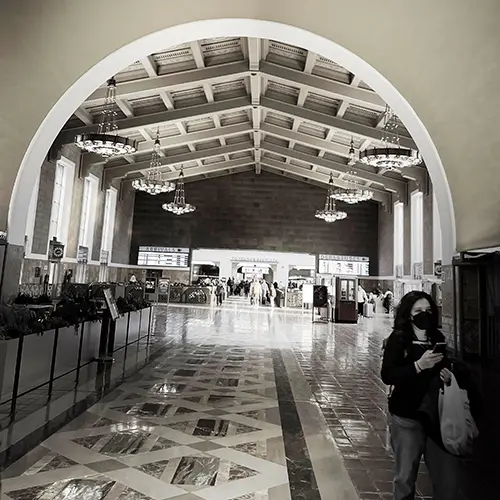
I caught the early train home. Union Station was deserted. The few people there were wearing masks. I felt like I had been thrown back into the pandemic. In the 30 hours since the first flames had sprung up, the fires had shredded the very fabric of the city.
I have seen almost none of the destruction first hand. Much of the city is under mandatory evacuation orders, and some of the zones of the highest destruction are closed even to the residents. I must rely on the images of others. And this is what I want to point out in the images of destruction: they are also images of depopulation. This is part of what is so haunting and eerie about them: the absence of human beings. And that is in itself terrifying.
I want to close with a quotation of Joan Didion, first published in 1967, later collected in Slouching Toward Bethlehem. I am probably not the first to point it out to you, or to remind you of it. And it is not that I find it comforting. But there is something strength-giving about its brutal clarity: Los Angeles weather is the weather of catastrophe, of apocalypse, and, just as the reliably long and bitter winters of New England determine the way life is lived there, so the violence and the unpredictability of the Santa Ana affect the entire quality of life in Los Angeles, accentuate its impermanence, its unreliability. The winds shows us how close to the edge we are. We are not going into the winery for a few days. The winds are supposed to pick up again tonight. If you are waiting for wine or olive oil, you will get another email from me soon.
Yours,
Abe
Photo credits:
- Matt Diamond via Malibu Times instagram
- Me
- Me