2024 Harvest Report: The Rebirth of Scholium
In which we tell you about the origin of our first Scholium wines since 2019
2024 HARVEST REPORT
Part 2: The Rebirth of Scholium!!!
I am so excited to share this with you.
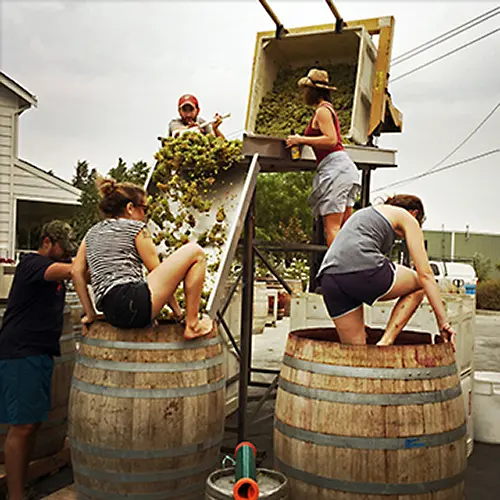
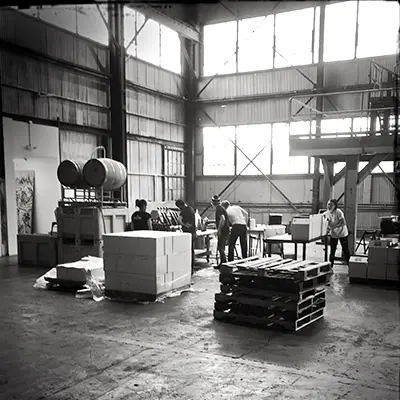
The photo on left is of Harvest 2013, at the Tenbrink winery in Suisun Valley‐ specifically the reception of the Farina Sauvignon Blanc early in October, to make the Prince in his Caves. How did we get here? Why a photo from Northern California in 2013?
SOME BACKGROUND
At the beginning of Part 1 of my 2024 Harvest Report, I told you that by the fifth week of the heat wave, I had to consider the possibility that we might lose all of our fruit in Cucamonga and Temecula, destroyed by the relentless heat. No fruit, no harvest, no wine.
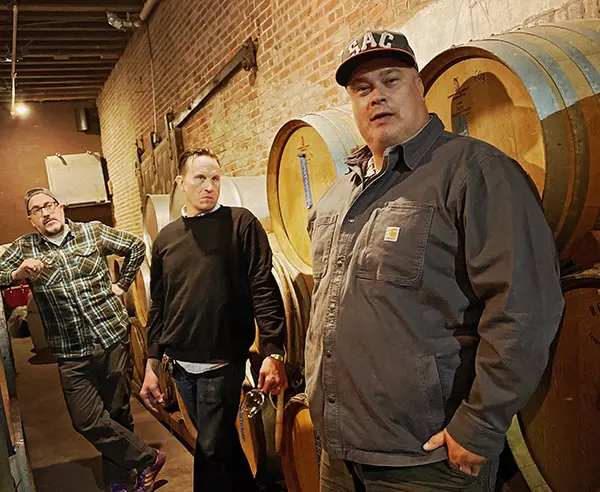
About a year earlier, after a visit to see friends in Napa and Suisun, Tegan Passalacqua called me and said: "Your work here is not done." Tegan is the winemaker for Turley and for his own brand, Sandlands, and he is one of my closest friends and collaborators. No one I know has a more fiery devotion to, and keener sense for, excellence in winemaking and grape-growing. So when he said this, I had to take him seriously.
I knew what he meant by "here"— I did not have to ask him. He meant the North, far away from Cucamonga, in the very specific planetary system that is somehow centered on Napa, but encompasses Sonoma, Mendocino, Lodi, Suisun, the Sierra Foothills, and the Santa Cruz Mountains. And in a sense, he did not mean anything merely geographical: insofar as he spoke about our work, winemaking, he meant something cultural. He meant something like this: "your work in the South is good, but do not leave behind your part in this culture, in this society."
And so, over the following Winter and Spring, I felt a responsibility to my friend and colleague and teacher to bend my mind north and to begin to find time and space to return.
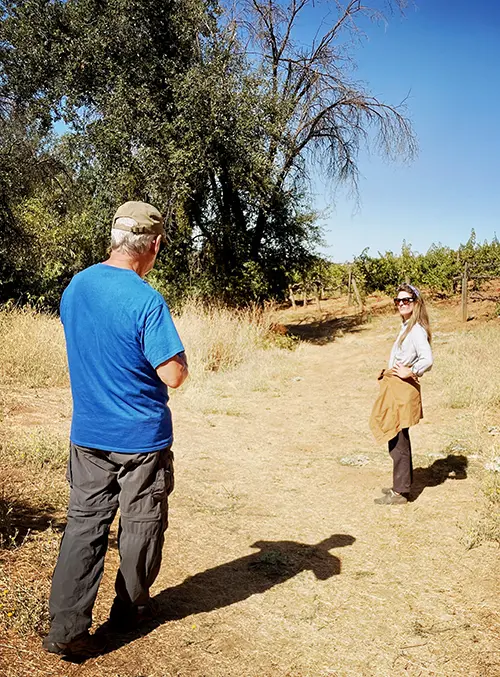
So when it looked like the vineyards in the south might disappear for a year, there was already a blurry map in my imagination, an amalgam of known destinations and unknown, wishes and hopes for exploration. In the North.
We harvested our last Lopez Zinfandel on August 16; by the next night, Kaeley and I were having dinner at Guantonio's in Lodi with Tegan; and on the morning of August 18, we met Jim Riskas in his amazing Sauvignon Blanc vineyard in Fiddletown, in the Sierra Foothills. The rebirth not just of Scholium lay before us, but the rebirth of the Prince, the Prince in his Caves.
AUGUST 23
1. OLETA SAUVIGNON BLANC
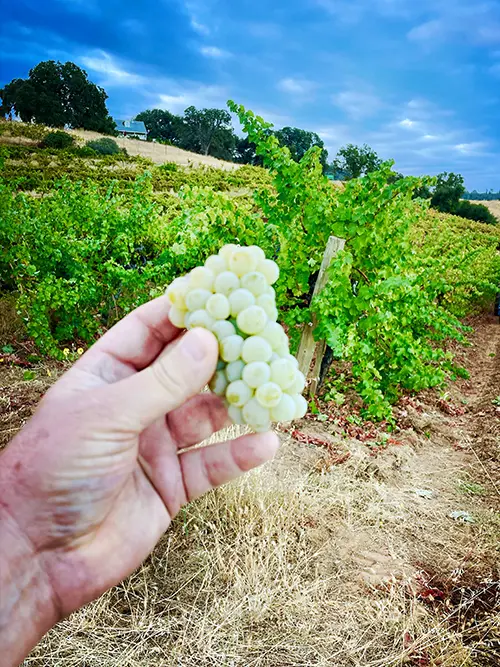
Tegan had mentioned this vineyard before; in fact, he had been telling me about it for years. Old Vine Sauvignon Blanc, on a rocky hillside, planted in soil that is a mixture of schist and Sierra granite. But somehow, he had never brought me here, or connected me with the owner. It remained a mystery, part of my map of magical places.
I lost Farina, the source for Scholium Prince and LSB, in the pandemic, but its disappearance from the orbit of my winemaking was inevitable. Once I set my sight on rediscovering the vineyards of the South, it was never going to be possible for me, a one-man operation by 2019, to make wine in the North and South at once. I knew that if I was going to establish something in Los Angeles, I would have to devote myself to it. The old Scholium vineyards of the North would have to take a back seat, no matter how wonderful they were. With the help of friends in Napa, and the tireless collaboration of Christina Rasmussen, driving up and down the 5 day after day, we made the Prince in 2019, and 1MN, but no Sylphs— we could not get to the fruit before the birds and bees.
And then, in late Winter 2020, the pandemic hit. Any form of travel felt incongruous, if not simply forbidden. I had to focus absolutely on getting our 2019 LA wines, made in an empty warehouse in Los Angeles, into bottle; and then somehow pruning Lone Wolf and the other abandoned vineyards. Not knowing if and when I would ever return, I let Farina slip, and also Bechtold. I allowed Scholium to wither so that LA River could thrive. And I had no regrets.
In the winemaking world of Northern California, the excellence of Farina and Bechtold had become clear by the Spring of 2020. If I was not going to buy the fruit, others would. And those who stepped up then, they are not releasing what they have won. So this year, when we headed north, there was no question of returning to the same old vineyards. If we were ever going to make the Prince again, we would need to find a new source; not identical to Farina, but equal in excellence. Not a replacement, but a peer. Tegan said he knew this vineyard.
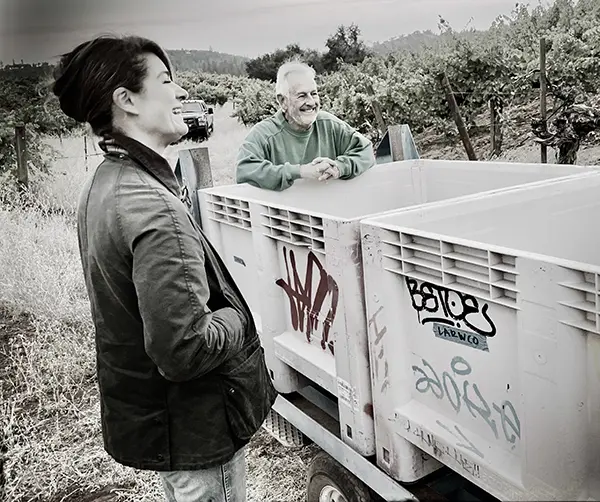
And so, on the morning of August 18, 48 hours after harvesting Cucamonga Zinfandel, Kaeley and I met Jim Riskas at his Oleta Vineyard, in Fiddletown, an old gold-mining town in the Sierra Foothills. And we saw massive, old, gnarled, vines of Sauvignon Blanc, and it was everything that Tegan had said, and more. As I walked the vineyard, I noticed something odd, completely unexpected here in the North. There were no graft unions on the vines. The Sauvignon Blanc was own-rooted. When I asked Jim, still incredulous, he just said, "Yeah." We brought bins with us, in case everything worked out. We pushed them off the truck, shook hands, and made plans to return in a few days to pick the fruit.
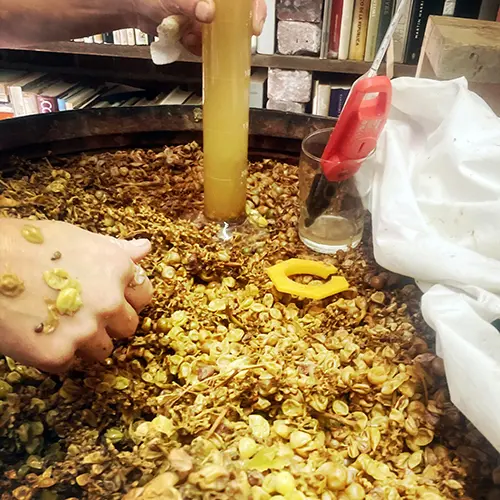
We returned on August 23d, brought the fruit home, and now, a little more than a month later, we have a puncheon of 2024 The Prince in his Caves, and a puncheon of La Severità di Bruto, aging in the winery. More on how I will get this wine to you at the end of the report.
SEPTEMBER 4
2. RODNICK PINNACLES PINOT
In 2015 and 2016, Alex Pitts and I made a Pinot Noir from a vineyard in the Chalone Appelation, high in the Gavilan mountains, planted in some of the rare limestone in California. The wines we made were only moderately good, for many reasons— chiefly because we did not know what we were doing. Last Winter, Kaeley and I were driving north to Napa, and, for once, we were not in a rush. We took a web of back roads, through beautiful inland oak savanna, and then, just south of King City, I remembered the amazing vineyards in the Gavilans, within view of the towering limestone Pinnacles. We found the road and ascended. It was breathtaking. As I constructed the new imaginary geography of Scholium, I had to include Gavilan Pinot.
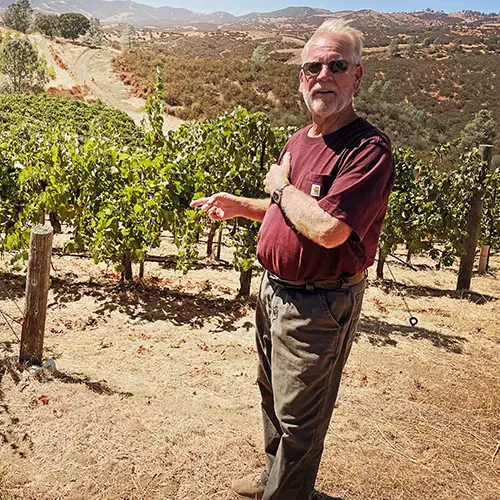
I remembered that my friend Scott Caraccioli knew some growers in the Gavilans, opposite his brilliant vineyards in the Santa Lucia Highlands, and he gave me a phone number and an email. On August 19, heading south after we dropped bins in Fiddletown, we met Kurt Gollnick, and saw his old vine Pinot, propagated from a previously unknown clone in 1946, and planted in broken limestone. We too shook hands and make plans to return. There would be a Scholium Pinot this year.
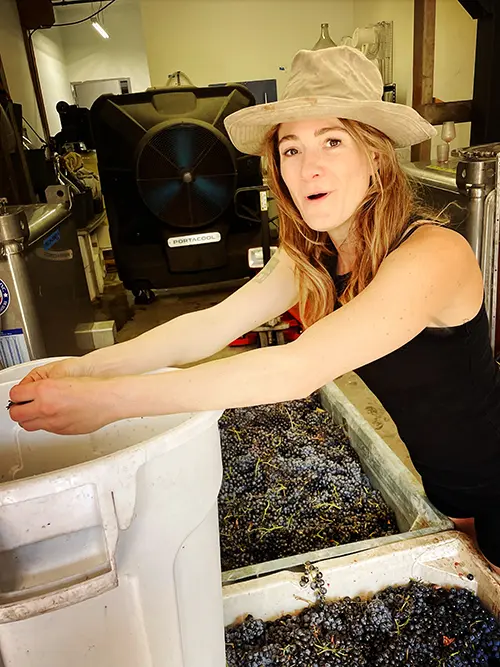
We stopped to see Raj Parr on the way south, my Scythian brother. Pinot? He was nearly speechless. After he caught his breath, he said: "Are you going to make Pinot, or are you going to make an Abe wine?" I knew what he meant. The medium-good Pinots I had made before were Abe-wines, not Pinot Noirs. I recognized and embraced my responsibility: if I, who pays not much attention to the notion of grape varieties, was going to work with Pinot Noir, I might have to subordinate my usual habits and principles to the requirements of this grape variety. Put simply: the path to beauty with Pinot might not be the same as with Zinfandel, Petite Sirah, and Listan Prieto. Not an earth-shaking insight, but worth articulating nonetheless.
And so you see Kaeley, destemming about a third of the fruit, right here.
A THEME: THE DIFFERENCE IN THE FRUIT
Let me pause for a minute to share some reflections. One of them will already be clear to you. The vineyards of the Los Angeles River Wine Company and the resurgent Scholium Project do not differ just in geography— nor just in age, or in grape varieties. There is something more profound that distinguishes them. This is caught in the responsibility I outlined above. Raj never would have asked me the same question about Zinfandel, or even Sauvignon Blanc. But Pinot is different: it somehow contains within itself a history, even a culture— a culture of making Pinot. Harvest the grape and either embrace the culture or set yourself up as an explicit renegade against it. In other words: Pinot is the peak of a kind of conventionality in winemaking. Sauvignon Blanc, Merlot, even Trousseau are minor players in the same hierarchy. One perhaps has more liberty in how one approaches Sauvignon Blanc, but no matter what you do, there is a kind of classical paradigm in the background. You are not working with a blank slate.
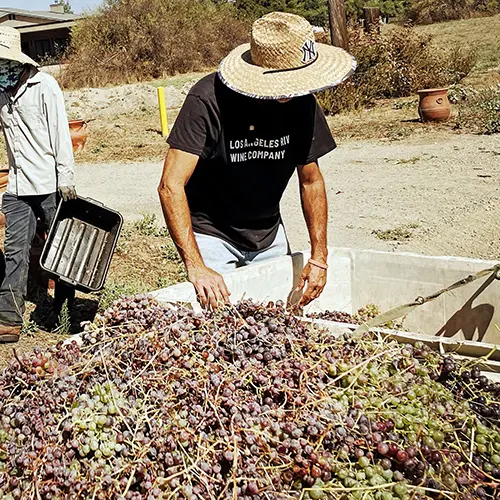
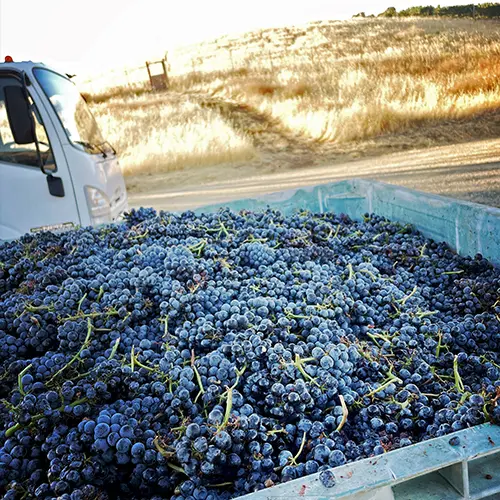
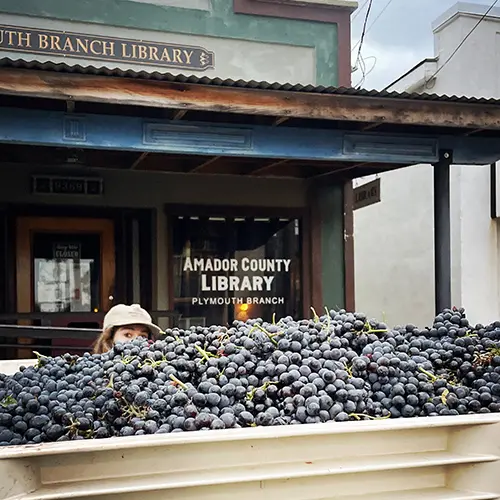
This is evident in the very nature of the vineyards that feed both projects: the vineyards of Scholium come in rows. They are farmed by farmers, with tractors. They have grape varieties, with clonal histories. The vineyards of LA River are from not just a different part of California, but from a different world: no rows, very often, not even known grape varieties. Some of them have been farmed carefully their whole lives, some have been abandoned and animals have established their dens beneath every vine. As a clear indication of how these differences are expressed in the fruit, look at the bin of Pinot above. And then look at the bin of Lone Wolf to the left. In one: homogeneity, regularity, order. In the other: a helter skelter collection of mottled fruit, berries of different color, clusters of different shape and architecture, all together.
There is no way that these different bins of fruit will not make profoundly different wines. And so, in the cellar, we have a new discipline: to respond not just to each vineyard, but to each kind of vineyard and make the best wine possible for us from each.
SEPTEMBER 9
3. ASCONA CHARD
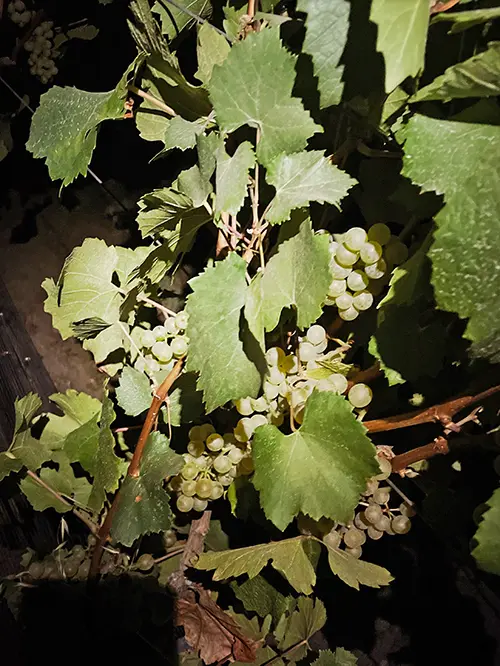
I had another wine in mind as I composed my imaginary map: Chardonnay. It had been a long time. Earlier this year, at Raj's, we had an amazing Chardonnay, blind. I did not even recognize it as Chardonnay, but I did recognize it as blindingly excellent. And the grower was right there, at the table. Ken Swegles, from Ascona Vineyard. He said, "Come visit us sometime." So I reached out.
We made an appointment for the same day as the Pinnacles Pinot. We drove to the top of the Santa Cruz Mountains, at 2500 feet, right off Skyline Drive. We found a young vineyard, maybe 15 years old, laid out in an intricate patchwork, responding to the changing geology of the soil. Chardonnay among the youngest vines, delicately in balance. The fruit was not yet ripe— perhaps two weeks away, but it was already intense and piercing. We were very excited. Another handshake, another promise to return.
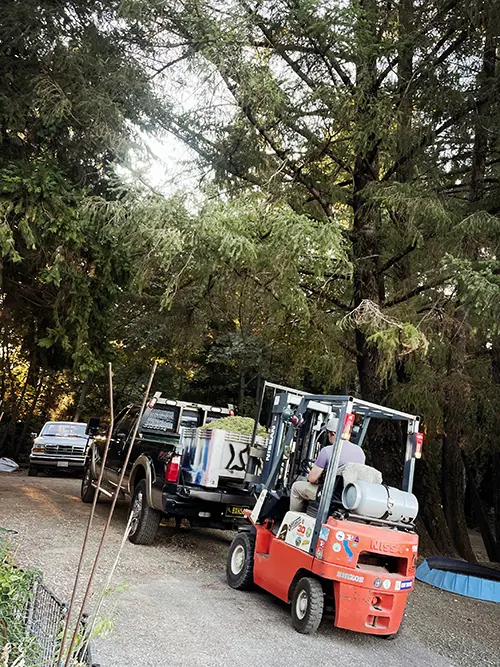
And so we did, 3 weeks later. Ripening was taking place very slowly on this ridge facing the Pacific. On September 9, Ken loaded our truck with a ton of fruit, under the shade of Redwood trees— beautiful, tiny clusters. In every way, we are very far from Cucamonga, balancing the wildness of Maglite with carefully farmed clonal selections.
SEPTEMBER 17
4. OLETA BARBERA
In advance of our first visit to Jim Riskas in Fiddletown, Tegan said: "You know, the Sauvignon Blanc might not be the best thing there. There's Old Vine Barbera, on terraces, on schist." When we met Jim and saw the SB, I asked him about the Barbera too. "Yeah, we have a little. Do you want to see it?" The terraces are so steep that Jim once had a heart attack while he was working them. Own-rooted vines here too. You could see the schist underneath the vines, broken fragments sticking up in the grass. The whole vineyard reminded me of another remarkable old-vine vineyard that Steve Tenbrink and I had visited together once: Chuy Chardonnay, on the west side of Spring Mountain, in Sonoma. Steve said: "You can't help but make great wine from this vineyard."
So I said to Jim, "Can we get a ton?" Another very distinctive grape variety, not really like anything else. I had never even seen it on the vine, much less tried to make it. I love drinking Barbera. But making it? Another exciting challenge.
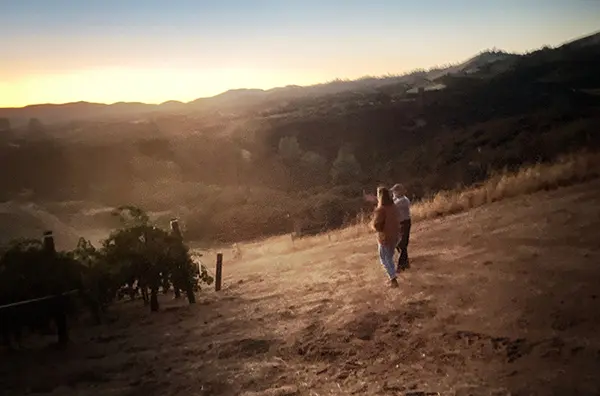
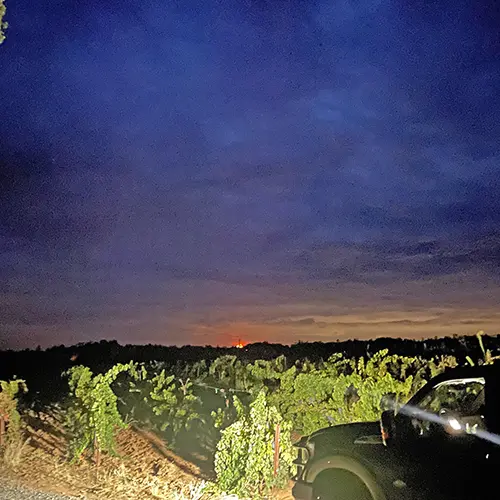
We returned two weeks ago, to pick the fruit during the night of a full moon (there is a photo of sunrise above). We brought it home that morning, stomped it, and it has been fermenting quietly on its skins and stems since then. We drained and pressed the wine yesterday. I have never made anything quite like it— or perhaps better to say, not since the Margit's wines of 2007. The wine is piercing and pure, nearly ballistic in its power. And remarkably high in acid— as is the nature of Barbera. What a wonderful discovery, a wonderful and unexpected venture into Terra Incognita.
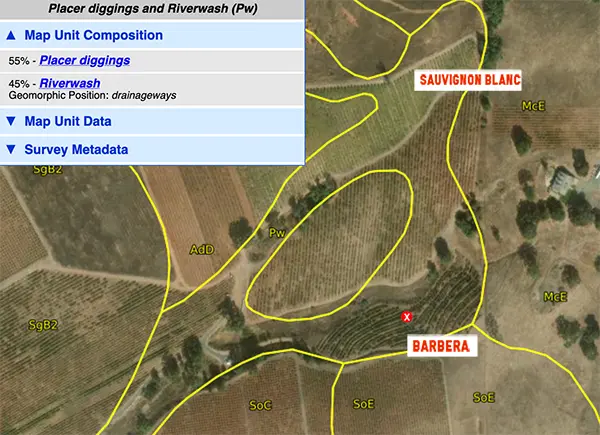
One word on the geology of these two Sierra vineyards. The screenshot at right is from a remarkable resource that I use sometimes every day— UC Davis Soilweb. It shows the Oleta vineyard, with the SB and Barbera labeled. You can see the tight, dense terraces of the Barbera following the contour of the steep hill, and the more regular Sauvignon Blanc rows above (there is Zinfandel in between). Soilweb shows that the soil that both are planted on is the wash from nearby placer gold mining— in fact, the old Golden Treasure mine is not far uphill from the vineyard. I honestly do not grasp all of the implications of this— all I know is that it is remarkable! How distinct— a vineyard planted not only in an old gold-rush town, but in the rocky detritus of human mining— what a strange kind of specificity of terroir. (I am happy to say that the placer mining of the area, while deeply destructive, involved no chemical activity with lasting traces. The soil is no more damaged than the vineyards in Priorat, for instance, where the the beautiful and terrifying schist slopes were ripped and regularized in the 2000s to form easy-to-farm terraces.1)
SCHOLIUM FUTURES
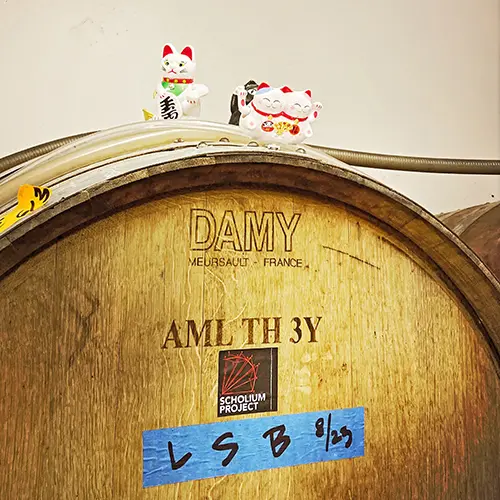
Now you know. These are the wines that mark the rebirth of Scholium. We will probably add one more vineyard next year. The vague aim for the future is to make roughly 6 or 7 Scholium and 6 or 7 LA wines each year. All of the wines will be made in tiny quantities— our biggest production wine this year will be the Pinnacles Pinot at about 600 bottles.
There is no aim to place these widely around the world. Most bottles will go directly to you.
If you would like to make sure that you get some of these, you may order futures now. We have been so grateful to receive futures orders for the LA wines every year since the 2020 vintage, and these orders have genuinely helped us to complete each vintage.
Now we need the same help with the Scholium wines. Please be part of this exciting rebirth. We will be so grateful to you.
We will begin bottling the wines in the Spring of 2025, and continue, with the Prince and the Barbera, in the weeks surrounding harvest 2025. We now know not to promise shipping from June till about October (we are just about to rejoin shipping the rest of the 2023 futures next week, after this present 100° heatwave relents). So you may expect the first wave of wines in June and the second in October. If any of the wines require more aging before bottling, we will ship these separately when they are ready— in other words, do not expect a single shipment of these wines. You will have the pleasure of receiving them in waves, when they are ready.
We are offering the 6 wines for $250— at about a 20% discount (the individual bottles will all sell for $50 or more upon release next year). If you think that you would like to order individual bottles, either instead of the package, or addition, just email me. Same for magnums.
We are very excited. Please consider visiting us, to witness this rebirth, in the flesh.
Thanks so much, as always.
Abe
FOOTNOTES
1. Brenna Quigley points out, in a series of carefully phrased passages in her essential podcast Roadside Terroir, how much of the geology of the prized vineyard land of Grand Cru Burgundy is due to the fact that land that was quarried before it was planted.