12 Seats East and West: our most recent and next events
Maria Niedrist on June 2
The Culture of
12 SEATS
East and West
I have just returned from an amazing trip to New York City. There was a time when I lived there, or almost so; and when I went back and forth to the West Coast, as if I were commuting. I am so grateful to have left that life behind, and to have roots now in Los Angeles, in a way that I never had before. I am devoted to something here, something in particular in the desert vineyards east of here…
But more on that later.
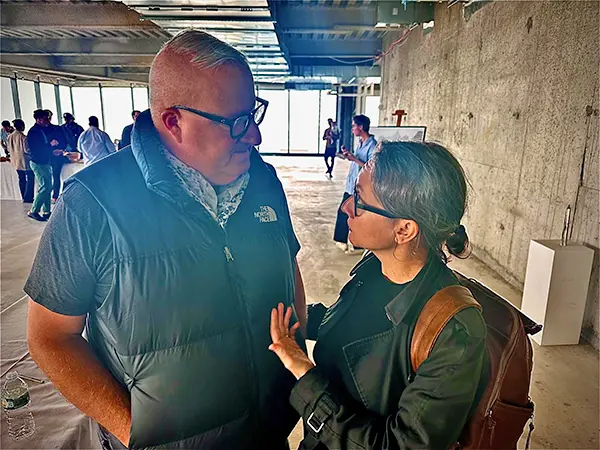
One of the great virtues of visiting New York in this new way is precisely and actually being an outsider—and consequently, being a guest. You get to marvel in the wonders of the city, and when you are taken in, this is a marvel too. Not to be taken for granted. You have to pass a bar here; perhaps the highest in the world. This is irrespective of kindness or hospitality— that is not what I am talking about. I am talking about cutting it.
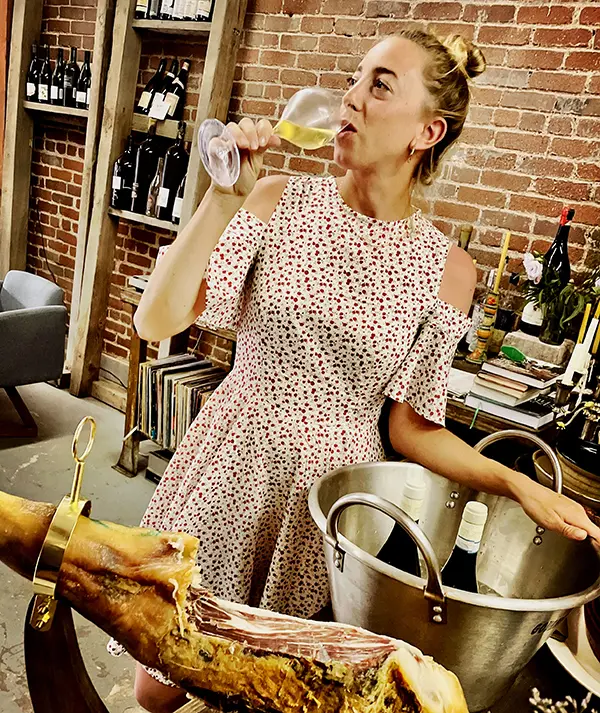
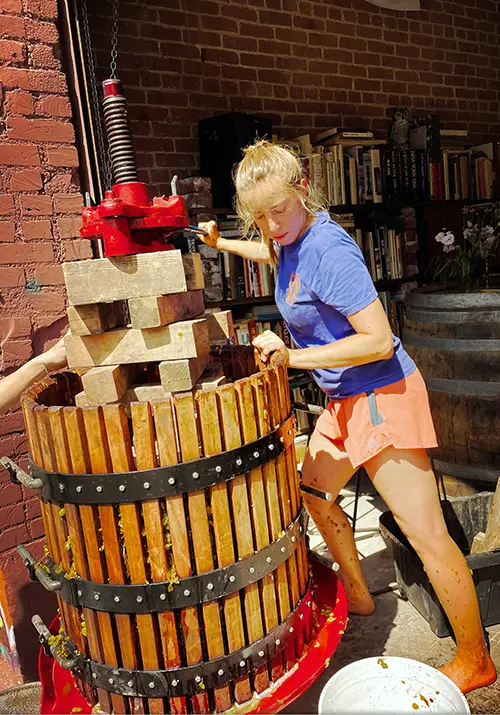
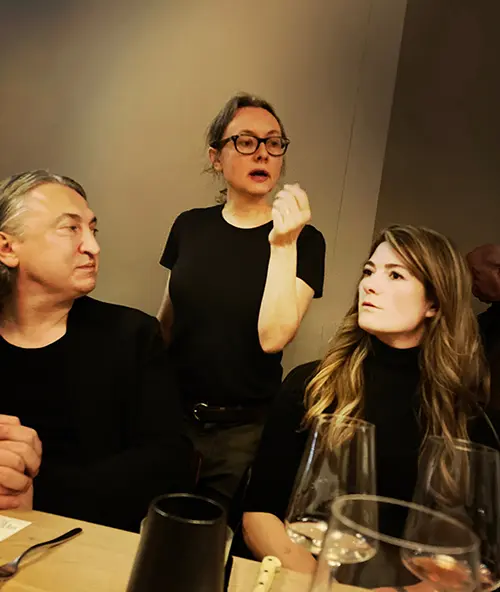
I was in New York for two reasons; both of them related to being a guest. Our dear friend and teacher, Chiara Pepe, is on an international tour to celebrate the 60th anniversary of her family's winery, founded by her grandfather. She is not only its chief ambassador now, but she is also the winemaker and the director of farming. It is a responsibility of Biblical or Shakespearean proportions: the crown does not rest lightly on her head. In spite of this, she is doing a remarkable job, not just of preserving her grandfather's legacy, and nor is she merely advancing it.
Because of her irrepressible spirit and electrical intellect, she has become a crucial leader in our field— in thinking not just how to make wine, and not just how to farm, but what it means, in our day and age, to make wine seriously— as if somehow this activity could play a role in human virtue. Here is one easily-cited example of her work in leading our thinking.
I can't say what an honor it was to be invited to the celebration, and then, toward the end, when she turned to me, unannounced, in front of 50 or 60 guests, and said, "Abe? do you have anything to add?" I asked a question about farming fungi, a topic that she had not yet touched on but that I knew was dear to her.
This question was at the front of my mind because of the second reason that I was in New York. You will remember that last September, Pascaline Lepeltier led one of our 12 Seats sessions. It was pretty incredible; I can tell you that we talked a lot about saké and the virtue of disappearing… I should mention also that Chiara Pepe had done one too, at the beginning of harvest, when she also made wine with us.
Pascaline enjoyed her session with us so much, and so did I, and so did our guests. She was now determined to host one herself, with me, back home, in the restaurant that she had recently founded— Chambers. I said, "this Spring, after pruning."
The moment finally came; the day after Chiara's celebration. Pascaline and I had put together a list of a dozen beverages to form the spine of our evening, from a magnum of fancy 2014 Burgundy, to a 1980 Emidio Pepe, to a 1961 Chateau-Chalon. It was amazing.
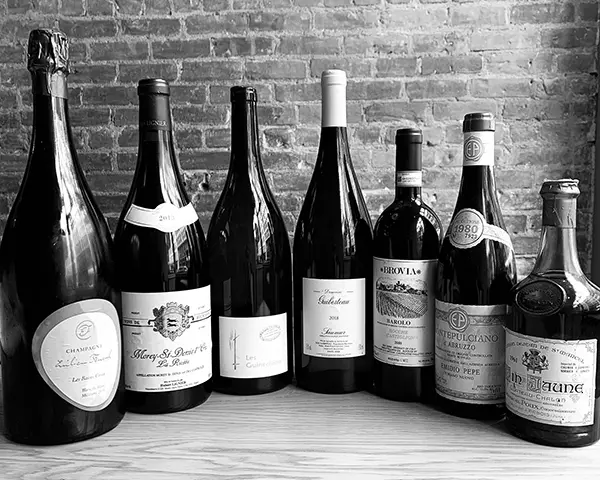
And by mutual agreement, we barely mentioned the wines. Sometimes, we just drank them in the course of our meal and discussion, sometimes we paused to comment or reflect on them. I had prepared four main topics for discussion; or, perhaps more accurately, for me to lecture on, briefly and concisely. Here they are:
- The rhizome versus the tree. An introduction to Rhizomatics. Accompanied by Champagne and fancy Burgundy. Chiefly: the opposition of the bounded superstructure of the tree and intertwining of the mycorrhizal fungi, without beginning or end
- .The shell of a wine. Presence in wine; "shell" as a kind of absence. Accompanied by two Chenins of the Loire
- The Underworld; thinking about the dead and disappearance. The invisibility of fungi. The especially invisible role of fungi not just in the air, but in the sea. The disappearance of bodies in the underworld. Accompanied by wines made by us from ancient vineyards near Los Angeles
- The difficulty of farming the invisible— pruning is easy. Farming vertically, farming volume. Accompanied by noble red wines, and then, finally, by a Chateau-Chalon from 1961.
The first, main, topic was spurred by a book that Pascaline and I had both studied in Graduate School, a few years and a few thousand miles apart. I promise to come back to this topic and this book some other time.
There was wonderful moment, a little more than halfway through the evening, when Chiara Pepe walked in and joined us— a little before we opened the 1980 made by her grandfather, in the winery's 17th year. It is hard to explain why it might be important to talk and drink at once. Let's say this: so much pleasure can come from drinking good wine. Sometimes, good, serious,thinking can deepen that pleasure. There must be something working reciprocally too, deepening, or at least making even more pleasurable, the thinking that occurs in common in the presence of shared, good, wine. It is this combination to which 12 seats is devoted.
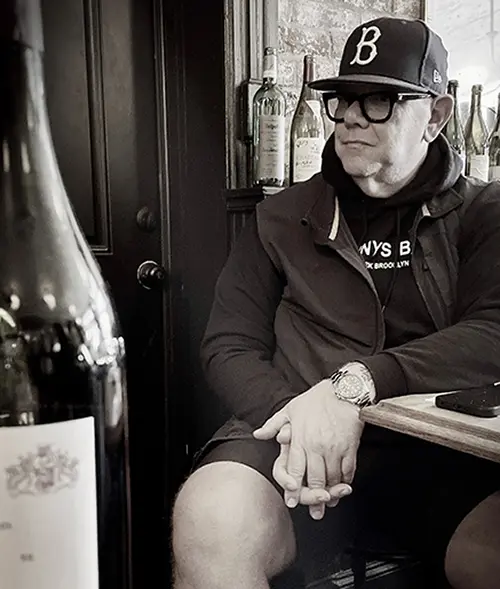
Pascaline had to work the floor Wednesday, the same night as our dinner. Service comes first, she could not abandon her guests. So we are going to do this again, in New York, but somewhere where she can sit down, as she did in our winery. We know where this will be already. We had a great dinner Tuesday night after Chiara's celebration, in a kind of secret room above the Red Hook Tavern, hosted by another character of Shakespearian proportions, Billy Durney. He was so in love with what Chiara and I had done, and what Pascaline and I were going to do, that he wants to host a regular "12 Seats East." In his secret room, one rickety flight of stairs above what could be the greatest burger in America.
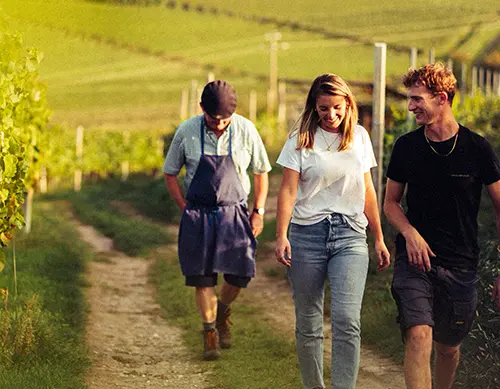
This brings me finally back to our own 12 Seats, here in Los Angeles. We are so happy and proud to welcome another great Italian winemaker, Maria Niedrist, on Sunday June 2, at 6 PM.
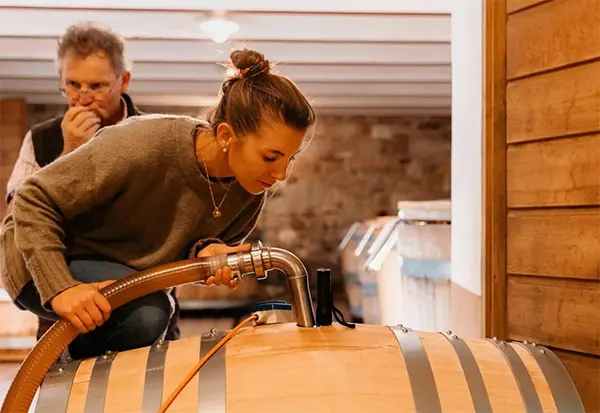
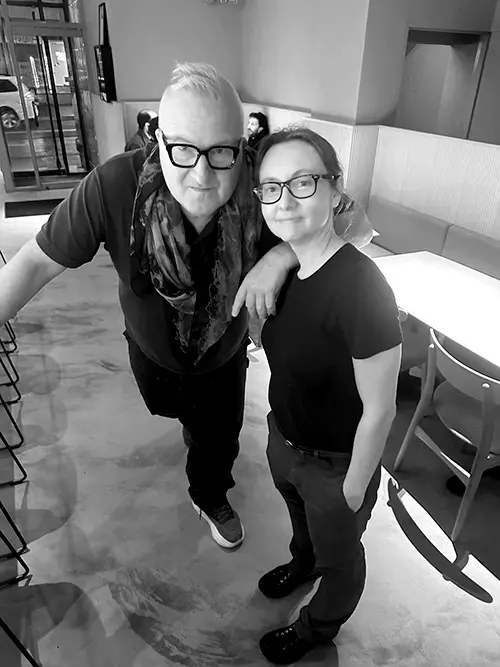
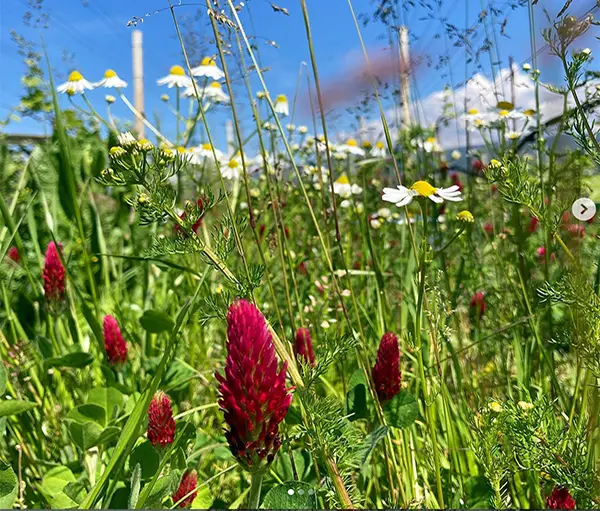
Maria (pictured to the left and at the top of the newsletter) makes wines of stunning purity from a collection of small parcels in the Italian Alps. Her family and its winery are part of the rich and complex Alpine culture in what is now called the "Sudtirol" (in the German that is local and traditional there), or the "Alto Adige" (in the equally legal Italian). Their vineyards are in Alpine meadows and on mountain slopes, at about 550 meters above sea level. You can see how radically different their land is from our desert vineyards.
I have admired her family's wines since the beginning of my winemaking career; I can still remember the first time that I had one of their wines. It was a Sauvignon Blanc, poured for me in Los Angeles in 2005 by David Rosoff, then at Campanile in Los Angeles. I was still very much trying to figure out how to make good wine, and it became a model and beacon for my own winemaking. For that reason, I am especially delighted to host Maria, pour her wines, and learn more from her. She is bringing several older library wines with her from Italy, and we will pour 5 of their new releases in California. As always, we will incorporate one or two other wines, and serve light snacks during the evening.
You may reserve seats here:
12 Seats: Maria, June 2
I want to give you the briefest headsup on what is coming ahead. During the days before and after Maria's visit, we will be making final preparations for our second Spring bottling. We will bottle nearly every remaining wine from the 2023 vintage at this time— 12 more wines!
And then will begin shipping futures orders on June 10!
You can see what wines we will bottle in June and place a last minute futures order here. Most of the wines will be available only in the 12-bottle selection representing the whole vintage, and some of the wines are nearly sold out already.
2023 Futures: 12 wines
More soon on bottling and the 2023 wines.
With gratitude and very best wishes,
Abe