A first report on harvest 2023-- and a futures offer on the wines!
Our harvest is nearly done-- only Lone Wolf awaits.
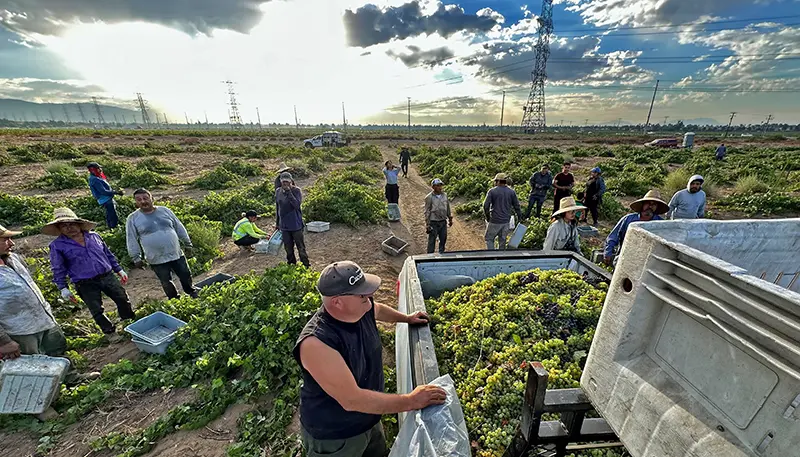
THE HARVEST OF 2023:
A WONDERFUL YEAR IS NEARLY COMPLETE.
Today has been a long time coming. There is so much forward momentum during harvest, such a joyfully breakneck pace, that it is hard to look back— even if somehow one has the leisure to do so. Today is the first time I have had the leisure and what one can only call the frame of mind to look back and reflect on where we are.
PURCHASE THE 2023 FUTURES
I am taking that leisure to write you with a brief and breathless report of what we have done and an offer to you to purchase wines from this very harvest and thereby fund our work right now. You have been enthusiastic supporters of this means before, and it has meant the world to us, in each Los Angeles harvest.
Above is a link to the wines; more on their specifics (and an opportunity to taste them from barrel!) below. First, a report on the harvest.
VINTAGE 2023: COMPLETELY DETERMINED BY WINTER RAINS
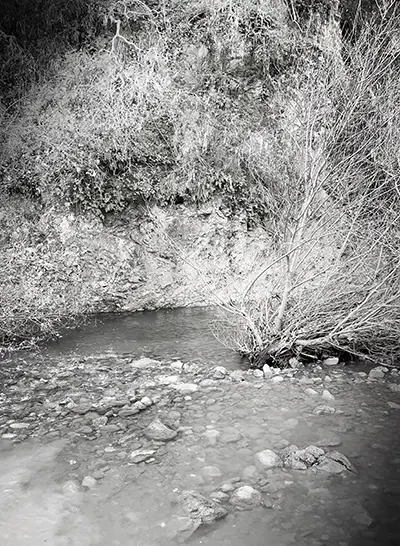
Harvest began on August 11 this year, nearly a month after it did last year. A month is a long time in the life of a grape berry; it would be like a person hitting puberty in their mid-twenties. The single cause of this remarkable alteration in the annual cycle of the grape vines, and in the physiological development of the berries, was simply the Winter and Spring rains that washed over all of California this past year. The rains were so long and steady that the water reached deep into the soil beneath the vines, and refilled aquifers that could flow under the vineyards during the rest of the growing season, no matter how little moisture remained near the surface of the soil. This sudden abundance of water, compared to the last 25 years of drought and near-drought, completely changed the physiology of the vines, and, you could say, programmed them for a very different growing season:
Drought induces something like panic in the vines, and so they set little fruit and ripen it quickly; abundant ground water inspires leisure and a kind of confidence. The vines set a lot of fruit and ripen it slowly. The slow ripening is a virtue in itself and tends to bring deeper and more complex flavors. In this case, we expect quality and quantity to go up at the same time. It is a wonderful feeling as we walk the vines.
CHIARA PEPE AND THE BEGINNING OF HARVEST
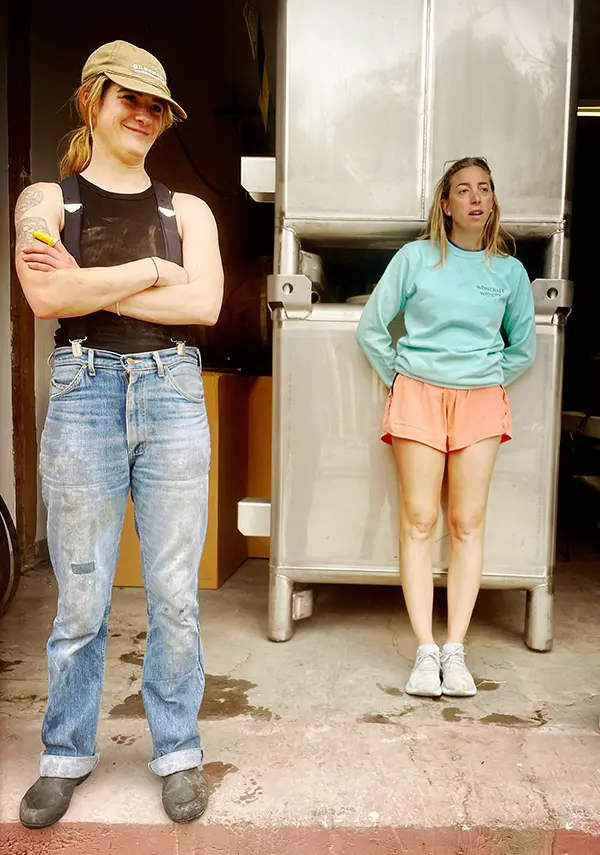
We had a storybook visit at the beginning of the harvest. Chiara Pepe, who directs winemaking and viticulture at the iconic estate Emidio Pepe in Abruzzo, spent a couple of weeks in California this summer, escorting her teenage brother and cousin as a reward for their hard work at the winery. I feel so lucky to call her a friend as well as a colleague, and we made plans to see each other while she was here. She even led a tasting of her family's wines at #12seats (but more on that below).
We thought that with the delay in harvest, she would be back in Italy before we picked any fruit— but then suddenly, Lopez sped up and Raj and Mikey decided to begin picking Palomino. We were going to delay for a couple of days and pick from a different, older, section of the vineyard, but when Chiara heard all of this she said, "What? You are not picking while I am here?"
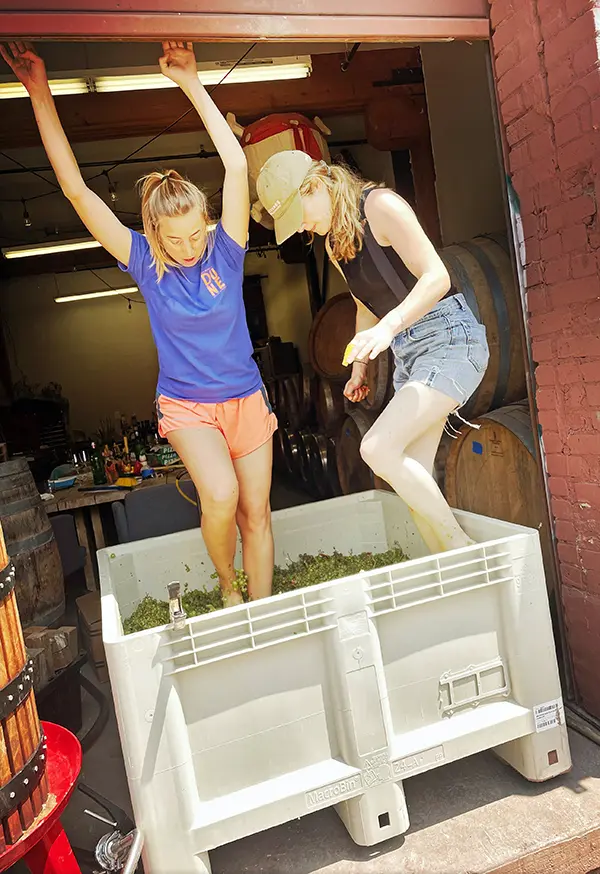
So Kaeley and I saddled up, put a half-ton bin in the back of the pickup truck, and brought some fruit back to the winery for Chiara. We are so glad that we did. If you can believe it, she taught us a new way to process fruit for making white wine, subtly but crucially different from anything that I had done before. I can sum it up like this: we have always broken berries by foot-stomping, dating back all the way to around 2007. But we have always understood this a preparation for pressing, not as an end in itself. Chiara taught us that the release of juice under the feet should be considered the aim of the whole process, and that eventual pressing, if it occurs at all, should just be considered a kind of cleanup. We have made every juice-fermented wine this year following this directive; we call it the "Chiara Protocol."
As I hope you have foreseen, we have kept the wine that we made that day separate, and it is the most beautiful wine in the cellar right now. We will bottle it separately too, as the Lopez Palomino “Chiara” Reserve.
LOPEZ PALOMINO AND THE OLVERA FAMILY
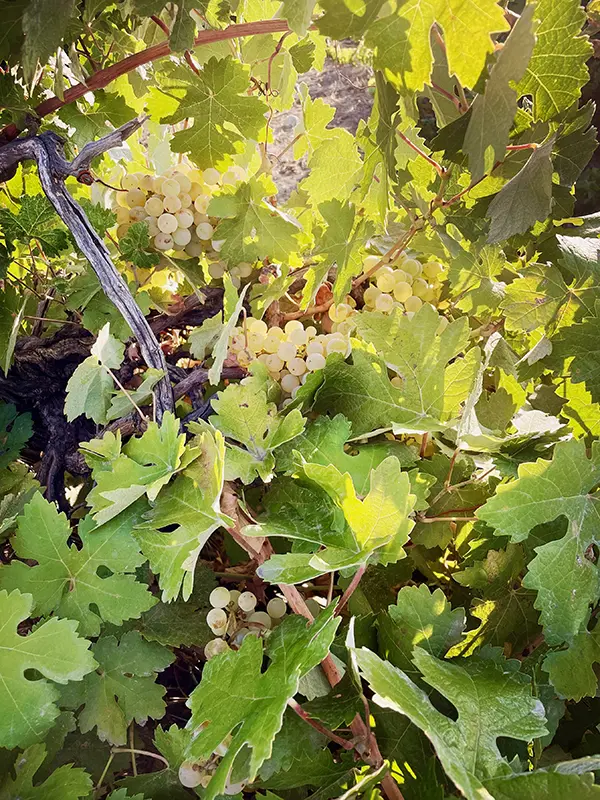
We depend on the Galleano family for nearly all of the fruit that we harvest in Cucamonga. They are the remarkable stewards and guardians of grape-growing in the area. They are not only the last traces of the tremendous industry that existed here one hundred years ago, but they make wines of great integrity and deliciousness that preserve the heritage of Cucamonga. The winery is led by Domenic Galleano, the far-seeing fifth generation scion of the founding family. He is not only preserving his family and the area's heritage, but he is thinking constantly about how to ensure that when Cucamonga is known at all, it is known for excellence— and not just for surviving.
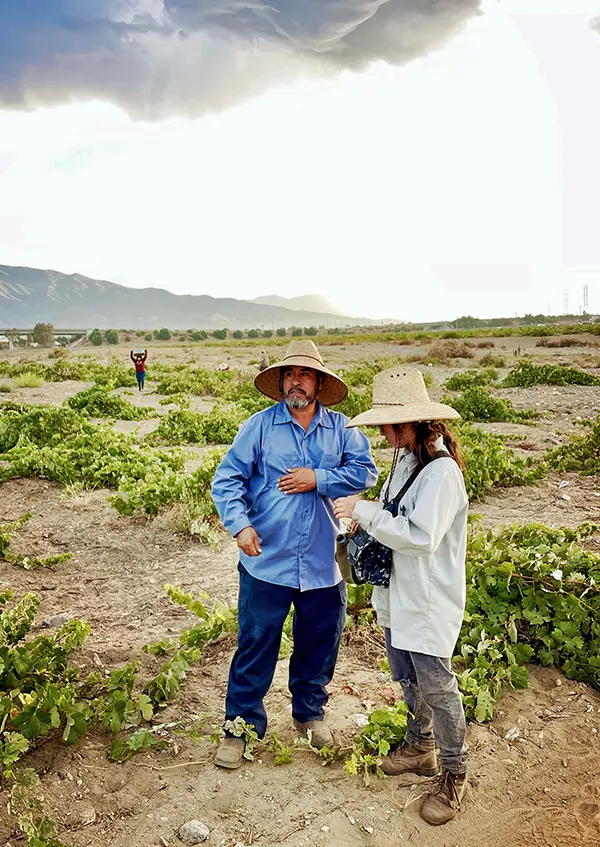
Domenic has two essential partners in this enterprise: his aide-de-camp, Red Wentworth, and Agustin Olvera. Agustin is the man who assembles and directs the teams that perform the two essential operations in the Galleano's historic vineyards: pruning and harvesting. In this respect, no one is more important to the future of grape growing in Cucamonga than Agustin. This year, as a reward for his dedication to the vineyards and the winery, Domenic gave Agustin control over the 30-acre Lopez Palomino vineyard, planted in 1912. We have worked with Agustin at every stage to harvest the fruit this year, and it is only fair to say that after a year of Agustin's farming, the old, nearly abandoned, vineyard looks fantastic.
It is the high point of our day, at 5:55 AM, when we arrive in the vineyard, and see Agustin and son and daughter who work with him, Erik and Nancy. It is the greatest honor to work with them; any eventual excellence in our Palomino wines depends on his work in the vineyard.
I want to make one small point before I go on: when we were harvesting one day in the middle of the vineyard, near the 50th row in, Agustin said: "You know, before we pruned them this year, these vines were last pruned in 2011." Think about this when you drink our "normal" Palomino: made from vines planted in 1912, abandoned 99 years later, revived and preserved by Agustin 21 years after that. Indestructible.
NEW TOOLS, NEW PROTOCOLS
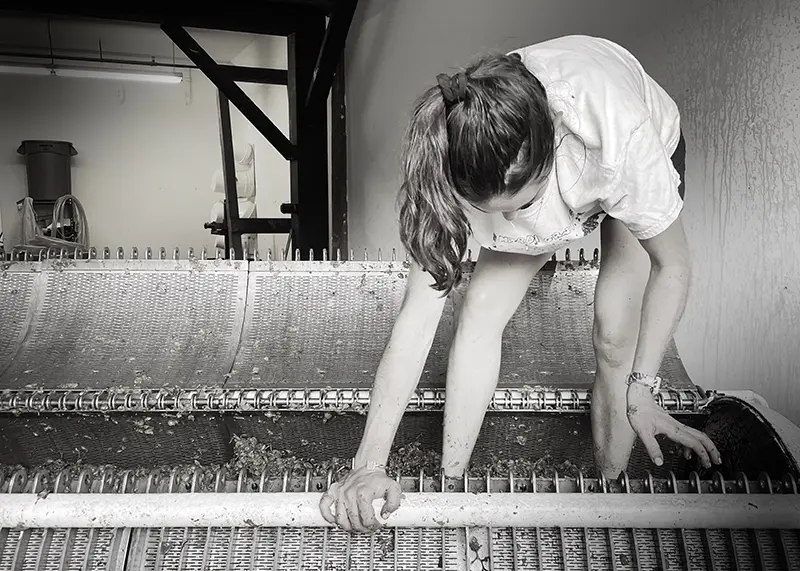
Last year, our first year in this new space, we were still scrambling to figure out how we were going to make wine, making up a lot as we went along. This year, in the Spring, as we prepared for bottling, we had the opportunity to look back and reflect, and to ask ourselves, what could we do better in 2023?
And we decided that there was much that we could do. The first and most important thing was to control the access of the wines to oxygen. As I learned how to make wines in Northern California, from rich, ripe, Northern California fruit, I decided that penetration by oxygen, perhaps even saturation, was essential to the kinds of wines I wanted to make there.
I brought that expectation with me to Los Angeles— and also worked for 3 harvest without a pump… This Spring, as Kaeley and I tasted and reflected on the wines of 2022, we decided that in 2023 we could and would make even better wines than we had before. The Chiara protocol is an unforeseen aspect of this improvement; the single most important change is simply the determination to top barrels, to replace wine as it evaporates. It is interesting how the smallest decisions can have profound results.
We also purchased a bigger press (from the Tenbrinks! the same press that I used for 12 years at their winery), a pump, two stainless steel tanks, and two more stainless barrels. None of them breathe. A new regime within the winery. We are loving it and cannot wait to learn how they will affect the wines.
THE BEGINNING OF THE RED HARVEST AND THE GREAT STORM
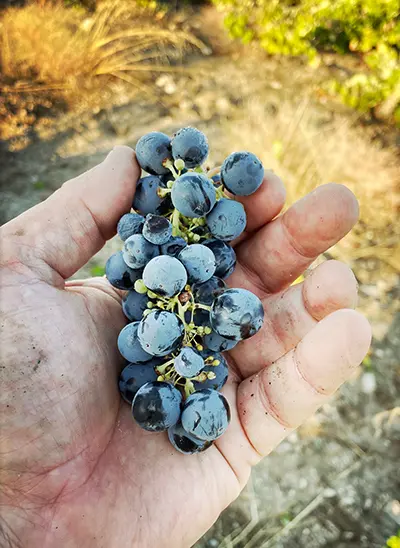
Just as we finished harvesting Palomino and began harvesting Lopez Zinfandel for Rosé, people began talking about a tropical storm sweeping up the Baja Peninsula from Mexico. At first none of us really paid attention, we all knew that it does not rain during harvest in California. Then reality took hold. None of us knew what to expect; no one had ever experienced anything like this. Agustin thought that we might miss one day of picking; but I had friends, other winemakers, who thought harvest was over. They were prepared to wrap it up for the year.
The rains came. Two and a half inches in 24 hours in Cucamonga. Monday morning, it was clear and damp. I was in the vineyard. The soil was moist, it looked brown instead of golden or brilliant white. But the fruit looked perfect: not just intact, but essentially unchanged. These old, deep-rooted vines, and their tannic, thick-skinned desert fruit: even 2.5 inches of rain could not change them quickly. We began harvesting fruit for red wine on Tuesday, and it is some of the most beautiful fruit I have ever worked with: ripe, intense, and high-acid. As if the rain were a mirage.
MAGLITE!
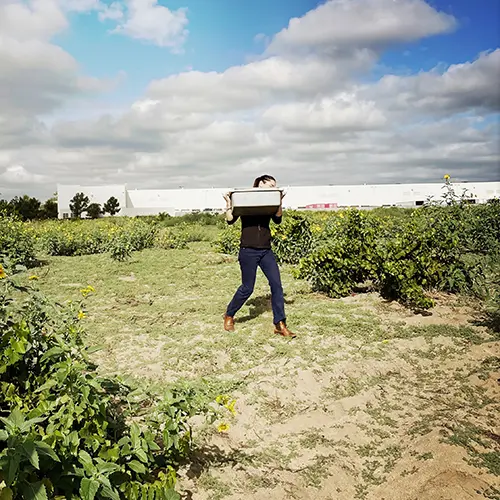
I want to tell you about one more vineyard before I begin to bring this report to a close. Last year, in 2022, Maglite almost died. The vineyard is perhaps the oldest in the area, planted in 1905. It had been farmed haphazardly for two years during a drought, and the plants were not strong enough. We lost half of them; the remaining half produced almost no fruit; all of it very small berried, tannic to the extreme. We made two spectacular wines in 2022 (the red, from Grenache is truly brilliant), but we were deathly afraid for what we would see this year. Would the plants recover, or had they been pushed too far?
This year, Raj and I harvested even less fruit from the vineyard than we had in 2022: only about 2600 pounds from 17 acres. But the winter rains and long, slow, growing season really benefitted the vineyard. The remaining vines seemed healthy, and the fruit had achieved a lovely and full ripeness. We have made red wine from most of what we harvested— it is mostly Grenache. We made 14 gallons of Blanc de Noir because we know it will be noble. Both wines are still fermenting. We have the highest hopes for the wines— the red seems magnificent; much less tannic and more ripe than the 2022. But we fear terribly for the future of the vineyard.
A TASTING OF THE WINES
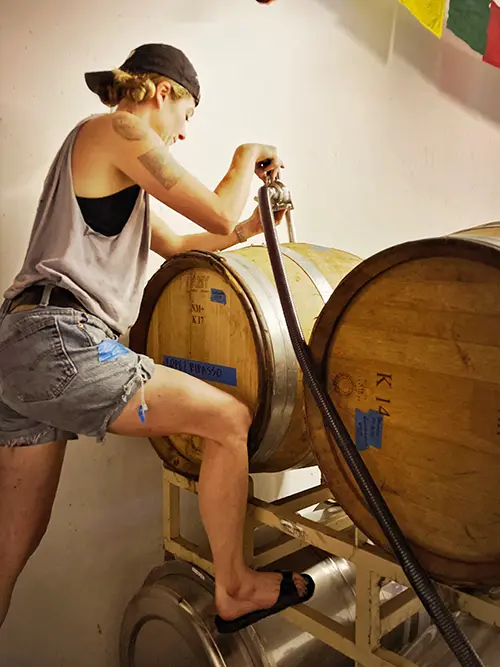
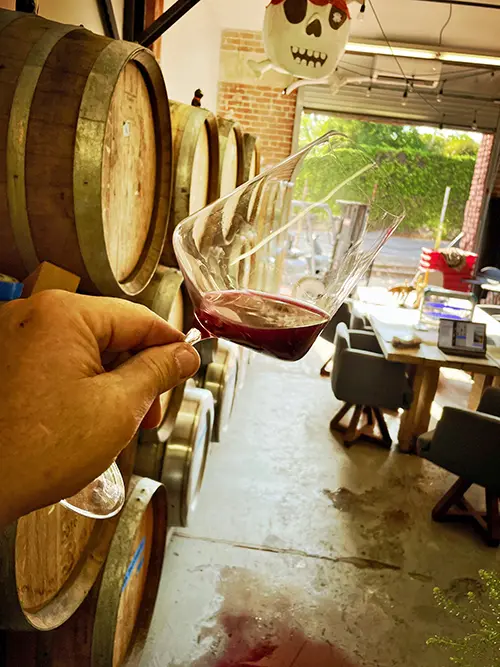
One of the wonderful features of our new home is that it allow us to welcome you. I have told you a little about #12seats and will tell you more in a separate email soon (after I hit send on this, I will begin preparing for a seminar tonight with Pascaline Lepeltier). But for now, I want to invite you to a barrel tasting so that you can taste the 2023 wines that I am talking about here. We will also pour for you some 2022 wines, including the Maglite, so that you can see for yourself how good it is.
You may reserve tickets for this event here. We will offer only 20 positions, so that it will be unhurried and intimate. I know that there will be sufficient interest in another tasting, and I promise to schedule one soon. For this one, we will give priority to the people who have already had the confidence to purchase futures, but I am sure that there will be room for others. The tasting will be on September 30 at 3 pm. At the winery, of course.
THE FUTURES
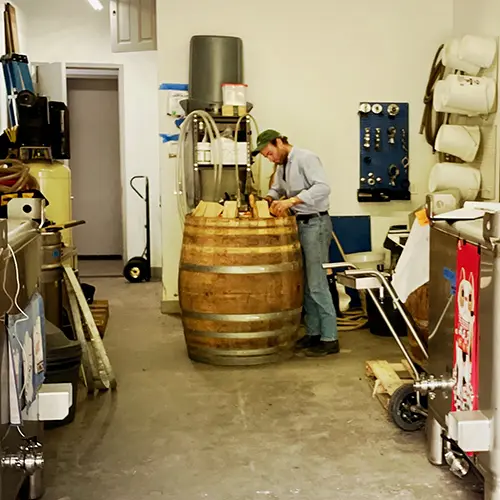
This is the fourth year that we have offered futures, and it is the key to what we do. It makes everything the rest of the year possible. If just a small number of you purchase and pay for the wine now, it allows us to pay our growers promptly for the precious fruit, and to cover some of the other expenses of harvest— the most cash-intensive period of the year. There is also all that stainless steel to pay for…
We will make 12 wines this year, a good number for your futures purchase. I will describe them in much more detail in the end of harvest report, but for now you should know the following:
All of them are precious, and the most precious is the special Palomino that we made with Chiara. We will bottle this separately and it will be available only to wine club members and through this channel.
You may go here to buy the wines of the 2023 vintage right now, and your purchase will propel us to the end of a triumphant and wonderful harvest.
And just to remind you how this will work: we will bottle the wines sometime in the Spring and ship them immediately afterwards. So this purchase is kind of like a Tock reservation for a dinner that you will not eat till Spring. Like the Tock reservation, it will guarantee you something that might not be available if you wait to purchase it.
A little before bottling, I will make an offering of remaining wines to the whole of the mailing list. Last year, most of the futures sold out in a day and something like this could happen again this year. The retail value of the 12 bottles in the futures offer is $810, so the offering is at about a 26% premium. We are offering only 60 of these packages.
Lastly, if you go here, you will see exactly what wines are in the package.
Thanks so much for reading so far, and thanks so much, as always, for your support and attention. I can't wait for the harvest to reach completion and to offer you a full report on another remarkable vintage.
Abe