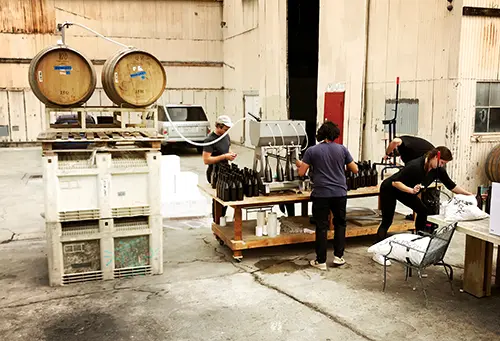
We begin bottling the 2022 wines today!
Lopez Palomino Reserve
2022 LOPEZ PALOMINO RESERVE!
Our first bottling of 2022 wine and a brief disquisition on readiness in wine
Desert wines. There is so much to learn. The greatest wonder is this 2022 Palomino from Lopez.
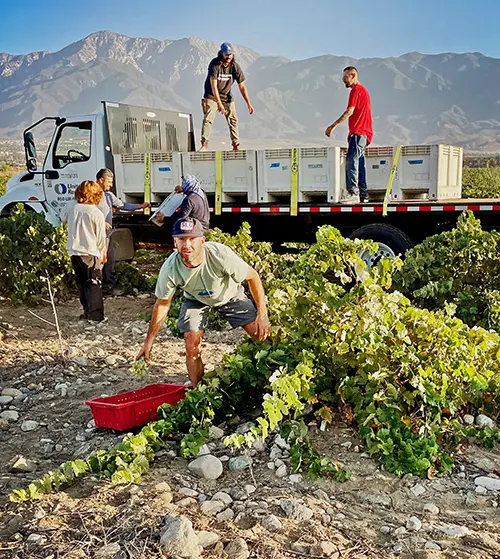
We harvested the fruit on the 24th of July. It took only days to ferment; and then, by the beginning of September, all the lees had settled, and the wine was clear. While many of my friends in Napa were just beginning their harvest....
It was a pleasure to taste, at first, just because it already was wine— not on the way to becoming wine, but already being wine. It gave us confidence in all of the fermentations around us, in all of the creatures still in the midst of becoming something.
So then, assured of its future, we walked away from it. We did not open the barrels for a few weeks, until the harvest was completely over, and we had had a few days to breathe. Then, gradually, around the first of October, we began opening barrels, pulling samples, assessing the wines, forming opinions. And my first concrete thought about this wine: it is ready.
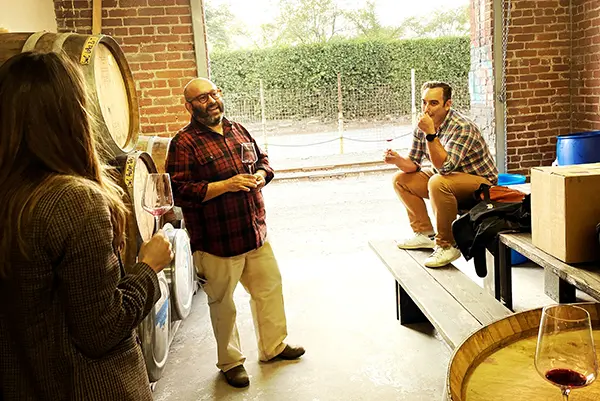
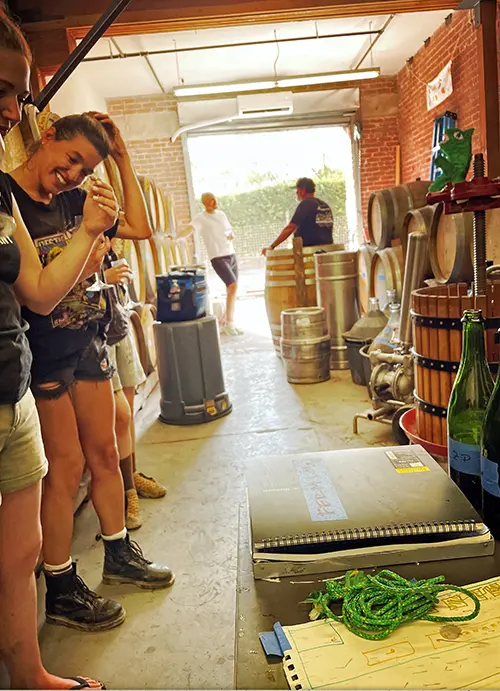
We have welcomed several guests to the winery recently— it is such a pleasure to host people!— and have tasted the 2022 wines from barrel on each occasion. We have hosted civilians who have never tasted an unfinished wine before; we have hosted colleagues whose business it is to understand and judge the half-formed. But most of all, we have had our colleague Raj, who has returned from Cambria twice recently to taste with us. Everyone has been delighted, even shocked by these unlikely wines— "Great wine from Los Angeles?"
But even more than this, on his last visit, Raj turned to me as we were tasting, and said: "They are ready." And so we begin bottling today, on the 22d of November, as the waning moons disappears, and before the new moon rises.
Our first wine is the most precocious, of course, but also the most noble all of them: a piercing and powerful white wine made from the 100 year-old vines of Lopez Palomino.
2022 LOPEZ PALOMINO RESERVE
We will begin shipping this wine on December 1. It is incredibly delicious and you may serve it right away.
The vineyard was planted in 1912, to make "California Sherry." For 60 years already, winemakers in Los Angeles had been making "Sherry" from Mission; Palomino was somewhat rare and exotic. The vineyard hid from me until I finally found it at the end of harvest 2020; it had gone unharvested, was untended, an unheeded treasure. The opportunity to make white wine from an old vine vineyard 35 miles from downtown LA was so thrilling; we made sure that in 2021, the vineyard was cared for. We brought other friends in to share the joy. What a triumph! This is now our second vintage; we hope to have a long future with the vineyard now.
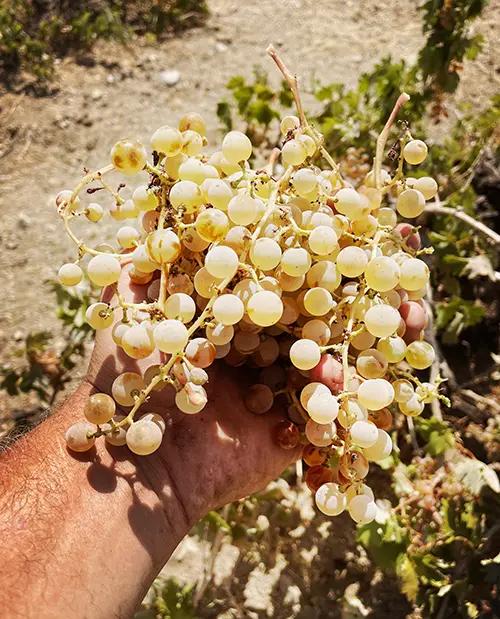
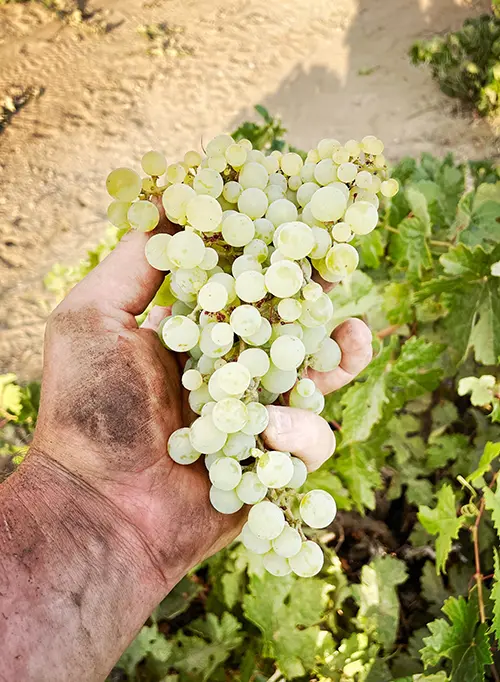
The vineyard is 30 acres. In both 2021 and 2022, only part of this extensive vineyard was pruned. The pruned section was glorious, with big, healthy plants. The unpruned section was tough, with small, wiry plants. The pruned section also seems to have access to underground water; it ripened about a week ahead of the struggling, unpruned, vines. We harvest from both sections, but do so separately, and ferment the wines separately. All of our 2022 wine is from the unpruned section— a cluster from this section is at right, for contrast with a cluster from the pruned section above.
In 2022, we made 4 barrels of wine; all of them pure juice fermentations, no skin contact. The fruit is already intense and tannic, without much juice in the tiny berries. Trying to get something more from the skins seemed excessive, gratuitous.
From the beginning, one barrel was distinct from the others. It's the first one we always show visitors. In a way, it could be a bad idea. It spoils them.
The last time that Kaeley and I showed it, we decided to bottle it separately. A Palomino Reserve. It reminds me not of other Palominos that could have made sherry. It is more expressive, with powerful minerality. It is perhaps not so distant from Eben Sadie's white wines, from old-vine desert vineyards in South Africa. But it is also like old-school Chablis, from a colder era. Stony and severe. You may order it here. I have put together a special 2 pack, $100 for two bottles. 50 of these are available.
After this bottling on Saturday, we will continue bottling these precocious wines, one after the other, on each successive waning moon. We expect to finish on January 20, 2023.
Instead of bombarding you with a single release of all the 2022 wines, I am going to release them gradually, writing you an email about each of them in turn as we bottle them. I look forward to this more leisurely way of introducing you to the wines. Should you wish to order all of them at once, you may still purchase futures now , or wait till the final release of all wines, around February 1.
A brief disquisition on the readiness of these wines
The whole time that we had been talking about beginning bottling in December, I thought: "This does not make any sense."
I remember 20 years ago, up in Napa, daring to bottle a wine at Christmas in the same year that we had harvested it. The wine was good, but it was more of a stunt, a dare, than an act of good judgment.
These wines have a different nature, a different history.
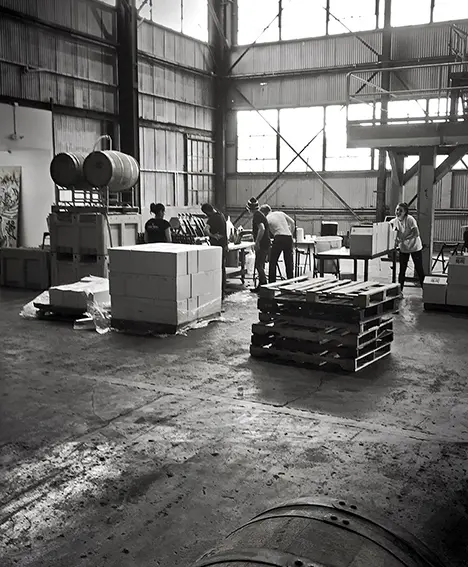
In March of 2020, I raced back to Los Angeles, my soul filled with terror: the severity of the pandemic was becoming clear— or perhaps a better way to put it: the pandemic was making everything uncertain. I was terrified that I would be cut off from our young wines, the first vintage of this very bold and utterly uncertain project. So I put together a rag-tag crew of volunteers, and on March 22, we bottled the wines of the 2019 harvest. They were saved and here we are. This is my point:
It never occurred to me for a minute that the wines were ready for bottling. It was just the imperative of doom. Yet the wines were good. The reds, in particular, were beautiful. The whites were somewhat savage and I remember writing all of you and telling you to sit on them. This was odd: how could the reds be ready before the whites? In the old Scholium days, I only bottled one red after as few as 9 months in barrel; all of the others spent more like 20 months. Yet here were these new wines of the south, grown in desert vineyards, beautiful after 5 months in barrel.
Next, it is January 2021. We are considering the wines of our second vintage, 2020. Raj and I are there, the importer Jose Pastor, our friend Alejandro, other colleagues. We taste everything. Once again, the reds are ready: beautiful, lithe. Some of the whites seem resistant; but others are ready, like the reds. I decide to schedule bottling for February 1; anything that is not ready will stay in barrel. It's a month earlier than the forced bottling of 2020. This time I make the decision in utter placidity, and the principle that is guiding my thinking: we bottle the wines when they are ready. We have the luxury to make the same decision in 2022 and begin bottling on March 2.
I am gradually learning: the wines that we are making down here are radically different from anything I made in the North. There is a two-pointed way to make this difference clear and precise:
- the desert wines are more changeable in barrel, and
- while in barrel, they mature much more quickly with a sensible forward momentum
These wines seem undeniably lunar. They present themselves differently from day to day, and in a way that is clearly cyclical. The differences can be aromatic, can be structural. The differences are usually not profound, but are still significant. Sometimes it is a matter of beauty or better and worse, sometimes just difference. In a certain sense, they seem lighter than the northern wines— but by this I mean the lightness that allows them to be carried by the tide or affected by air pressure, not simply lightness on the tongue. Some of them are quite dense, even burly— but they are still lunar.
But at the same time that the wines are showing these oscillations, they are not wandering: they are all clearly proceeding on a path forward to completion. You sense the vector of their development. As we taste, we feel the wines become more organized, more rounded, deeper. Baby fat is shed, angles, peaks and valleys, appear. You sense not just that the wine is complex or multifarious, but that it is elaborating itself, with a beginning, middle, and an end.
For this reason, it seems right to emphasize not just that the wines change a lot or even quickly, but that the change feels directed. In this sense, they are truly precocious, not just speedy: showing their real nature before you expect them to.
Let me draw this last, crucial, contrast with the northern wines: now, on the verge of Winter, the wines of the north are beginning to go dormant, like the plants around them. You don't expect any changes till Spring, when the wines will wake up again. Down here, our desert wines are still moving, still proceeding sensibly toward their ends. And so we prepare to bottle.
Now let me hazard an explanation for this phenomenon. We are so new to this, it is too early to speak in any way that is not tentative, exploratory. With that in mind, this is my starting point:
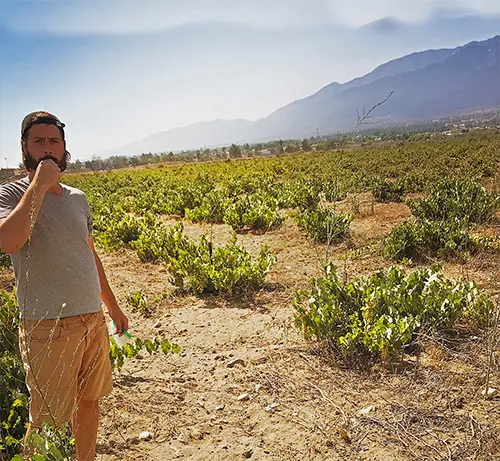
Our vines live in desert environments, in deep sand, with very little annual rainfall, and no irrigation. Some sections of vineyards seem to have access to underground, invisible, sources of water— but these are not underground streams, they are more like lenses of dampness. The winters are cold and bright; the Springs warm and very sunny; the Summers hot, with 14 hours of unobstructed sunlight. Everything happens quickly in the lives of the plants: we see budbreak about the same time as the north, but then the shoots grow much more quickly, flowers form, are fertilized, berries grow— we harvest a month ahead of the north not because of any single event, but because every step in the annual cycle of the vines happens more quickly down here. The lives of the desert vines are full, but compressed. The fruit was off the vine and leaves began dropping in Lopez Zinfandel before the first of August this year. The desert vines begin shutting down for the winter while Napa vines are still ripening fruit.
I don't know what effect this has on the fruit, but whatever the mechanism, whatever the channel of transmission, I think that the rapid natural clocks of vines are translated into the wines. I will turn to metaphor, not physiology or chemistry: the urgency of life in the desert is translated into a precocity in the wines. There is no time for anything to develop slowly, stolidly, down here.
And now I want to adduce one last factor, again without being able to specify a physiological pathway. Our youngest vines are at Lopez Zinfandel. They were 104 years old this year. There is some kind of fascinating collaboration between the urgency of desert life, and the placidity, the security, of the centenarian desert survivor. I think that this somehow keeps the wines serious and allows them to feel unhurried. I am not sure that the same thing would be true if our tools for plumbing the desert were young vines.
Thanks so much for your attention, as always.
Abe