The first Scholium wine offering in more than a year
4 wines from Northern California
I HAVE NEW SCHOLIUM WINES FOR YOU!
3 WINES FROM 2021 AND 1 MAGICAL BEAST FROM 2019
It is hard to take in, but I think that harvest is over. We picked all of Lone Wolf on Saturday, brought the fruit home to Los Angeles, and made red and white wines from the beautiful, fierce, grapes of this wild vineyard. Barring surprises, this will be the last harvest of the year for us. I will compose and send you a report separately, in a week or so.
For now, I want to let you know about something else exciting, something we have been holding in the wings. We made a very small amount of Scholium wine in 2021, and bottled the wines in the Spring of 2022, along with our LA wines. I wanted them to age longer before release, and now it is time to offer them to you. The release consists of three 2021 wines, and one very special wine from 2019 that has spent 3 years in barrel.
Here are two packages of the four wines:
- 3 BOTTLES EACH OF THE FOUR WINES
- 2 BOTTLES EACH OF THE FOUR WINES, PLUS 2019 PRINCE AND LSB!
You will find 3 other packages, including a selection of one bottle of each wine, here.
THE FIRST SCHOLIUM WINES SINCE 2019
In 2018, I began shifting a substantial portion of my time and energy to Los Angeles, to found this remarkable endeavor that we are now in the midst of. I made less Scholium wine in 2018 than in 2017, and less in 2019, our first year down here, than in 2018. And then in 2020, the pandemic hit and I decided to give the new project in Los Angeles my unwavering, and un-traveling, focus. I could not be more happy and proud of what we have accomplished since then; and I am so grateful for your support of it.
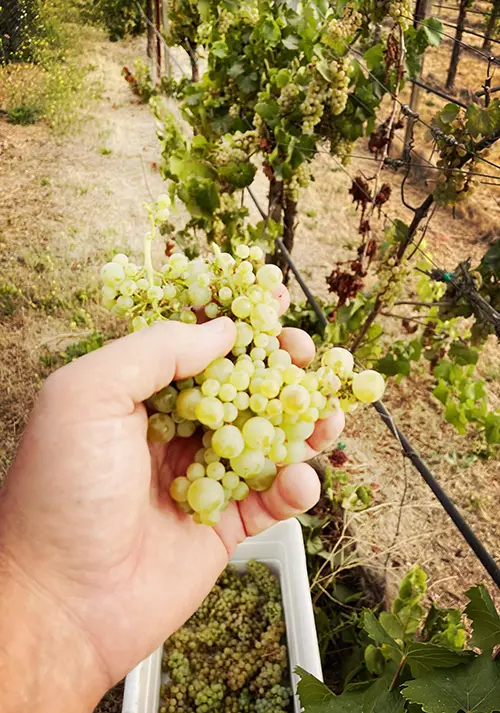
Last year, in 2021, I finally felt that I could begin traveling to the north again, to monitor vineyards and make plans for 2021 wines. I pruned Guman, for the first time since the winter of 2017-2018, with friends, and we harvested the fruit on August 28 2021. The Sylphs of 2021, the first vintage since 2018, anchors this release.
Here is an outline of the four wines in the release:
2021 Guman Vineyards The Sylphs
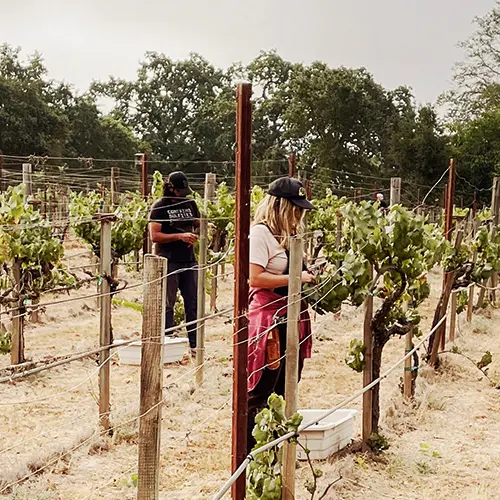
This dear vineyard is in difficult shape. John Guman decided to change the training method of the vines before harvest 2018, and it was hard on them. In 2019, there was a heat storm so fierce over Labor Day that we lost all of the fruit and did not make a wine. I did not have his permission to prune the vineyard in the winter of 2019, and then the pandemic hit, making the question nearly moot. I did not go to Napa in the Summer and Fall of 2020, and the fruit went un-harvested. But even worse, John's many responsibilities outside of the vineyard kept him from giving it his usual attention, and the drought took a terrible toll on it. By the time I returned to the vineyard in the Spring of 2021, many of the vines had died. We pruned the vineyard eagerly, returned for shoot and fruit thinning to make sure that it was not bearing too much fruit, and were overjoyed to harvest 800 pounds of fruit at the end of August.
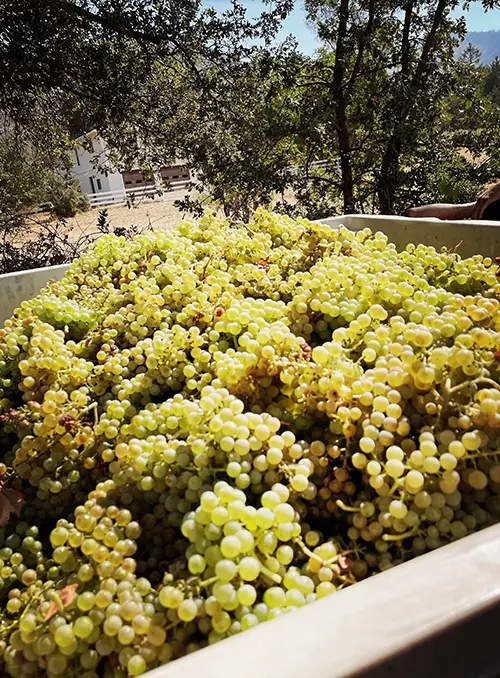
We brought the fruit back to Los Angeles, pressed it, and nearly filled three 16-gallon demi-johns. The wine seemed more fragile than the very robust Sylphs of the past, so, instead of the normal aging regime of 2-3 years in barrel, this wine spent 7 months in glass. We bottled it in March of this year. The wine is beautiful and shows the nobility of the vineyard. You could call it angelic. To be clear, we bottled a tiny amount: 40 gallons led to 16 cases of wine, 192 bottles. I am offering 115 of them for sale.
2021 Phelan Farm Les Coteaux
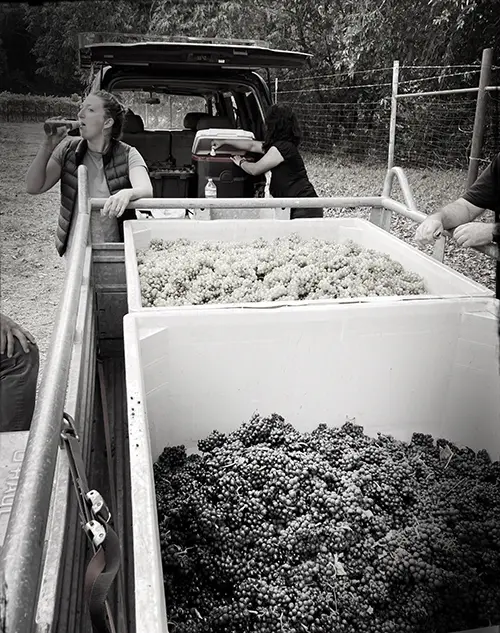
As you might know from following my travels on Instagram, I have spent a lot of time in the last three years in Raj Parr's Phelan Farm vineyards. It has been a wonderful adventure, with a lot of hard work and a tremendous amount of learning. Raj has taken over all of the farming on 12 acres of land in an isolated canyon in Cambria. The land is fertile, but the canyon, facing the Pacific, only a few miles away, is cold and the vines move slowly. Raj is engaging in a very innovative and idiosyncratic kind of farming: he is doing everything organically, and following some of the precepts of biodynamic farming, but without dogmatic adherence. He is combatting mildew without the use of sulfur, and concentrating his farming efforts on soil microbiology, and a vine health that flows from the vigor of the fungal microbiome in the soil. He does all of the work himself together with his dear partner, aided by only one employee, and a constantly shifting team of friends. The vineyards were originally planted only to Pinot Noir and Chardonnay, all on their own roots. Since he took over a five years ago, he has grafted much of the land over to 12 other varieties, mostly from the cool climates of the Jura and Savoie.
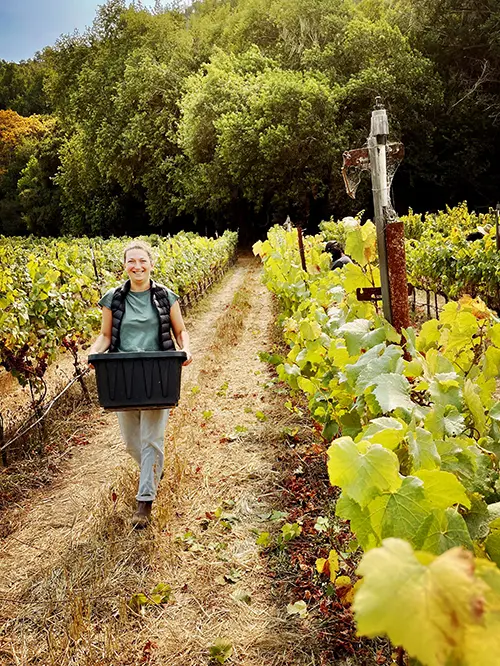
In the late Summer of 2021, he offered me a little fruit. I said that I knew exactly what I wanted, and asked for some Pinot Noir and a little more Chardonnay. We drove up at the end of September, and on the 25th, harvested about a ton of fruit. We drove it back to Los Angeles the next day, stomped it, and pressed both varieties together to make a single wine.
The wine is modeled on the cool-climate Côteaux Champenois wines of another, cooler, era. LIke them, it is made from red and white grapes together, without skin-contact; tightly focused, severe to the point of being challenging, complex and deep, but not rich. I think that we have hit our mark. There are only 28 cases of this wine.
2021 Stolo Vineyards Nebbia
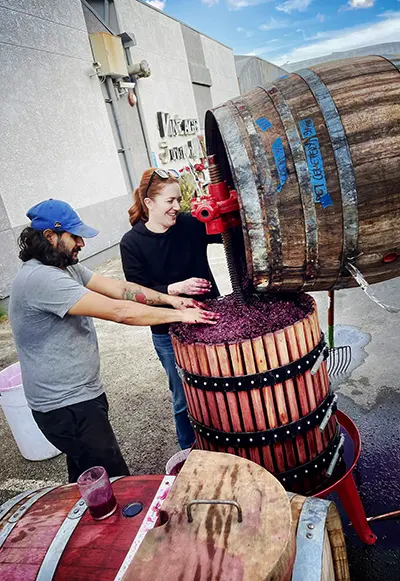
Raj works closely with another winery in Cambria, where he makes his own wine and directs their winemaking, the Stolo Vineyards. Stolo has some very noble old-vine Syrah on a hillside above the winery. In 2021, Raj offered me and some of his other friends some of the Syrah, with the aim of seeing what a few us could do with the this fruit that Raj thought was very promising— but virtually unknown.
Fall in Cambria is beautifully cool and misty— even wintry. We really had no idea when the Syrah would be ripe. And then, I was delighted to receive half a ton on October 30. It had been harvested the day before, right before the rains came to Cambria. The fruit was darkly colored purple, nearly black, intense in flavor, and still with very high acidity in spite of the long ripening. We foot-stomped it as usual and then allowed the fermentation and maceration to proceed without any intervention— for 40 days. We drained and pressed the wine and sent it to barrel on a sunny day in December.
The wine has a kind of sharp intensity appropriate to the grapes' long maturation on a steep hillside. It is deep, powerful, and complex— but still lithe and vibrant. In some ways, it resembles other noble, hillside, Syrahs, but it has none of the warm richness of the Syrahs that I made in another era at Scholium. Not just cool-climate Syrah, but wintry. We made 28 cases of this wine.
2019 Tenbrink Vineyards The House of Asterion
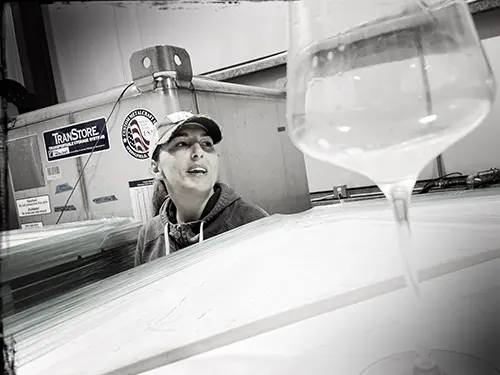
My life is focused on Southern California now and our desert vineyards down here. The vineyards of the North, with their abundant oaks, sycamores, and eucayptus trees, and grass in the rows— they feel foreign to me now. When I am up there, I feel like such a visitor from another land. But nowhere do I feel more warmly at home than at the Tenbrinks' winery in Suisun Valley. I helped to create the winery, and made wine there for a decade. But now most of what I feel is not a nostalgia for another time, but a deep collegiality with the Tenbrinks' daughter Lisa. She runs the winery now and makes wine there with her husband and the rest of the family. Her label is Tolenas, and her mounting successes are worth following. She represents the future of this winery and is guiding it, and in some ways is guiding her whole growing region, into another era.
I had a wonderful visit with her this Spring, in which she showed me many of her wines in barrel, some dating back to 2019. Some were conundrums to her— and she did not know what to do with them. She had given up hope and about to consign them to the drain, as she prepared to make wine for the 2022 harvest.
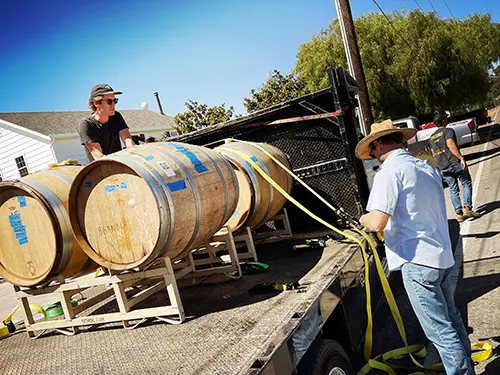
I identified one barrel that I thought was especially promising, and reminiscent of the Babylon wines I had made from the same fruit for many years. "Don't throw it away. Save it for me. I will find a home for it." I returned last week, when we went North to harvest the 2022 Sylphs. And now the barrel rests in our cellar in Los Angeles, where it will be blended with some remarkable 2020 Grenache from the now-extirpated Pirate vineyard in Cucamonga.
I too did not know what to do with this wine, made from the first fruit that we had harvested in the brutal heat of 2020. We loved the wild, abandoned, vineyard, and we really respected our work in it, having gathered the fruit from among thorns and thistles. The wine was fascinating, and we loved it; but it was also not delicious, or even pleasant. Too special to throw away, but not beautiful enough to bottle. Until now.
This wine, that somehow brings together the well-tended vineyards of the North and the abandoned fields of the South, is named for the Minotaur of Crete, the offspring of very different beings: a woman and a bull. The story of the Minotaur was in my mind because of Jorge Luis Borges, whom I reflect on often. I am working on a paper on Dante in some way motivated by him, and the name of the wines that I have made from the same fruit, "Babylon," is also due to him.
This is all very interesting, you might say, but what does the wine taste like? It tastes like Dante and Borges, of course, which means that it it is rich and dense and complex. It is like Amarone in the world of wine, and like Pan Forte in the world of food. It is somehow very Italian, has bitterness, and suggests sweetness, but is utterly dry. It is in this way the antithesis of the wiry wines we are making in the South, and is a gesture to my rich, ripe, Scholium wines of another time and place. There are 24 cases of this. Let me know if you would like a magnum. We made some. It seems appropriate for this wine.
Now that you have read this far, let me remind you how you can get the wines. I have put together 5 different selections of them; spurred by the release of this wine from 2019, two of the selections include two other wines from the 2019 vintage: the 2019 Prince in his Caves, and the 2019 La Severità di Bruto. You may find all of these here.
All of the sales will be limited to 115 bottles of each wine in total. Forty 3-bottle orders will exhaust the supply.
We will begin shipping the wines on September 23, as long as the heat subsides somewhat. As soon as it does, we will begin shipping the many orders have been on hold for days and weeks.
TASTINGS
I will hold tastings of these wines at the following times and places. All of the tastings will be limited to 12 guests, and preference will be given to those who purchased the wines.
- NEW YORK CITY on 9/17
- LOS ANGELES on 9/24
- CARPINTERIA on 10/15
I will send out a separate email about these tastings, with more details on time and place. Lastly, because the Tenbrinks are on my mind, I wanted to give you a headsup about:
OLIVE OIL
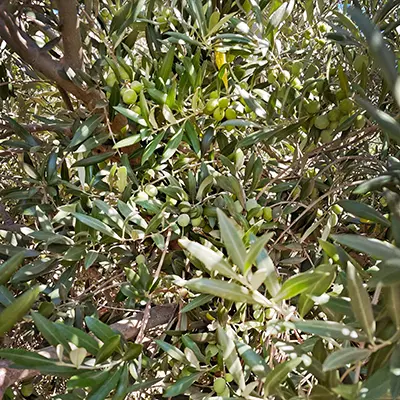
Just as I was driving up to Napa, Linda Tenbrink let me that they expect their best olive harvest ever— by far. I stopped to see the trees; they are across the road from the winery. And I have never seen them laden like this. The biggest reason for this is the maturity of the trees, and the consequent depth and extent of their roots. Last year, there were 4 harvests; this year, Linda is projecting 6. The first one will be October 10; they will continue every Monday until all of the olives are picked. The pressing will be on the same day as the harvest; just like last year, each harvest will have its own immediate pressing. So we will press the first pick on the 10th, drive the oil to LA on the 11th, bottle on the 12th, and ship on the 13th. You will be able to taste 2022 olive oil one week after the fruit was harvested.
We will NOT repeat this madness with every harvest. Instead, we will ask Linda to hang on to the oil until the 4th harvest, and then we will do something similar: pick up harvests 2, 3, and 4; drive them down to LA, bottle them (separately, of course!), and then begin shipping on November 3. If there are indeed 6 harvests, we will do this again two weeks later. I am warning you now, because the oil always sells out immediately. We will make an offering for the first pick a few days in advance.
Thanks so much for reading so far. Now that harvest is over, I hope to see you soon.
Abe