Raj Parr's Phelan Farm-- an introduction from the inside
They have just released their first wines
RAJ PARR AND PHELAN FARM
One of the most amazing grape-growing projects in the country
I have a special mission today. I want to introduce you to what my friend Raj has been working on with a kind of blinding dedication since 2019. You have a sense from these missives, and perhaps from the chronicles of Instagram too, how closely we have been working together during this time. But I have never really made clear what is going on up in Cambria, what it means to me, and what it could mean to you.
The occasion for all of this is the first release of the wines that Raj has made from this land; you will find a link to the wines at the end of this little narrative.
I am going to try to convey the essence of Phelan Farm to you in five vignettes:
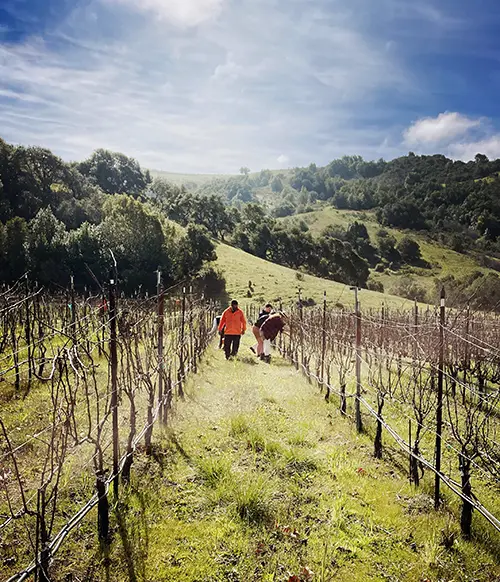
About 10 years ago, Raj was approached by a grower way up the coast, offering him Pinot Noir and Chardonnay for Sandhi. The grower was Greg Phelan. He was managing a ranch that has been in the family since 1851. They had planted 4 blocks of vines on their own roots in a cool, misty, valley bordering Heart Castle, and less than a mile from the Pacific. Raj went up and looked at it and saw something that went way beyond blending into Sandhi.
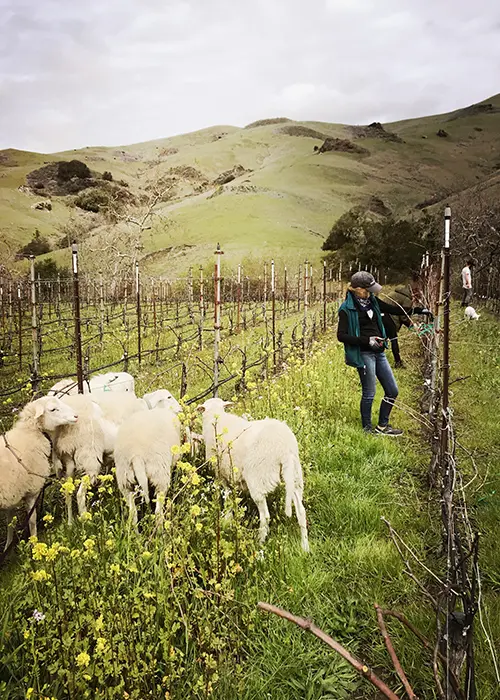
The vines are on their own roots because the valley is isolated and no grapes have even been grown nearby. The isolated valley is magical, surrounded by soaring hillsides with volcanic outcroppings. The valley is not only cool, it is the coldest vineyard that I know of anywhere in California.
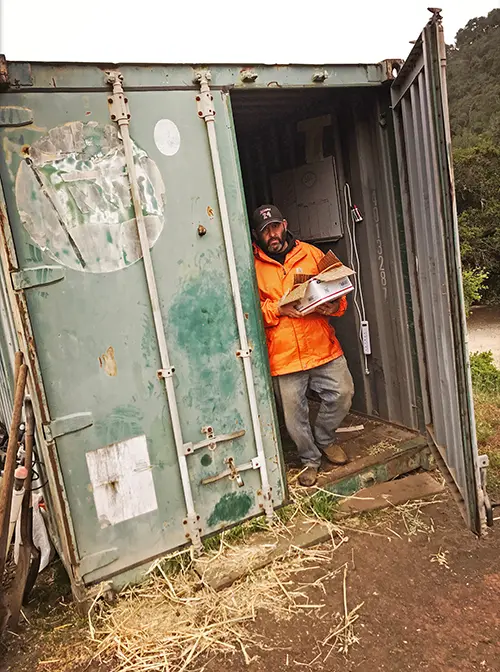
Here is the most important thing that I have to tell you. When Raj took on the vineyard, he took on all of its farming, in absolutely every respect. There is no vineyard management company. There is Raj and his inseparable lieutenant, Abad.
And as remarkable as it may be that this former sommelier now spends his days with his hands literally in the dirt, or wrapped around the wheel of a tractor, or stirring a compost tea— even the fact that he does this real work himself is not what is most important. Raj is following no rules, or handbooks, or consultant's directions. He is teaching himself about grape growing in the vineyard, every day, from the ground up, from the first pruning cut. In this way, he is engaged in the radical project of re-thinking the daily work of grape-growing from its very foundations.
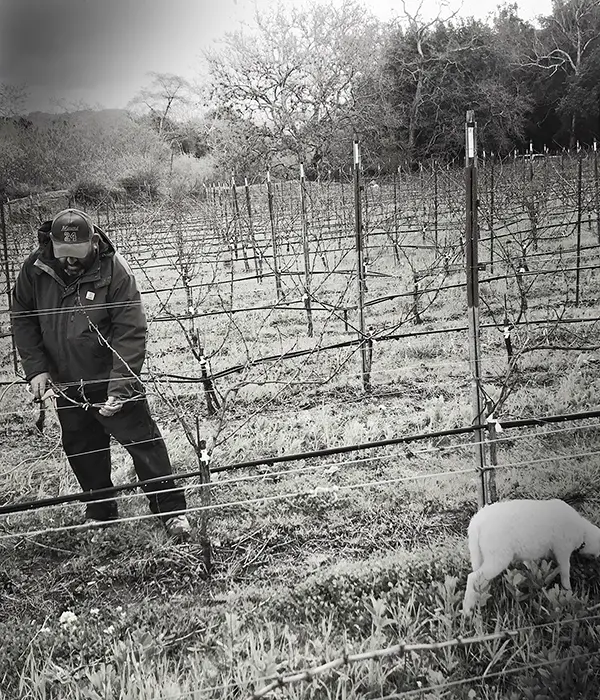
It is easy now to sign on to the principles of biodynamics, to hire a consultant, or even an experienced organic farmer. Raj has done none of these things. Instead, he goes into the vineyard every day, at every season, and asks: what is the most holistic way to do this? what is the least intrusive? how do we work with every living thing in the vineyard, bacterium to fungus to thistle to red-tailed hawk? How do we encourage, make stronger? We decided on this principle a year ago for managing pests at Phelan Farm: The aim would never be eradication, only collaboration.
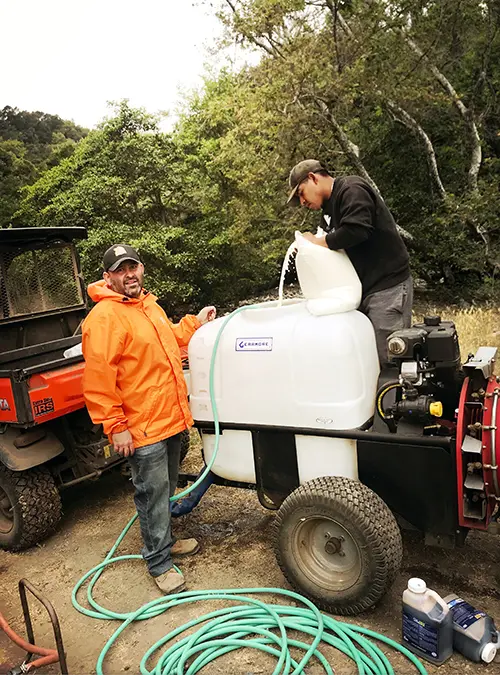
Look at the second photo above. They are filling a plastic tank. That tank is for spraying, for spraying the vines, most often to prevent mildew. What are they putting into the tank? Not sulfur, or some even more gentle poison still allowed by the rules of organic certification. That's Milk going into the tank. He learned about this from a friend in Burgundy and believed in it and was determined to try it. Not "try" in the sense of make an experiment: but to launch in, with no previous experience, and the whole harvest at risk, and to try to make this organic farming fairy tale work. And he did. Raj sprayed no sulfur in 2021 and had no more mildew than any careful, conventionally farmed, vineyard.
So yes, Phelan is farmed organically; but that is the least of it. It is farmed boldly and courageously, with everything in jeopardy in a daily pursuit of beauty.
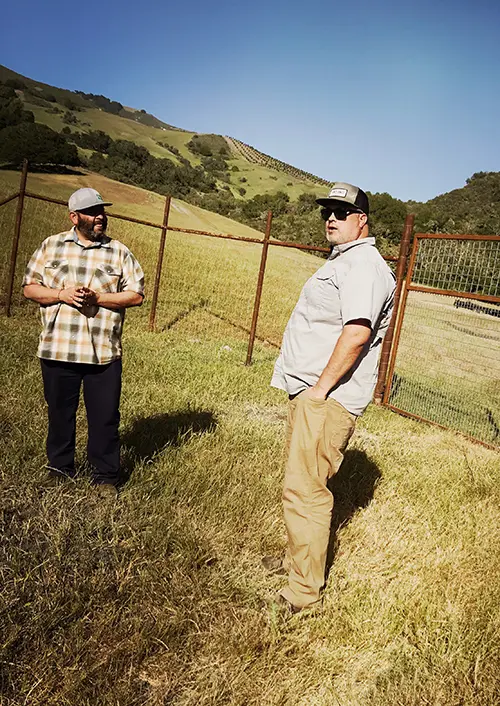
I want to point out one more, very special, thing going on at Phelan Farm. There is so much thinking going on there, so much inquiry, so much attention paid to small things— and so much looking outward, to the work of others. In some way, it is like a very collegial research institute, with constant visitors— students and faculty alike. And this collaboration, in the vineyard and at the dinner table, is bringing the cultures of Napa, Paso, and Cucamonga, California and Oregon (and soon Europe and the US) closer together. The wines of San Luis Obispo county are often overlooked and have a certain reputation for conservative predictability: Raj's work in Cambria is helping to bring a new momentum to the county, and to fertilize the already sprouting seeds of new thinking.
One the two important things that wine can accomplish is to capture and translate a place. This power is amazing and an object of reverent gratitude for me.
Think about this: Phelan Farm, the harvest of 2021, nourished by kelp-compost teas, protected from mildew by milk, You can take the fruit of this harvest, this very specific harvest from this very special place, ferment it, bottle it, and ship it around the world. And then you have captured something that is essentially from Phelan and nowhere else. And shared it. The wines can bring Phelan Farm to you.
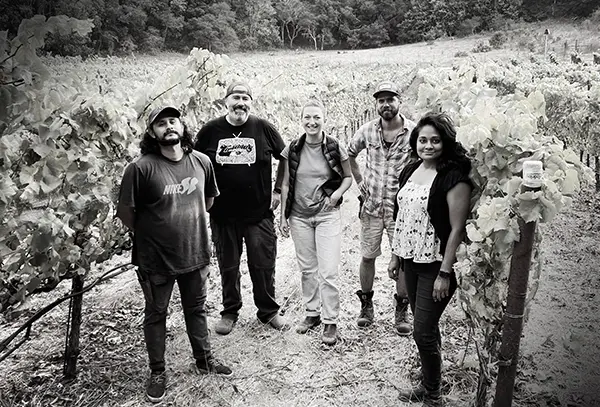
Phelan Farm is like a lens, focusing joyous energy and the sharpest thinking on the project of growing grapes. The bottled wines are the last lens, the final bringing into focus.
Go here and you will learn much more of what Raj is up to; you will learn especially how he has grafted over most of the Chardonnay and Pinot to grape varieties from Jura and the Savoie; how he is making apple, pear, and grape co-fermentations; and you will see some traces of our work together in the anti-Cambria of Cucamonga.
I am so grateful, as always, for your attention. I hope I have conveyed some of what is magical about this place.
Abe