Heralding the release of the 2021 LARWCO wines today!
Lone Wolf, Heart of Sand, Lopez Palomino-- coming at you
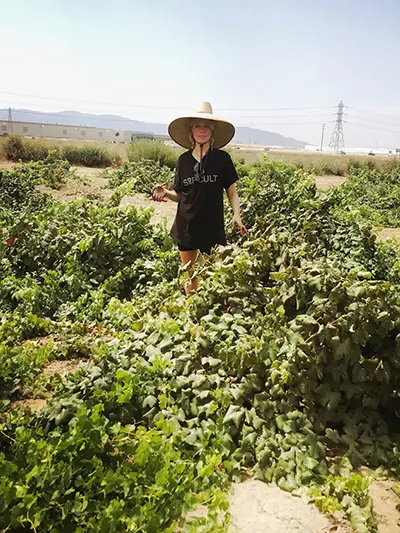
THE WINES OF THE 2021 LOS ANGELES HARVEST
WE RELEASE THE WINES TODAY!
Here is the most important thing to tell you:
The wines taste different this year.
When we go from barrel to barrel tasting the wines, from glass demi-john to glass demi-john, there is a luminosity and lightness— as if some spirit previously imprisoned were now freed.
The wines of 2020 were properly wines of their times. Those wines were marked by the dread that suffused Los Angeles, and the whole country, in 2020— in part because we made them in hopeful resistance to it. And so too these wines, of the 2021 vintage, are not only wines of place, but wines of their time. None of us will forget the naive joy of the late Summer and early Fall of 2021. That joy is caught, transparently and without naïveté, in these wines— wines of joy and triumph.
We made thirteen wines in 2021 from six different vineyards in Southern California— each of them planted before Prohibition. One of these vineyards is utterly new to us; and we returned to two important vineyards that we have not worked with since 2019, and got access to new sections of these vineyards. The result of all of these novelties is that four of the 13 wines are utterly new, and a few others subtilely different.
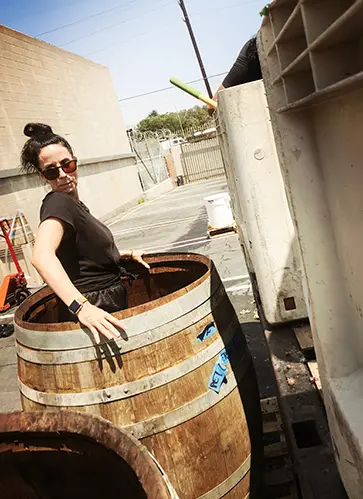
One note on quantities: the drought has taken its toll on all of our vineyards. We made even less wine this year than last; we had to buy 16 glass demi-johns, each with the capacity of about a quarter of a barrel— because we made so many wines that could not even fill a single barrel. Our largest production wine this year is 992 bottles; the smallest two are 150. We still don't have a pump. This method and those quantities are congruent to each other.
Here are the 6 vineyards of the Los Angeles Wine Company, with brief notes on the wines that we made from them. I list them in the order that we picked them:
- LOPEZ PALOMINO
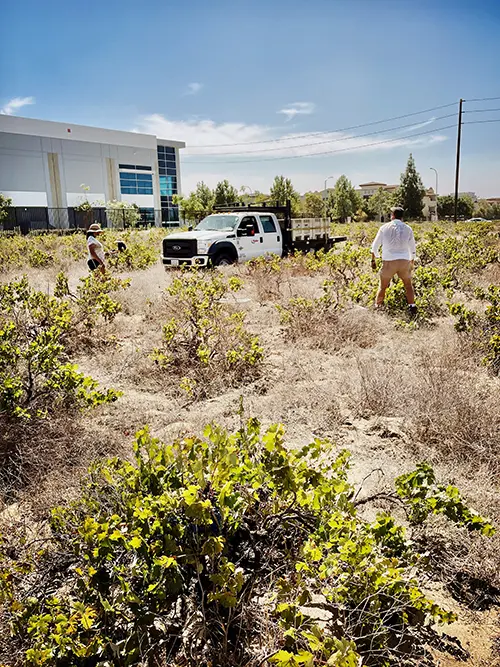
I have told you a little about this vineyard, especially last Summer when we were just coming to know it. It is a vineyard that Christina and Raj and I had heard about from our first explorations in the Los Angeles Basin, but we could never find it. It was remarkable because it was supposed to be planted to Palomino, a white grape. When you heard of surviving old vine vineyards in California, you heard of Zinfandel, Mission, a tiny bit of Grenache. No one talked about white fruit.
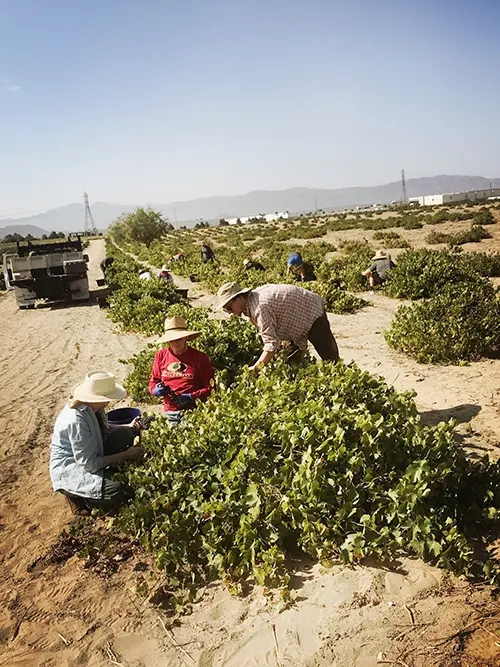
Then, at the end of harvest 2020, Fidel Guerra, whom we knew from another vineyard, brought us here. A huge vineyard, full of white grapes. It was too late to harvest them in 2020, but we could not wait to return in 2021 and begin making plans. It was kind of unbelievable: a pristine 30-acre vineyard of own-rooted Palomino, planted in 1912 on its own roots, 46 miles east of Los Angeles. And no one was taking the fruit.
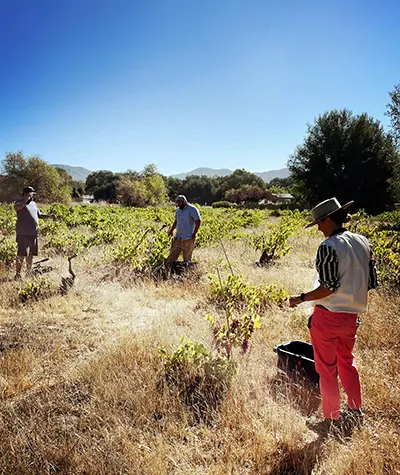
Raj and I secured the vineyard from Fidel in the Spring of 2021— and, in a happy gesture that will change the reputation of Cucamonga wines, began telling our friends about the vineyard. By harvest, five of us would be making wine from it, including Raj, Scar of the Sea, and Herrmann-York.
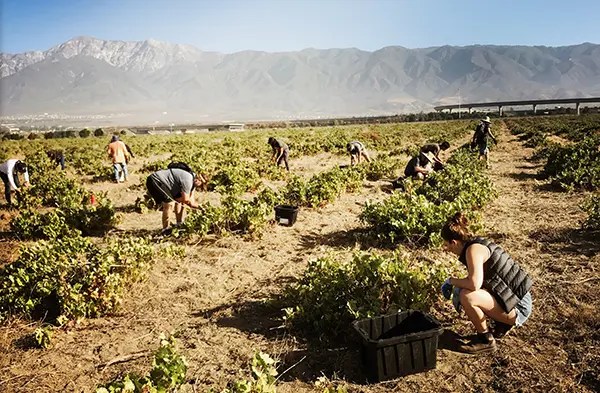
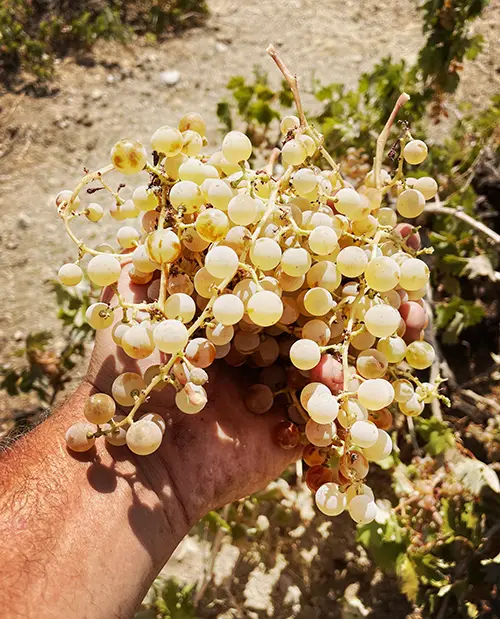
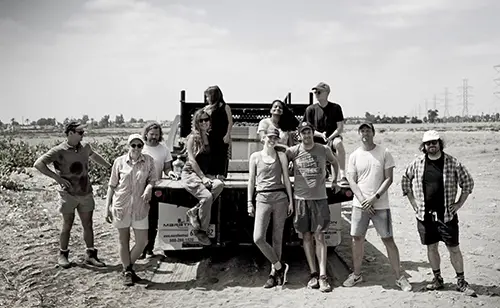
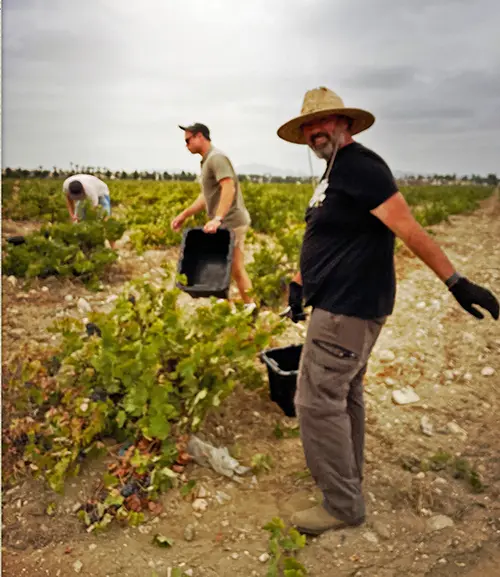
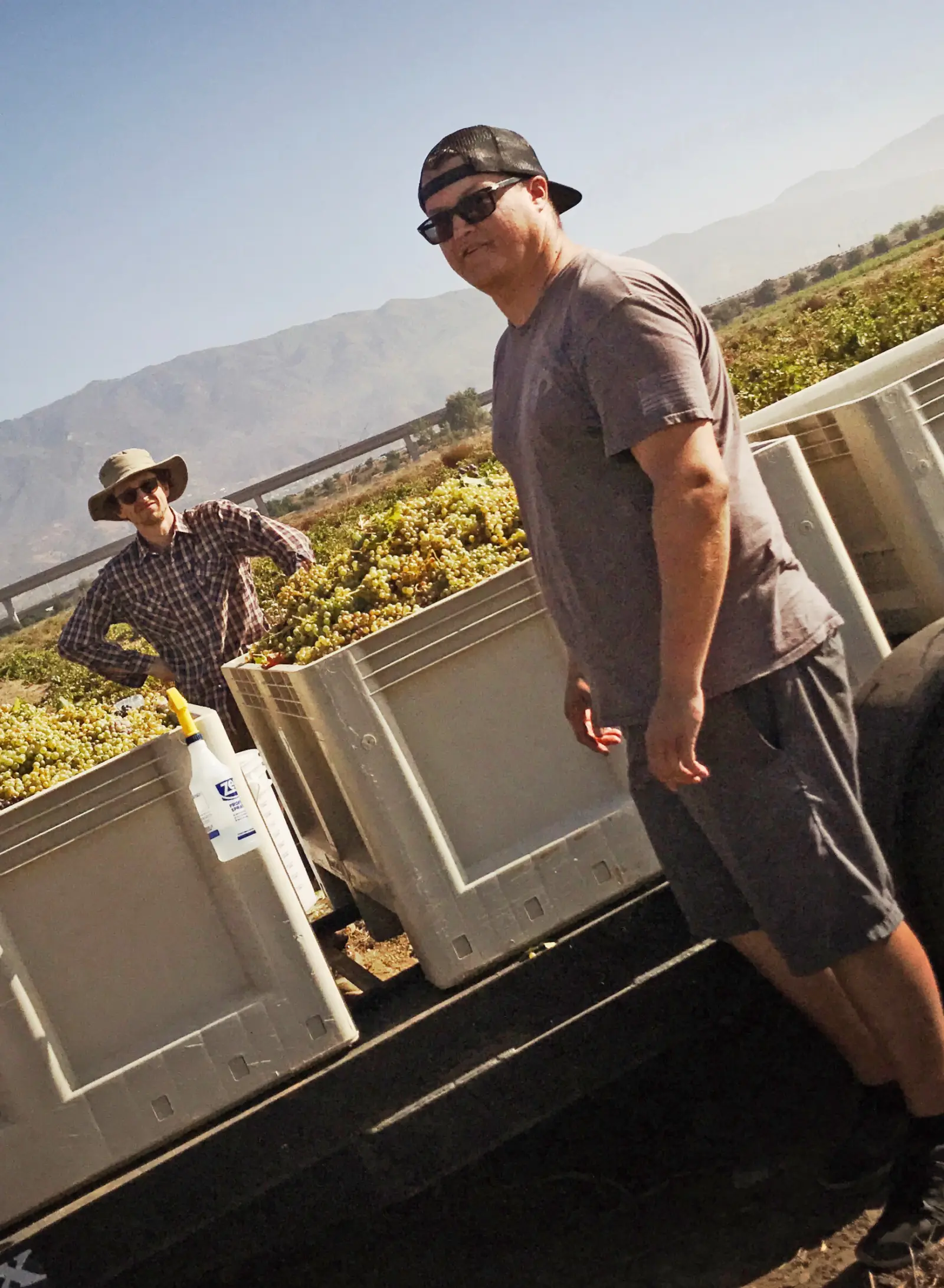
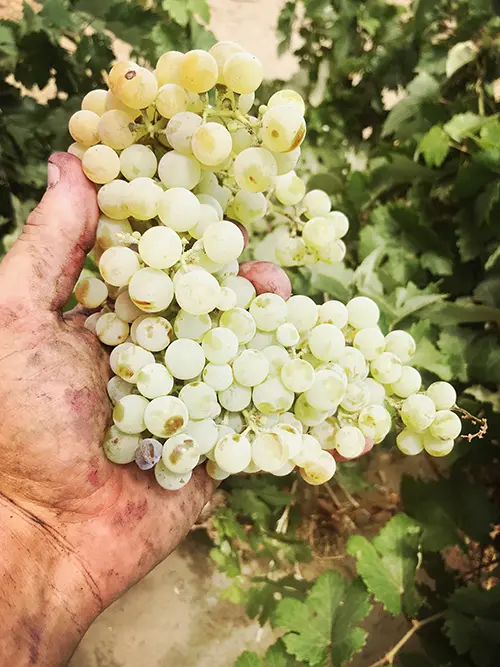
We began picking the Palomino on August 2d. The fruit looked wonderful: small berries of bright yellow fruit with a little green. Raj and Mikey were determined to capture the fruit with peak acidity; the rest of us wanted a little more ripeness. Fidel had pruned about 5 of the 30 acres in the vineyard; the pruned vines were magnificent, and because they bore a decent amount of fruit, were ripening more slowly. We picked those first for Raj and Mikey. The rest of us came back on August 7, and with a large crew of eager friends and family, harvested fruit from the unpruned vines. Here, the berries were even smaller, more golden, and more tannic. But still with vivid acidity!
We brought the fruit to our friend Adam's winery, foot stomped it, and pressed it in his press, somewhat larger than our own. We made a beautiful wine, precise, fresh, incisive. It shows some of the oxygen-rich quality typical of Palomino, but is more marked by the acidity and power of the old vines.
On harvest day, we met a man who had worked in the vineyard since he was a kid. He had helped plant new vines— in the 1960s! He referred to the fruit as "Golden Chasselas," not Palomino— the term common in California in the 19th century, when it was first being planted. In honor of him, we too call our wine Golden Chasselas.
There is something so special about this wine because of its historical place: it is a wine of rebirth, for a remarkable vineyard, in a remarkable region. It is wonderful to be part of this rebirth. - MAGLITE
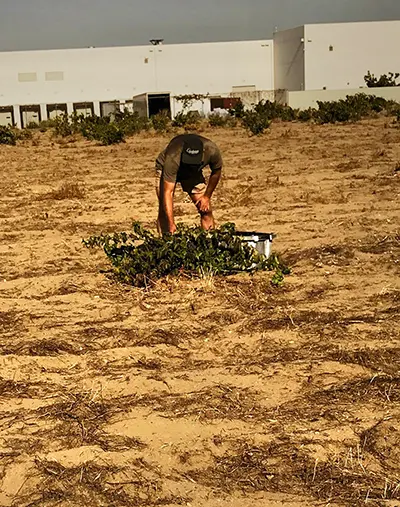
Maglite is a magically preserved 15-acre vineyard in the middle of a commercial development in Rancho Cucamonga, a little bit south and west of Lopez. Its soil is incredibly deep, fine, loose, sand. It was planted to Grenache Noir, Alicante Bouschet, Mission, Muscat of Alexandria, Grenache Gris, and Rose of Peru in about 1905— though less than half of the original vines survive. No one but us has made a single vineyard wine from it, perhaps ever. It is now surrounded by undistinguished modern buildings. We call it "Maglite" for the corporate headquarters facing its northern edge.
We made two wines from the vineyard this year: Heart of Sand, and Heart of Sand Blanc. The first is a red. We made it also in 2019, from Grenache Noir and a little Rose of Peru, and it was my favorite wine of the vintage: light and intense at the same time, and beautifully fragrant. This year, we picked only Grenache Noir for the red, and made yet another light but intense red wine, floral and serious at once.
We were overwhelmed by harvesting in 100-degree heat in 2020 and walked away from the white fruit; it went unharvested that year. In this lovely, cool, year, the white fruit was actually ripening more slowly than the Grenache, so we harvested that first, and came back a few days later for the white fruit.
The white is the revelation of the vintage. We foot-stomped it, and then pressed it quickly and gently at our friend Adam's winery down the street from us. We fermented 2/3 of it in a big, beautiful amphora of his, and the rest in a neutral wooden barrel.
The result is a beautifully aromatic wine, floral, soft and charming. It is another shocking wine from these hot sands: there is nothing baked or raisiny about it; only fresh and lively. - LOPEZ ZIN
The Palomino is a nearly forgotten corner of this more than 200-acre vineyard. Almost all of the rest is Zinfandel (Domenic Galleano says that there is also an acre of Grenache at the northern edge), planted in 1918 to provide fruit for home winemakers back east— train tracks run through the middle of the vineyard. Dom controls all of this and generously provided us with some Zinfandel again this year. We made two picks: one right after the Palomino to capture red fruit at peak ripeness, with good acidity, and before too much sugar had accumulated. We stomped this and fermented it for about two weeks, without ever pushing the clusters into the wine, or pumping the wine over them. This allowed us to make a wine that it is very light for ripe zinfandel— but the nature of the fruit, and its pigments, are so intense that even though the wine is light in body, it is nearly black in color. Intense and piercing: it is red wine of the highest order, more like Burgundy than Zins that you know. We call this simply "Lopez Red."
To make the white, we returned to the neighborhood of the Lopez Palomino. Directly across the street from it is a block of Zin that, for some reason, was ripening more slowly than the rest of the vineyard. The acidity was still high, sugars low. We picked it on a Saturday, bright it back to the winery, stomped and pressed it as quickly as possible. We fermented the juice in a single neutral barrel. The wine is a rosé of medium body and color; pungent and intense— you could almost say meaty. Not a light wine; serious, meant for aging. As we did in 2019, we are simply calling this "Lopez Rosé." - GALLEANO HOME
The Galleano Home vineyard, surrounding the winery, was planted in the 1920s. Much, but not all, of the original vineyards survive. The remaining vines are all varieties suited to producing California Port and Sherry: mostly Alicante Bousquet among the reds; Mission and Palomino among the whites. There is also a crazy, obscure red grape, called "Salvador," bred in Texas in the 19th century specifically for Port production. The berries are darkly colored, with black flesh, not just skins; tannic; and very high in acid even at full ripeness. Dom began to ignore the Salvador few years ago because it is hard to pick and hard to prune— it has a sprawling growth pattern and you have to root around to find the clusters. In 2019, he allowed us to harvest the fruit, and it was one of the triumphs of the harvest for us.
This year, he allowed us to harvest the Salvador again; but, because of the drought, there was almost no fruit, and he sent us into some of his Alicante vines to harvest enough fruit to make a barrel of wine. We made Galleano Home Red from a cofermentation of the Salvador and Alicante. It is the darkest and most pungent wine of the vintage; witchy and feral.
On the way to the Alicante, I saw some huge vines weighed down with white fruit. "Dom, what is that?" Palomino. More Palomino. Dom allowed us to harvest about a ton and so we made another Cucamonga Palomino: Galleano Home White. The Galleano Palomino was much more big-berried than Lopez, bright green, not golden. More charming and less tannic. According to Dom, it was also simply "better." In order to make the wine, we divided the fruit in half; turned half into juice, and foot-stomped and then skin-fermented the other half. At the end of harvest, we combined the two fermentations to allow them to age as a single entity.
We made one more wine from the Palomino: once again, we made a Disco Essence, a cofermented white wine. This year, the wine is made from about one half Maglite Blanc, and one half Galleano Palomino. It is much more fragrant than last year's; less feral, more seductive. - LONE WOLF
This is our star, the irreplaceable jewel among all of the vineyards we work with. I have written so much about this vineyard that I will concentrate here on the 2021 wine. I will be writing more about the vineyard in a couple of weeks; we go down to prune on February 18.
This year, because of the drought, we harvested only a quarter of the fruit that we did in 2020. The healthy vines in the vineyard bore many fewer clusters this year, and all clusters were smaller on the average. A few of weaker vines in the center of the vineyard died; seeing them was heartbreaking. And then, on top of all of this, in the days before harvest, we suffered hundreds of pounds of losses to coyotes! They too were driven into the vineyard by the drought; in previous, wetter, years, there was more for the coyotes to eat and they did not need to turn to grapes.
We harvested all three sections separately in 2021 as we did in 2020, and intended to make 3 wines. But there was just not enough fruit for three healthy fermentations. As we did in 2019, we will make only one red wine this year, from red fruit harvested from the whole vineyard. (For those of you who bought futures, expecting 3 different Lone Wolf reds, you will still get 12 bottles of wine, but only one kind of Lone Wolf.) We call the one red wine this year simply "Lone Wolf."
We found the white wine that we made from Lone Wolf in 2020 so amazing that from now on, I plan to make a white every year. This year, in 2021, we planned a special harvest for the white: we came down a week early and picked the yellow and pink clusters off every vine, leaving all of the red and purple fruit behind. There was less coyote damage at this point, and we got a whole ton of fruit (sadly, during the next week, the coyotes ate a lot of the red fruit that we left behind). We foot-stomped this, pressed it quickly and gently, and fermented it in two neutral oak barrels. The wine is intense, high in acid, somewhat tannic, and very exotic in its aromas: savory and herbal, and floral in a very restrained way. This is "Lone Wolf Blanc." - GATEWAY
Gateway is a nearly abandoned vineyard, also in Rancho Cucamonga, very close to Maglite. It too was part of the original Secondo Guasti plantings; it too has incredibly deep, fine, sandy, soil. There are some local zealots who have been working with the vineyard while its owners await the permits necessary to turn it into a hotel. It is planted to mostly Zinfandel in one section and Mission and Rose of Peru and Zin in another. The vineyard had not been pruned for a few years, but was still strong when we picked it in 2020. Even though they let us pick it, the developers will not let us prune the vineyard or farm it in any way, and so this year, when the drought was very hard on it, it seems like many of the plants have died. We struggled to find half a ton of fruit on a hot day at the end of harvest. The wine is beautiful and piercing; another intense zinfandel, inky black, with only freshness and no sense of anything sweet or jammy. It is such a noble wine, and so tragic that it might be the last vintage. As we did in 2020, we call the wine "Phulax," for the Ancient Greek word for a guardian— for instance, of a gateway.
These are the six vineyards of the Los Angeles River Wine Company. You may purchase the wines here.
I have pre-sold much of the wine to you already: many of you have bought futures, as you did last year. There is only a small amount of many of the wines left after this. I am offering the remaining bottles first in the form of two packages:
- THE TWELVE GEMS with one bottle of every wine that we made this year. I have 50 of these to offer
- THE CORE with one bottle of Lone Wolf Blanc and the five other wines that I feel show the core of our work. There are 62 of these.
After these are all sold, I will offer individual bottles of anything that remains. Some of the smaller bottlings will only be available in the packages.
We will begin assembling the packages and shipping them on March 15. All of the wines should go out by April 1.
It is unspeakably exciting.
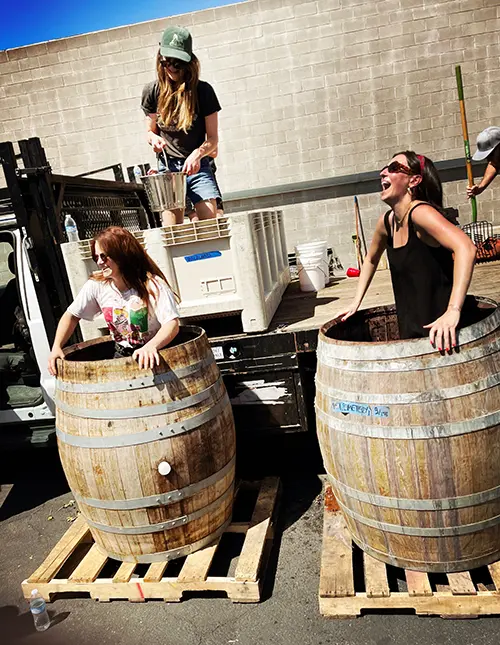
Let me make one more overall comment on the quality of the wines. Last year, 2020, was incredibly difficult, and not just because of the pandemic. The harvest heatwave was truly a threat to us, not just a challenge. It made harvesting fruit a heroic activity— but even more, we worked last year in the most primitive conditions, and fermented wines out of doors in 100 degree heat. In a certain sense, we should not have been able to make any wine last year at all.
This year, we are still working in a very simple way, without pumps and without refrigeration. And we love it. But this year, there was no heatwave, and we could ferment in shade and relative cool. The wines of 2021 are simply better: more beautiful, less rough. That is all I will say for now. In another week or so, I will offer you a series of tastings: in Los Angeles, Carpinteria, Napa, New York. The wines might be sold out by then, but you will still get to taste them.
Thank you so, so, much for your attention, and your support. This is a wonderful project and it is so deeply gratifying to be able to share it with you.
Abe
PS: The thirteenth wine is not in any of the packages, though some of you purchased futures for it: it is the second edition of our flor-affected wine, "Pecorino Flor." In a certain sense, it is not a wine of 2021, or hardly so: it consists mostly of 2019 and 2021 wines in solera. We added a small amount of 2021 wine in the Fall, less than 25% of the whole. You may buy it here.