A report on the La Cabaña Tasting: 23 Los Angeles wines from 4 wineries
In which we witness the towering excellence of old vines in Southern California
A HISTORIC TASTING
The 2021 Wines of the Los Angeles Basin:
4 wineries,
23 wines.
Only a few years ago, no one had heard of the wines of the Los Angeles basin; almost no one knew about the ancient vineyards still growing there, the scattered remains of a vast and deep culture rooted in the city of Los Angeles.
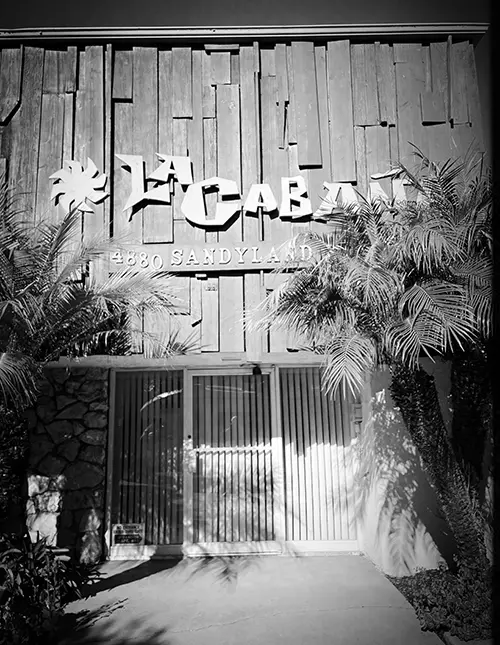
On Sunday January 9th, thirteen of us gathered in La Cabaña, a 1970s-era clubhouse on the beach in Carpinteria, to taste the wines that we each made from 5 ancient Los Angeles vineyards during the 2021 harvest. And when I say "we," I don't just mean the usual pirate crew of friends and followers who make our wines.
This year, our third year making wine in Los Angeles, we were just one element of a wonderful alliance of winemakers now devoted to working with and preserving these ancient vineyards. This alliance has grown up organically in the time that we have been working here. It began with my friendship and collaboration with Raj Parr, but since then, then it has extended to another winery, one of whose founders I met in the parking lot of a pizza parlor dear to us in Fontana, and to a member of my mailing list, who is gradually giving up his day job to make his own wine. Even as I write, I feel this alliance growing further.
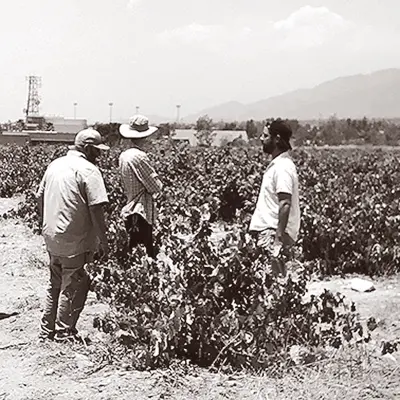
Four distinct wineries showed their wines at the tasting: Raj Parr, who will release his Southern California wines as part of his Phelan Farm project; Herrmann York Wines; Harvey Walsh Wines; and our Los Angeles Wine Company. (More on the individual wineries below.) A fifth friend and colleague, Mikey Giugni of the Scar of the Sea, had long planned a vacation and could not attend. Lily-Elaine Hawk Wakawaka, a wonderful and severe wine writer who is now the US Editor for JancisRobinson.com, was interested enough in what we were doing that she planned to attend the tasting, but finally had to stay away out of Covid precaution.
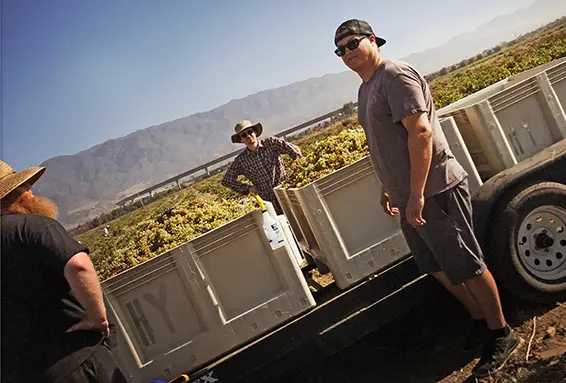
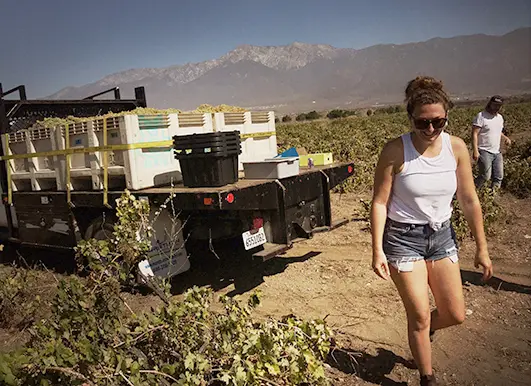
What defined this group was not merely something like a shared mission, but something much more concrete: all of us toiled together in these hot and sandy vineyards, sometimes pruning, sometimes harvesting, sometimes just sampling fruit and counting vines— but all of us had our feet in the soil and hands on the same vines. We made our harvesting decisions together, and helped fill each others' bins and trucks and trailers.
We are now far from alone in working reverently with the remarkable vineyards in Southern California; we have other friends and colleagues pursuing the same path. What defined this tasting is the bond of our unbroken collaboration.
1. LOPEZ PALOMINO
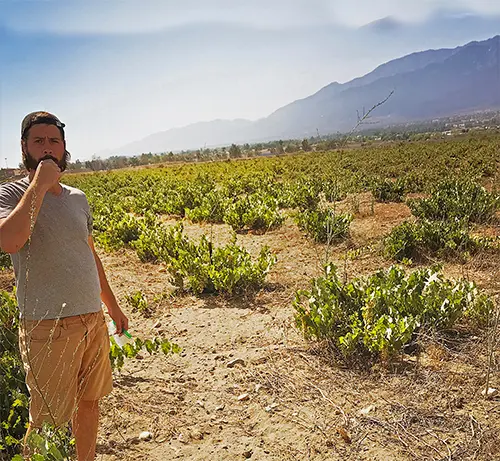
The vineyard at the heart of this now-shared project is one that was only mythical to us when Christina and Raj and I started this in 2019; that we set foot in for the first time at the end of harvest 2020; and that was pruned for the first time in a while in the Spring of 2021. It is an Eldorado, a promised land in the midst of the desert—an old vine white vineyard in Southern California: Lopez Palomino.
The vineyard was planted on the eastern edge of Rancho Cucamonga in about 1912 to make California Sherry. The Galleano family has controlled it for years, but their need for it became so slight that they turned it over to one of their workers to farm and harvest. His name is Fidel and it was he who pruned the vineyard. To be more precise, the vineyard is very large— about 30 acres. He pruned it over weekends and after work. He got about 5 acres done in 2021, and did an absolutely beautiful job: the vines are gloriously strong, well-shaped, and bore the perfect amount of fruit.
Fidel showed me the vineyard for the first time in September 2020. It was mess: too much fruit, too many leaves. The vines clearly had not been pruned that year, nor probably cared for in any other way. The vines were big and strong and needed pruning just to keep them in line. There was no fruit in 2020 good enough for us to take a chance on. We walked away. But I kept Fidel's phone number.
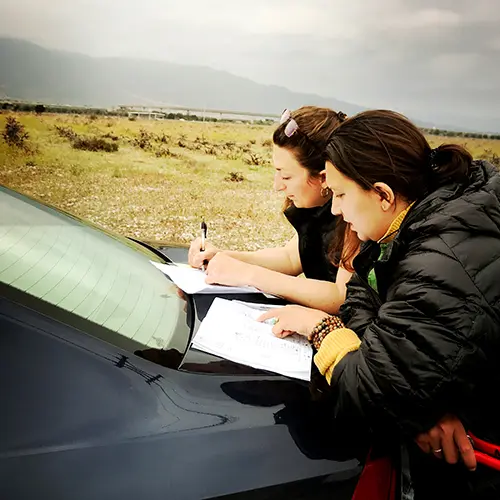
We pruned Lone Wolf last Winter in the middle of March. We made plans to stop at Lopez on the way home. Raj had never seen the Palomino and I wanted to check on the vineyard, get a sense if we could or should prune any of it ourselves. As soon as we pulled up, we could tell. It had been pruned. I called Fidel. Katia and Nina started working on a vine count and vineyard map.
Patrick from Herrmann York and Tim from Harvey Walsh were already working with us in Lone Wolf and had helped at every stage, from pruning to shoot thinning to harvest. Each of them had asked to make some wine from the Lone Wolf in 2021, as did Raj. I promised to give them what I could, as a reward for their essential collaboration. I could see the benefits to all of us of this alliance, and thought of Lone Wolf as the sacred soil that bound us together.
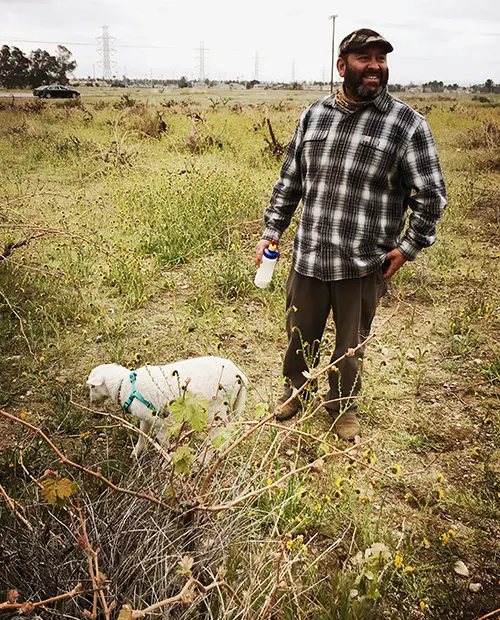
But now, here we all were, together in Lopez. Seeing the pruned vines fired our excitement. Nobody talked about old vine white fruit in Southern California, and now, before us, was a strong, well-pruned, Palomino vineyard, and more than a hundred years old. Forty-five miles from downtown Los Angeles.
Mikey is a Rancho kid; he grew up only a few miles from the vineyard. He knew and worked with Lopez Zin and Hofer Grenache already. We let him know about the vineyard. It suddenly seemed like a wonderful celebration— not just a collaboration, but a coming together of disparate forces, from very different backgrounds, to work in and celebrate a special place, a place that our very work could help to save. In 2020, no one took the fruit. Now, one year later, 5 of us were banding together, each to make our own version of Rancho Palomino.
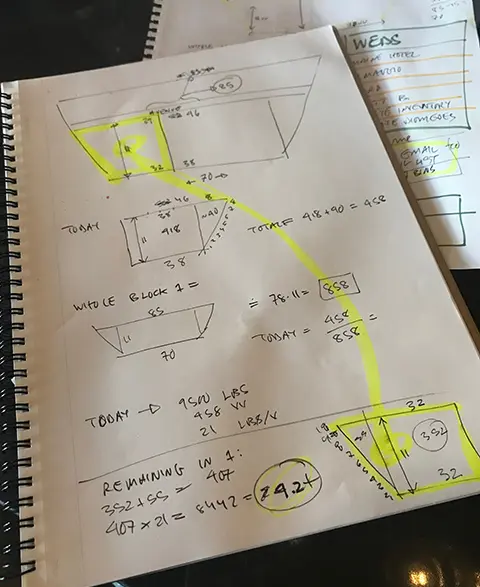
By June, we reached an agreement with Fidel to buy as much fruit as we could. From our first visit, we realized that Fidel had not managed to prune the whole vineyard, but had only finished the five acres closest to the road. I figured that the pruned section might have as much as 12 tons in it. We would split it up, 5 ways. By harvest, our enthusiasm for the fruit was so strong that we started looking at the un-pruned rows. I walked them and estimated that we might get an additional ton per acre from them; but the the vines were frail, with much less leaf cover for the fruit. The drought had taken its toll on them. Mikey was not confident that the unpruned fruit would ever ripen; he was afraid that it might get roasted by the sun before the stressed vines could bring the fruit to ripeness.
We monitored the fruit carefully. By Fourth of July, we thought that we knew our harvest date: we prepared for July 26. Raj and I had both made Palomino from Gena Nonni's wonderful vineyard in Fresno, and it is fair to say that it was a challenge to harvest ripe fruit with any acid left. Focused on avoiding this, he wanted to get out of Lopez early.
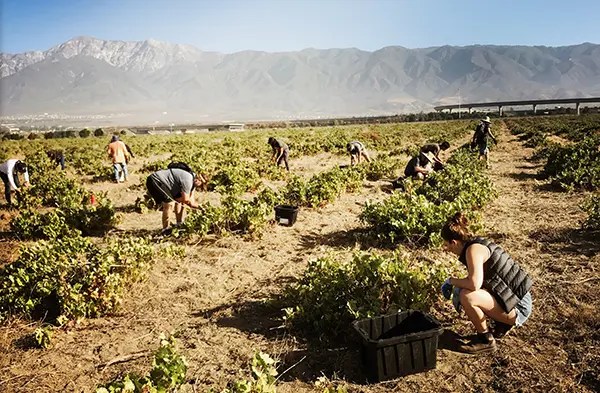
But as the fruit ripened, we experienced something almost miraculous: cool weather. There were no 100 degree days in July, and many nights in Rancho went down to 50 degrees. The fruit was ripening slowly, with flavors developing faster than sugar was accumulating. And the acid was holding. We pushed the harvest back a few days and prepared for the 30th, and then finally, Monday August 2d. The sugar was so low that Raj was a little concerned that perhaps he was rushing it— but, still, he wanted to make absolutely sure that he caught the acid. Mikey felt largely the same and was more concerned about the vineyard crashing in the heat. Raj and Mikey held to the 2d, and got the first fruit out. The rest of us waited 'til Saturday. I felt that that the fruit could easily take little more ripening— and we all needed to wait 'til the weekend to bring in our band of pirates in to help Fidel and his crew.
And so harvest 2021 began.
2. THE LESSONS OF THE TASTING
So how did the wine taste? Did the acid hold? What difference did it make that some of us waited 5 days? And remember the pruned and unpruned vines? Did it make any difference if your fruit came from the smaller, struggling, unpruned vines?
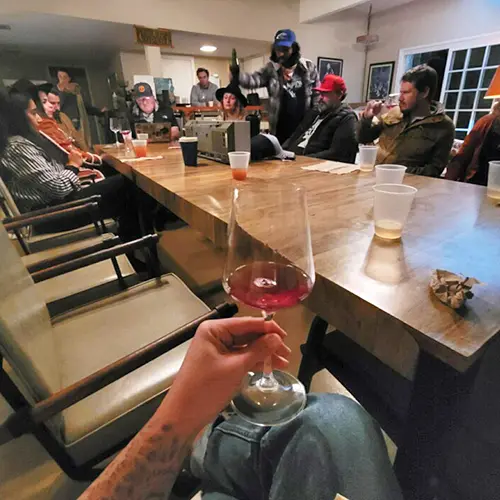
Now you can see why were so excited for this tasting. Not just to taste our own wines, not just to taste the wines of our friends and colleagues— but this nearly unique opportunity for winemakers to taste the results of different teams working from the same vineyards, applying different aims and methods to the same fruit. What an opportunity to reflect and learn!
We tasted 5 wines made from 2021 Lopez Palomino; there would have been 6, but Mikey could not get us his samples. Perhaps the most remarkable was my colleague Jaime's: as an experiment, he made a case of Pet Nat. In order to do it, he simply pulled a few gallons out of our fermentation while it still had a little sugar, and put it in champagne bottles, crown capped it, and left it— from early August 'til now. The wine had nearly completed fermentation and and seemed pretty much dry. The bubbles and the tiny bit of sugar changed everything, as you can imagine. But that was not the lesson: the lesson was that it was GOOD. Something really worked between the soft bubbles, the slight cushion of sweetness, and the natural character of the fruit.
And what was the character of this fruit? You will not be surprised to learn that the other 4 wines showed a great similarity. Palomino is not an aromatic variety; it has none of the spiciness or floral character of the Muscats, or Sauvignon Blanc, or Riesling. It is flat, like Chardonnay, and has a real appetite for oxygen. It sucks up oxygen from the air, and ther wine turns golden or even brown, and loses its edges. Many people walk away from it for making white wine; until very recently, nearly all of it has gone into Sherry, a wine very much about air and yeast and not fruit.
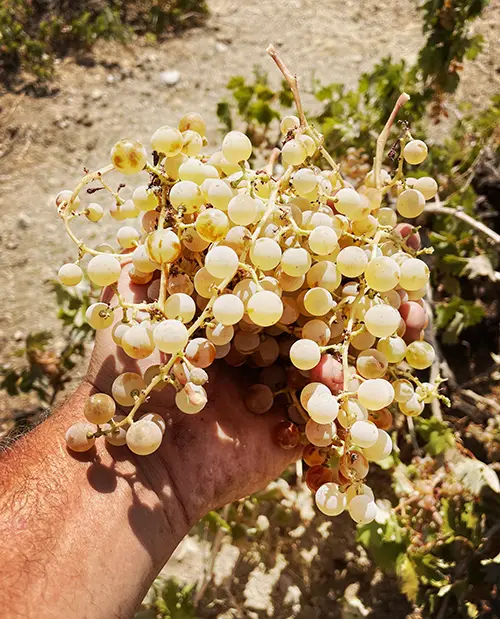
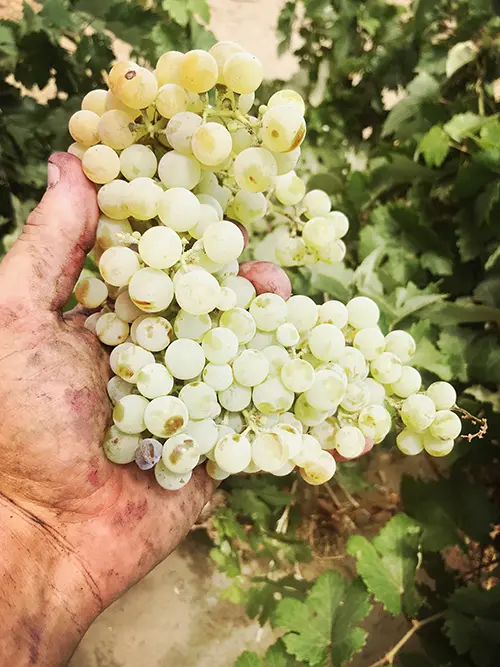
But the vineyard is not merely "Palomino," it is Lopez Palomino, on very special soil, essentially in a desert. The clusters are architecturally large, typical for Palomino— not small and tight, like Pinot Noir, or unirrigated Sauvignon Blanc. Here, they are gangly, very loose, with small, hard berries, with thick skins. (To the right are two clusters, one slightly larger than the other.)
All of the wines had intensity and even fierceness. Raj's wine was the most civilized of all; Tim's polished also; our wine, and Herrman York's, perhaps the most fierce and raucous. But this is most surprising lesson: all of the wines are quietly fragrant— not like Muscat, but not so different from Albariño or Chenin or Savagnin. All of the wines had color, but none of them were the least bit oxidized. All had freshness and great acidity; and all were at least slightly tannic. Raj's wine was the least so, even though one third of it had skin contact for 10 days. Ours was partially foot-stomped, by graceful maidens, and then pressed immediately and gently— and was still more tannic than his. I could sense no difference, certainly not in ripeness or acidity, between Raj's wines and the rest, harvested 5 days later. Because of the interaction of acid and tannin, all of the wines reminded me pleasantly of the masterful Savagnins of Labet.
Raj's wine came completely from the pruned vines; everyone else's had some degree of unpruned fruit. Ours was nearly 100% unpruned. The difference in civility versus fierceness, to a high degree due to the sensation and structure of the tannins, could have been due in turn not to any winemaking decisions, but to the nature of the fruit. It is so interesting to think that in some way, you can sense the struggle of the unpruned wines in the finished wine.
So this too is a lesson. Wine is so exceedingly complex, even from a merely technical perspective. None of us inoculate with yeast, none of used SO2 on these wines. This in itself leads to an an immediate diversity in the microbiomes of our wines, and consequently to the possibility of astounding differences in the number, dynamics, and proportions of microbial effects. All of the wines were made in distinct environments, in different wooden, steel, and glass vessels, in a crazy variety and range of sizes, each with its own effect on the microbiology, but also the physics and chemistry, of the wines. Some of us foot-stomped, some did not. As fascinating as the comparisons were, as fruitful and even exciting as the discussions were, you could not really walk away and say: "I am going to foot-tread next year," or, "I am going to harvest earlier next year." Or perhaps it is nearly impossible not to say such things, you just can't say that your decisions are based on something as simple as evidence.
What I can say, with what feels like certainly, is that this is a great fucking vineyard, towering in its ability to produce, pruned or not, the fruit necessary to make great wines. And not just one great wine, in the hands of some single great winemaker. The first venture of this remarkable alliance demonstrates something interesting and even important: here, a straggling survivor on the edge of Rancho Cucamonga, is a vineyard whose power and excellence transcends the work of any single winemaker, no matter how brilliant or accomplished. And this in itself is a wonderful first step in demonstrating the importance, the greatness, of any vineyard site or region: that it depends on no one human interpreter. The place stands above.
Welcome back to Cucamonga. It's been a long time.
3. THE WINES
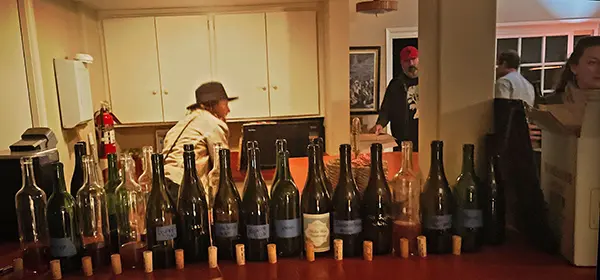
We tasted 23 wines from Southern California (we snuck in a 24th from Raj's Phelan Farm in Cambria). The 5 wines from Lopez Palomino were just the beginning: they were followed by 6 from Maglite, from white to rosé to red; 4 versons of Lopez Zinfandel, also white to red; two reds and a white from the Galleano home vineyard, one Zin from Gateway, and Lone Wolf Blanc. Six vineyards; 5 within 50 miles of Los Angeles. The complete list of wines, in order, is to the right. I cannot possibly tell you about each of them, but I must tell you a little more.
- Harvey Walsh Lopez Palomino
- LARWCO Lopez Palomino
- Hermann York Lopez Blanco
- Raj Parr Scythian White
- Jaime Arzate Palomino Pet Nat
- LARWCO Galleano Home White
- Harvey Walsh Maglite Mission
- LARWCO Maglite Blanc de Noir
- LARWCO Lone Wolf Blanc
- LARWCO Lopez Blanc de Noir
- Raj Parr Scythian Red
- Hermann York Lopez Rosado
- Hermann York Lopez Clarete
- Harvey Walsh Maglite Grenache
- Hermann York Guasti Rosso
- LARWCO Heart Of Sand
- Harvey Walsh Lopez Zinfandel
- Hermann York Lopez Tinto
- LARWCO Lopez Red
- Hermann York Galleano Rosato
- LARWCO Galleano Home Red
- LARWCO Riverside Red
- LARWCO Gateway Zin
4. MAGLITE
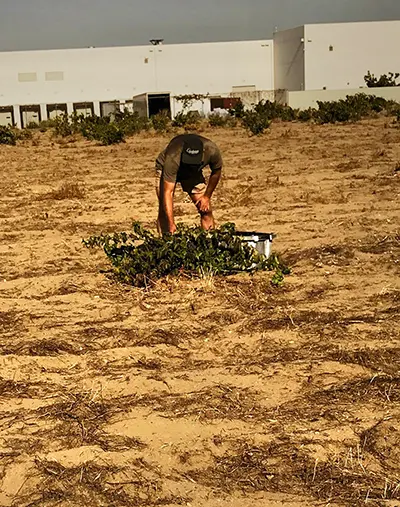
Four of us made a total of 6 wines from Maglite, a vineyard in the heart of Rancho, several miles west of Lopez. "Maglite" is the name that we give it because the firm's US headquarters are opposite the vineyard. The vineyard is so little known that it does even have a name separate from us. Just an address. It's on Francis Road. We don't know anyone who made wine from the vineyard before we did; the grapes just disappeared into a nameless matrix. It is interesting that this previously anonymous vineyard became the source of more wines for the alliance than any other.
The vineyard was planted in 1905, as part of Secondo Guasti's gargantuan Italian Vineyard Company. The fragment that remains is half of a city block in a commercial-industrial neighborhood with very little remaining open ground. The Guasti plantings reached more than 5,000 acres at their peak; this remnant is about 18 acres, of which only about 5 acres have living vines.
The soil is deep sand, much finer and less rocky than Lopez. The whole is divided by a central avenue into two sections: one with only red grapes— mostly Grenache with about 25 remaining vines of Alicante Bouschet; and another section, a complete mixture of Grenache, Mission, Rose of Peru, and perhaps a little Muscat.
The four wineries that worked with Maglite made three kinds of wine from the vineyard. Raj approached the vineyard as a whole, and made a traditional field blend from all of the grapes, harvested in proportion to their presence in the vineyard. The result is a beautiful, light-bodied, red, distinctly reminiscent of the very traditional red wines being made from old vine red fruit in Spain at the moment. Drinking the wine felt like being transported back to the historical origin of these vineyards. He calls this wine "Scythian Red."
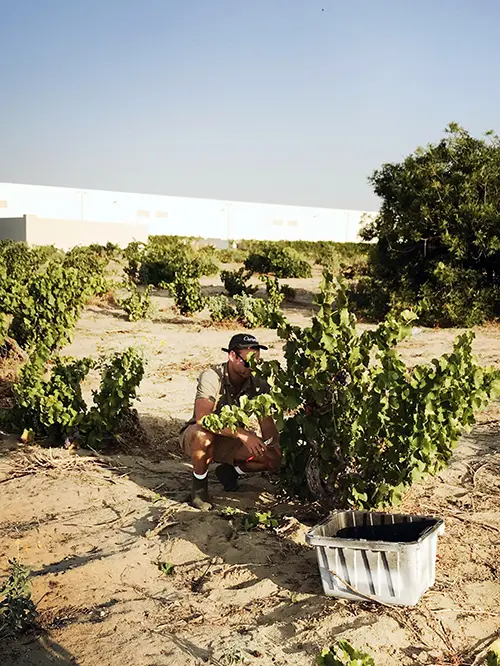
The rest of us divided the vineyard into two harvest blocks and made a red from the Grenache, and a medium-bodied white wine with a little color from the mixed section. The whites are beautiful, fresh, fragrant, and slightly tannic. Our is one of the prizes of the whole harvest for me; the most joyous and charming wine that we made all year.
All of the reds were light in color, but all were very deep and intense in both the mouth and nose. Their fragrance was not really fruity, and the opposite of ripe or jammy fruit. They were much more floral and somewhat spicy. This is not the least surprising in itself for Grenache, and even for warm climate Grenache— we feel that we have compatriots in the remarkable high altitude wines from the Sierra del Gredos of the Comando G team. It is just perhaps not what you would expect from an industrial suburb of Los Angeles.
5. LOPEZ ZINFANDEL
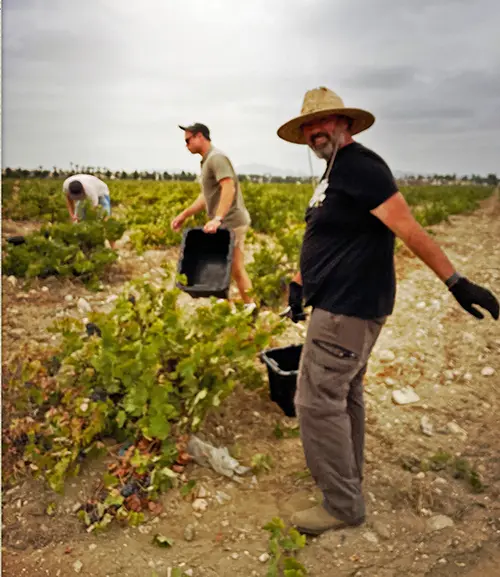
Lopez Zinfandel is the much bigger and better known neighbor of the Palomino. It shares the same geology with the Palomino, though the vines are probably a few years younger. I know the Lopez wines of Galleano, and we had made wine from this vineyard in 2019 (the fruit was destroyed by heat in 2020), so I should not have been surprised— but these wines were absolutely remarkable to me. We tasted a total of 5 wines from this fruit, ranging from our Blanc de Noir to 3 deeply colored reds.
There was something so good about tasting them together, and about tasting our wine, for the first time, outside of the cellar, away from the barrels. The Blanc de Noirs were both good, and distinctive, and completely justify the notion of making white wine from red grapes in warm climates. But it was the reds that demonstrate the absolute irreplaceability of this vineyard. The wines were universally black— to be more precise, a crystalline and opaque black-purple. I don't know how something can be dark and bright at the same time, but all of these wines were.
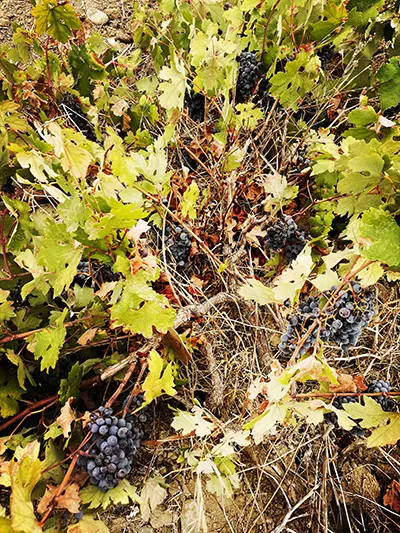
They were harvested from different sections of the vineyard on different days, but all were picked in the early days of harvest, beginning about a week after the Palomino. We picked second to last, on August 22d. I think that we engaged in the least extractive fermentation regime, just leaving the skins and stems in a floating cap— yet our wine was the blackest. This is not mere curiosity: it indicates something very particular about this vineyard: its dark intensity requires no coaxing to bring out, it lies in the juice as much as the skins, and the skins are themselves giving, not reticent. It makes black wine, no matter how little you do to it.
All of the wines were very intense, piercingly ripe, yet fresh, lively, and high in acid. For me, this was another demonstration of the excellence of a vineyard, and its ability to express its nature above or through the intentions of the winemakers. We followed the same techniques we use to make a barely red wine from Maglite, yet our Lopez Zinfandel is impenetrable. That is the vineyard speaking.
6. GALLEANO HOME
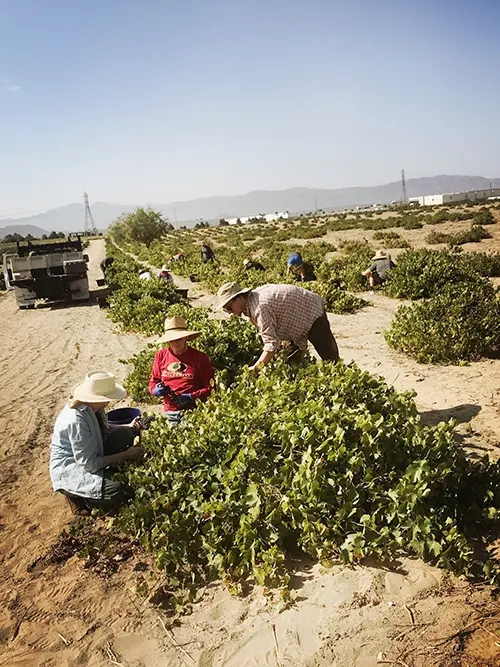
We tasted three wines from the Galleano home vineyard: LARWCO made a second Palomino (it felt like a kind of infidelity), Herrmann York made a Rosato, and LARWCO made a red. We harvested all of the red fruit on a single day with a large and eager crew; and then a few of us from LARWCO returned a few day later to harvest white fruit.
I think that we all feel unspeakably fortunate to be able to work in this vineyard. This land was planted by Domenic Galleano's great-grandfather in 1927. It is an honor every time that Dom lets us set foot on the ranch. Some of the vines date from the original plantings, some date from a replanting in the 60's.
This year, Domenic originally gave me permission to harvest all the fruit from their 30 or so abandoned Salvador vines. Salvador is an obscure, dark-fleshed, vinifera hybrid; it was developed in the 1800s in Texas by Thomas Munson specifically to make darkly colored wines. The vines at Galleano produce small clusters of tiny berries; the fruit is musky and holds a high and sharp acidity through harvest. We made a partial Salvador wine in 2019 and loved it. We were very grateful to return and brought an eager crew. Herrman York came to lend a hand; we hoped that there would be enough fruit to share. But the drought had been hard on these unpruned vines, and there was not even enough fruit for an LARWCO fermentation. Domenic, out of generosity and a kind of amusement at our hard-working ardor, revealed a secret section of the vineyard to us.
"If you go into the southwest corner of the vineyard, there is some Mataro. Take all you want. It will go with the Salvador. Your truck will get stuck in the sand, but I'll pull you out." I walked down to scout it and felt sure that I passed a fair amount of Palomino on the way. "Is that Palomino?" It was now a week after we had harvested Lopez. The fruit looked really plump and fresh, on huge vines with lots of leaves to shelter it. "Yeah, that's Palomino." But Domenic did not say anything else.
Herrman York made a beautiful Rosato, from the Salvador and the putative Mataro. We too harvested both together, foot-treaded them, and made a single cofermentation of the red fruit. We call the Mataro "putative" because we think, even though we are total newcomers, that it is Alicante, growing on huge, younger vines.
We kept the wine together with the skins and seeds for about a month, a long time for us. For this reason, our wine went in an opposite direction from Herrmann York's: our finished red is dark, funky, high acid, and witchy. Like the Lopez Zin, the wine is nearly black, but not as purple tinged. Its aromas are hard to place, but are definitely on the side of truffles, preserved meat, and dried dark fruit. As with the other red wines, there is nothing jammy or or luscious about the wine. This is a third lesson in the possibility of red wine in this hot desert: there need be no expectation of cooked fruit.
The origin of the Palomino for us is more comical. There was a day when we expected to pick up some Lopez Zin from Dom. He confused the days, and we were out in Lopez with an empty truck and nothing to put into it. "Come to the home ranch," said Dom. "I will let you pick some Palomino. It will be better than Lopez."
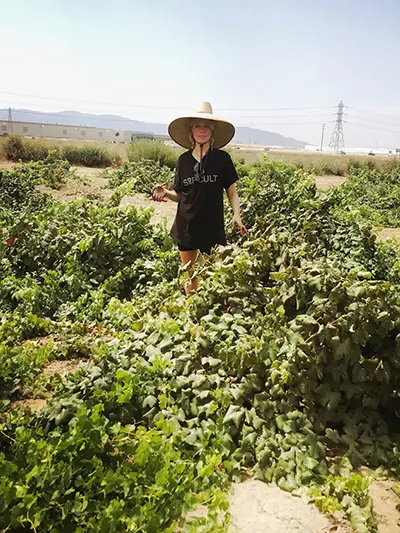
The Palomino looked and tasted completely different from the Lopez: bigger clusters, bigger berries, skin much more light green than gold. There is nothing surprising about this: both the Mataro and the Palomino seemed to be growing on top of an underground river (see the photo of Jen above, in the Mataro jungle); I don't think that I have seen such luxuriant un-irrigated vines anywhere in the world. The fruit was still intense, and ripe.
The finished Galleano Palomino is much more fragrant and expressive than the Lopez. We skin-fermented about half of the wine and it was extremely successful; immediately after fermentation, we blended both portions together. The fruit is so much less tannic than the Lopez that the skin-fermentation only added richness and a scaffolding to what would have otherwise been a more simple and direct wine. It would be hard to say that the wine is better than Lopez, but it is more beautiful, at least at this very young moment. Lopez suggests rigor and endurance; the lushness of this corner of Galleano: seductive luxury.
7. GATEWAY
This is the only abandoned vineyard that we worked with this year, and only we made wine from it. It was the last wine in the tasting; the most fierce and intense.
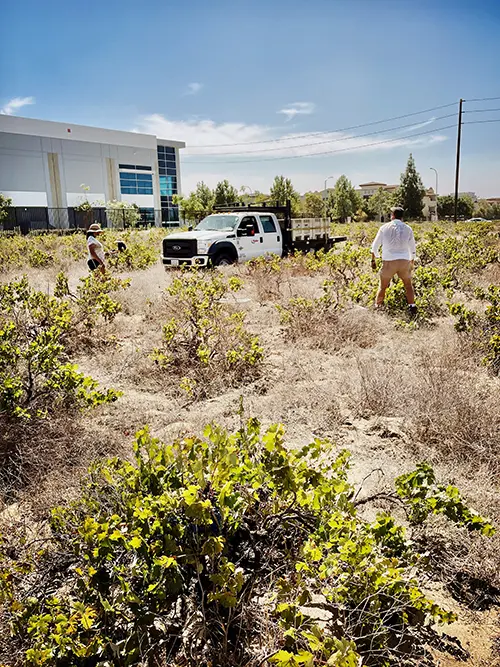
Gateway is in Rancho, not far from Maglite. It dates from the same period as the Guasti plantings, but was probably not actually a part of them. Like Maglite, it is a fragment of an older, much larger vineyard— you can see it shrinking in historical aerial photographs. As in Maglite, two sections remain: one is nearly all Zinfandel with a few scattered Muscat, Mission, and Rose of Peru vines. The other is more a mixture of Zin and Rose of Peru, with a few of the other grapes. The vineyard is owned by a developer who hopes to put a hotel on the property; the word among the locals is that they are stalled in the permitting process. For the sake of good community relations, the developers allow people to harvest the grapes from the vineyard, but don't engage in or allow any other kind of farming. The vineyard is withering under the double onslaught of drought and no pruning; I think that about a quarter of the vines have died since we first saw the vineyard in the Spring of 2020.
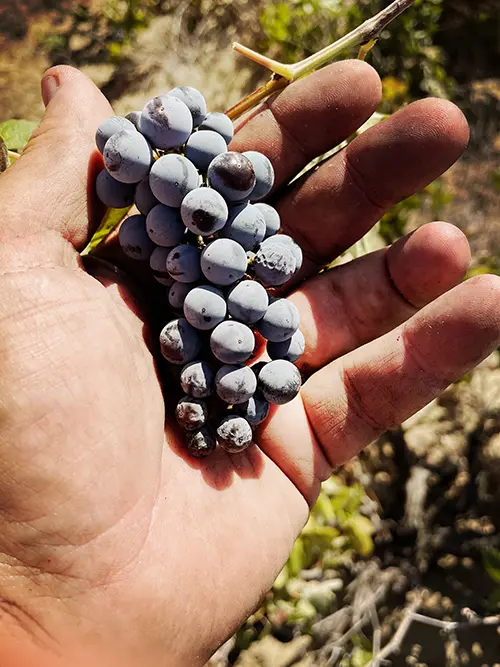
We only got permission to harvest fruit late in the season, on August 28th. We were in the vineyard the next day with a truck. It was the hottest day of what had been a cool harvest, 100 degrees by noon. There were only 6 of us, we picked as much fruit as we could; but there was not much fruit at all, and the clusters were tiny. We brought home only enough fruit to make 32 gallons of wine.
There is so much that is important about this vineyard, and it is crushing to see it disappear. We would love to save it, but you can imagine that this would be a very different kind of project— not just winemaking. For now, let me concentrate just on this. It is important for us as Southern California winemakers to have two historical Zinfandel vineyards to work from. The contrast between Gateway and Lopez highlights each of them. Lopez is more stern and fierce, but it is also capable of a kind of lightness. Sometimes it reminds me of Nebbiolo, sometimes Pinot Noir. Gateway is more typical of what we expect of Zin: fruitier, more generous. It shows these qualities this year, in spite of the drought and the lack of pruning. Even with the tiny amount of fruit and the relatively late, hot, harvest, the wine has fruit, but is nowhere near jammy. Even in the most difficult conditions, the vineyards of this area display a distinct and noble character of restraint and elevation, lightness and intensity. Over-ripeness is not part of their character.
8. CONCLUSION
I would like to close this lengthy report by emphasizing its most important lesson. The many wines, from many vineyards and many hands, held together at the highest level of quality. Some of them showed real excellence and the ability to stand with the best wines in the world. But what is most important about this joint tasting is this: the beautiful way that it showed how this excellence depends on no one winemaker. The place stands above.
You can purchase the LARWCO wines from this tasting here.
As a result of this tasting, the blends are now final, and so are the quantities of the wines. We will bottle them during the four days beginning March 1 and will release them immediately afterward.
We have already sold much of the wine through a futures program that began during harvest last year. In this program, you purchase one bottle of each of the southern California wines that we made this year: a total of 12 wines, from Lopez Palomino, to Gateway Zin, to the wines of Lone Wolf. The price for the twelve is $500. We made such small quantities of most of the wines that many of them will be available only as part of this program.
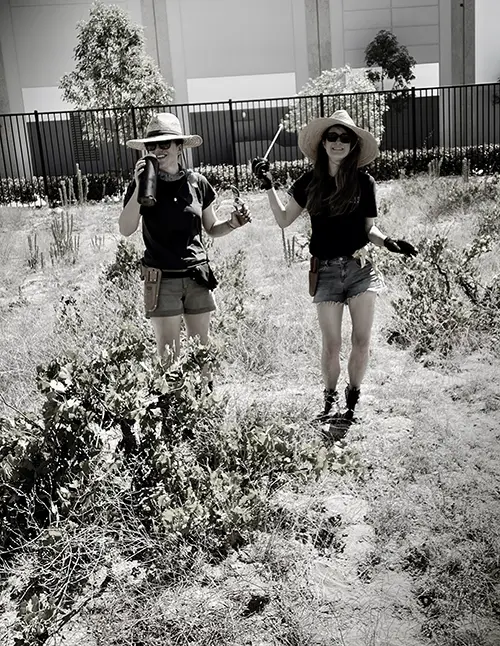
I have capped the futures program at 100 bottles of each wine— 100 packages of each of the 12 wines. As this goes out, we have only about 10 more packages to sell.
In case you are counting and wonder how we got to 12 wines, I omitted two wines from this report, both blends: Disco Essence, a cofermentation of Maglite Blanc de Noir and Galleano Home White; and Riverside Red, a stunning cofermentation of Maglite Grenache, Galleano Salvador, Galleano Alicante, and Lopez Zin. I also omitted the Lone Wolf wines and will report on them separately— in about 5 weeks, when we gather to prune the vineyard.
I can't believe that you have read so far. I am grateful for your attention— not just to me, but to what this moment means.
Thank you.
Abe
You can find Raj's Scythian Red and White here.
You can find the wines of Herrmann York here.
You can find the wines of Scar of the Sea here.
You can write Tim here to get on the Harvey Walsh mailing list.
Stay tuned for Jaime's Pet Nat.