A report on the recent tastings, and some reflections on the role of oxygen
Twenty wines, tasted over two weekends
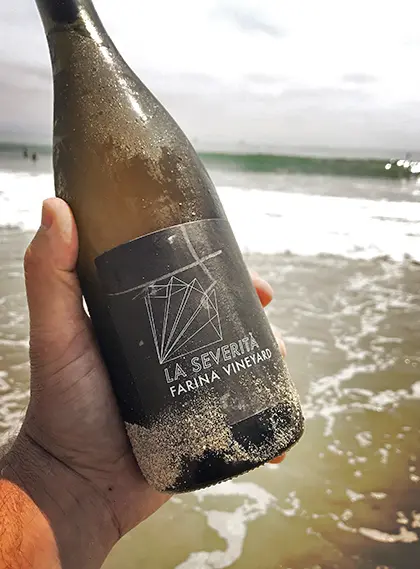
WE HAVE TASTED THE WINES.
IT WAS GLORIOUS.
We have had two tastings in the last two weeks— so wonderful and so different from each other. On the 19th, we hosted nearly 70 people at my friend Alejandro's workshop and studio in Los Angeles. We served pizza. I still cannot quite believe it. I had an army of helpers, among them 7 people merely pouring wine and three putting orders together. We tasted 10 wines— nearly every wine from the 2020 vintage of the Los Angeles River Wine Company. I spoke briefly about each wine and quickly wove a web, explaining what we are up to in Los Angeles, and tying the wines to the very special places, and extraordinary growing conditions, that gave rise to them.
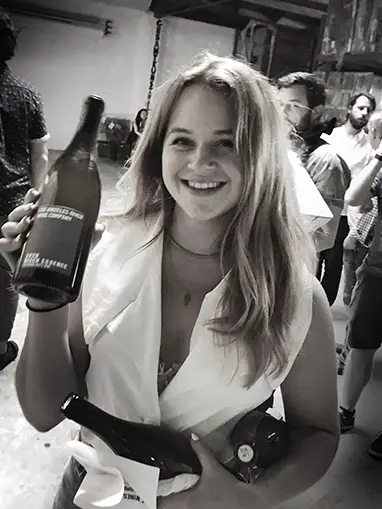
I stacked the deck by showing the most beautiful wine first: Lone Wolf Blanc, a sharply-etched and bracingly tannic blanc de noir made from the Mission and Grenache of Lone Wolf. We went from there to a savory Rosé of Zinfandel from an abandoned vineyard in Rancho Cucamonga, and things just flowed from there. It made me speechless with gratitude to pour for so many people, supported at every step by friends and colleagues, and for the wines to show like beacons on this special night. No one had any doubt of the seriousness and success of our somewhat unlikely project.
Three of the 2020 LA wines are now totally sold out (Disco Essence! Pet Cemetery! Heart of Sand!), but you may still purchase the others— including Lone Wolf— here.
The most remarkable wine, the show-stopper, was Lone Wolf Wildlands, from the un-pruned section of the vineyard. There is a little left over from the packages, and now that the tasting is over, I have opened up sales on individual bottles. You may purchase them here.
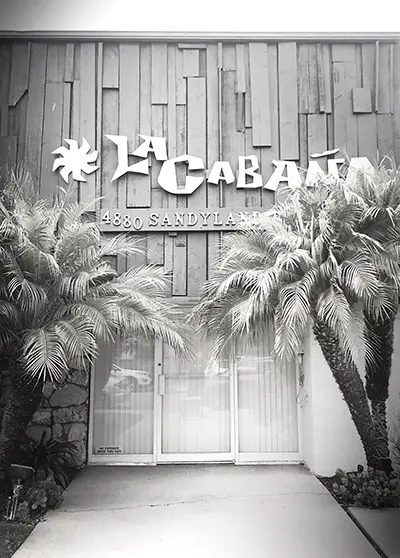
Sunday, I hosted a lovely and intimate tasting in La Cabaña, the Party Room of the condo complex in Carpenteria where I have been staying for weeks. I hosted twelve guests, including two old friends who put my wines on restaurant lists in NYC a decade ago. I so much love the nameplate over the entrance; it is the opposite of timeless, yet somehow cheerfully out of time. It is too innocent to be dated. A perfect venue for a Sunday tasting.
But this was not just a leisurely Sunday tasting, it was my first tasting of the Lost Scholium Wines that we bottled last week. I had not opened a single bottle since they left the bottling— until yesterday. I packed the car with boxes Thursday as we wrapped up, drove them down to Cambria to see Raj on Friday, let them sit in the trunk Saturday while we did some late-season shoot-thinning (it's cool in Cambria, don't worry), then drove them down here yesterday. We opened the bottles in advance to make sure that none were corked, but I did not taste any of them until I poured them for the guests. I was surprised by many of the wines, and delighted by all of them.
The wines, as I have told you in previous missives, are strong. A survivor's strength marks all of them. The LA wines are intense and kind of sharp— none of them is soft or round. But many of them are delicate. Not these wines from the North. They are intense and forceful. This is not about alcohol (only FTP-Z is above 13.5%); nor is it simply about density. Instead each is somehow marked by its uncommon elevage, the long years spent in a cellar without attention or manipulation. You could say that the wines have a Dickensian orphan's toughness.
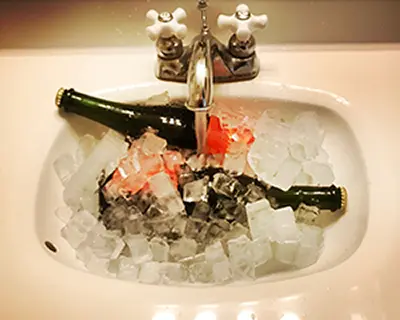
It was wonderful to serve these wines and watch old friends and new nod as they tasted the wines, as if they were slowly coming to understand and perhaps even recognize them. The wines are reticent, in spite of their power. Powerful, but no shouting. The most interesting of all of them for me is the first one that I poured, the 2018 LSB— a juice-fermented Sauvignon Blanc that spent 2 and half years in barrel without topping or sulfur. The wine is stony and smells of dried herbs and flowers. It is fresh with coiled energy— nothing tired about it. But it is an odd kind of freshness, without anything like fruit or flowers.
We did not make much, and this wine is nearly sold out, but you may still purchase some here. All of the wines remain available, both in packages and individual bottles. The other wines that deserve special notice are the 2018 and 2019 vintages of the Prince. Each is superb and it is hard to say which is better— but a very interesting question. Each has the savage power of the Prince when the wine is young, but each is also incredibly graceful from the long time in barrel. These might be the last vintages of the Prince; if so, it will be a glorious way to end.
Let me now turn to some brief metaphysical-aesthetic reflections tied to these wines. It was my great pleasure, the day that we finished bottling, to be in the zoom-audience for a wonderful seminar that is part of the Larkmead Salon Series. This series is aimed at wine professionals, but it will hold interest for anyone who has read this far. The host of the salons is my wonderful colleague, Dan Petroski, a beacon of joy and seriousness. The topic was ostensibly "The Origins of the Natural Wine Movement." Natural wine can be a divisive and tendentious topic, and when it is even on the margins of a discussion, it often limits, rather than inspires, serious discourse. This brief conversations was eminently thoughtful and serious, and I am happy to say that you can see a recorded version of it here.

One of the participants was a winemaker whose wines have influenced me from the beginning of my winemaking: Nicolas Joly, the owner and winemaker of the Coulée de Serrant monopole in Savennières, in the Loire. Joly was one of the first winemakers in the Loire to investigate the possibilities of making dry white wines in what had been traditional sweet wine territory, and was one of the first grape growers anywhere to embrace biodynamic farming. Not only is he a remarkable farmer and winemaker, but he is for sure the most passionate and captivating exponent of the principles of biodynamic wine-growing. The whole system is easily parodied and can seem like nothing better than the newest diet fad when its principles are in the wrong hands— or in the wrong mouth— but Joly is a captivating magician. You listen to him and he somehow brings everything together into a whole that is articulated, reasonable, and compelling— even if you bury no cow horns as a result.
It was very interesting to me— and dear to my heart— that when it came time for him to speak, he very soon turned to a topic that is not usually at the center of these discussions. He turned to the role of oxygen. And, in brief, he emphasized that if your wines need to be protected from oxygen, you are doing something wrong from the beginning. A living wine thrives in the presence of oxygen; only a wine that is somehow already dead or moribund needs protection from it.
I have thought something like this for a long time; and for me, as a student, it flowed not from hearing Joly or other wizards speak, but from observing and questioning John Kongsgaard, my teacher in Napa, as he made wine. I have always wanted to make wines that embraced oxygen, but ones that could accept this structure without ever at the same time seeming tired, spent, oxidized. Alex Pitts and I have often said, "There is only one question in winemaking. How much oxygen?"
These recent wines, abandoned, and then embraced, push this practice to its furthest limits. They truly test the capacity of wines to absorb and incorporate oxygen without crumbling it and failing. Here is the decision that I had to make as their author, before sending them out into the world:
Are they mere curiosities, or are they delicious in their own right?
I could not really answer that question until yesterday. I think you know the answer.
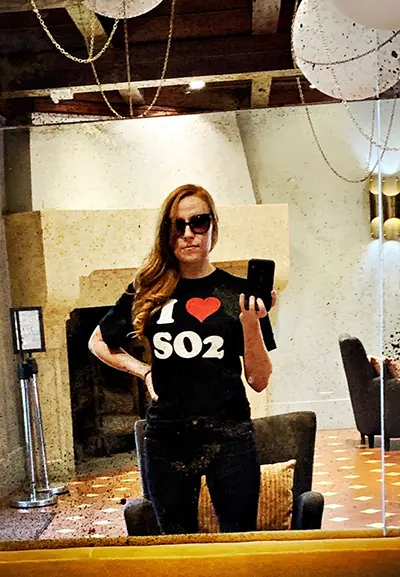
Let me give you one more insight into the thinking behind these wines. There was a technical side to Joly's comments: he was to some degree discussing the use of SO2 in winemaking. He uses SO2, as do I. I embrace its use and use it without hesitation or apology— but it is also fair to say tha I use it rarely and in narrow applications. All but four of the wines is this bottling were made without any SO2 at all. I hit the other four with SO2 at pressing, in order to point them in a certain direction, but, precisely because there were abandoned, they never received any more. Here is the point that I hope you will find interesting:
I have often used SO2 late in the life of a wine to revive it, tighten, and polish it— right before bottling. I could have done that to all of these wines. I really thought about it. But then I decided that I needed to present these wines in their actual state. These wines. Not every wine, every time. But these wines. I decided that I could correct the wines with SO2 and perhaps that would make the wines more beautiful. But instead, I decided this: that the highest beauty would be achieved by preserving— not erasing— the scars of oxygen.
Thanks, as always, for your support and attention.
Abe