The Lost Wines Of The Scholium Project Part 1
Will there ever be another vintage of the Prince?
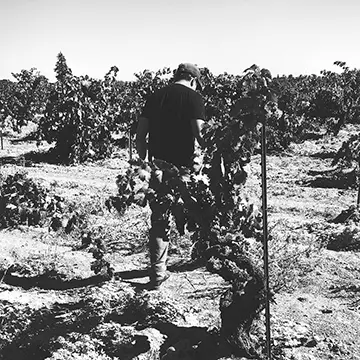
The Lost Wines Of The Scholium Project
A story in two parts
It's September 2018. I am at my desk in Napa. We have harvested one vineyard already— Tegan Passalacqua's Kirschenmann Chenin, in the crystalline alluvium of the Mokelumne in Lodi. We are watching Bechtold carefully— Cinsault, also in Lodi. It's warm, but not more than warm— highs in the 70s, not 90s. And there was Spring rain, and so, for several reasons, the vineyards are ripening a little more slowly than they have been the last few years.
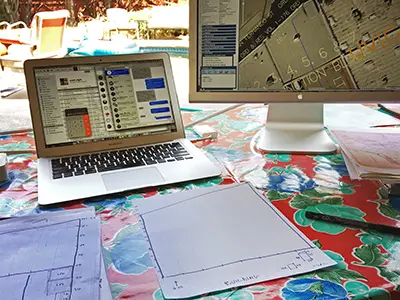
On my desk are floor plans; on my laptop, historical data about one of the oldest buildings in Los Angeles. In the Fall of 2018, my feet were in two lands, straddling nearly the whole state.
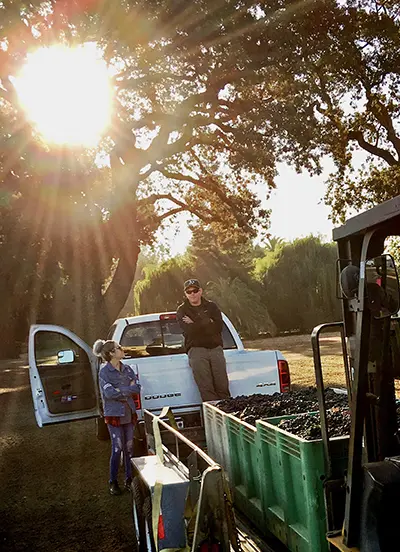
Alex and Brenna and I were still working together. This was a team that had been together since 2012, making really good wine. This was now our seventh harvest. But we all sensed that it might be our last together. I was determined to create something new, radically new, in Los Angeles, and it simply was not clear whether I could sustain Scholium in the North, and create something new in the South. It was not so much about making wine, or travel— it is hard to sell wine; selling Scholium took a lot of time and hard work. Would it be possible to sell the other wines too?
Let's say that, for the first time ever, the harvest was bittersweet— not three months of high-adrenaline, unalloyed joy.
And perhaps all the more bittersweet because we sensed how good the fruit was. Good Spring rains; no Labor Day heat spike. Tegan's Chenin had never tasted so good; weeks away we would harvest Farina, and that too seemed better than it ever had.
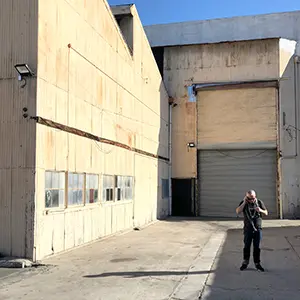
Now, it's March 2019. I am in Los Angeles. So much has happened. I had no idea how much work it would be to create this new project. We have wine in Napa. Really good wine. Normally, I would be thinking about bottling it, but my mind is focused on real estate, fund raising, corporate governance. I make plans to bottle, but I have no idea how I am going to pay for it. There's just too much to think about. I know the wines will keep. Let's get this winery started in the South, bring the barrels down here, and bottle them by hand. In the new land.
Now, it's July 2019. I have just succeeded in leasing the building of my dreams, right in the old grape-growing and winemaking district of Los Angeles. I have the Galleano family, who control the most important historic vineyard in Southern California, on board. I know that we are going to make wine in Los Angeles this year. It is truly breathtaking.
The wines in Napa are not at the front of my mind.
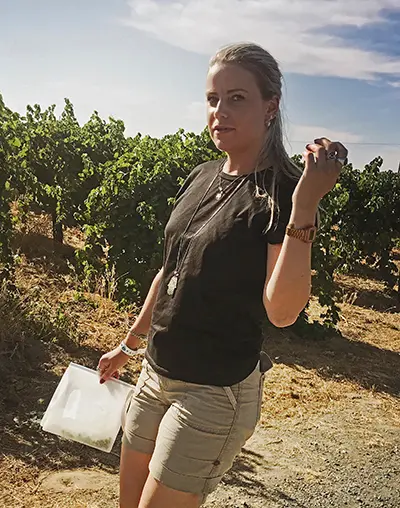
Christina, a dear friend, is flying in at the end of the month. She will be my harvest intern. I have no idea how much help she will be. She has never driven a truck; what's more, she is flying in from London, she is not even used to driving on the left. But I know how we will spend our days: we will traverse the state, bringing grapes from Napa, Lodi, Fresno, Cucamonga, Temecula to the new winery in Los Angeles.
But this is a dream. Not a plan. We have leased a building, but it will take another half million dollars and several months to turn it into a winery. As harvest draws near, I dream less and plan more. I can be good at this. We have a lot of fruit up north, a lot of wine to make. We contract with a friend in Napa, Tim. He will make most of our Scholium wine at his winery, under my direction, but without our constant attention. Except for Lopez, I don't really know what wines we will make in the South. But whatever it is, Christina and I will make it, by hand, without tanks or pumps or other equipment, in Los Angeles.
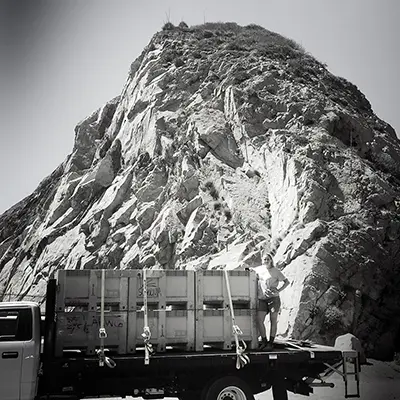
It's the end of July. Christina arrives. She starts driving the truck on day one. We head to Napa, to buy some plastic bins for hauling the fruit, and a tiny hand press. And to pick up some used barrels from the Kongsgaards. She drives back. We are making wine in Los Angeles. It is kind of unbelievable.
We discover Lone Wolf; we harvest Zinfandel planted in 1912, on the edge of the city; we find a biodynamic Palomino vineyard in Fresno, planted on its own roots. We drive north to check the vineyards: Kirschenmann and Bechtold in Lodi, Guman in Napa, Farina on Sonoma Mountain. We decide that Kirschenmann is so special that we will haul it to LA. We want to have our hands and feet in it.
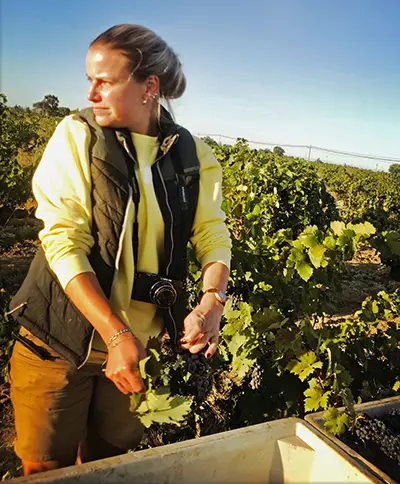
We are in the vineyards for every harvest. Wherever the harvest is, we are there at dawn, and we haul fruit either to Tim in Napa or bring it home to LA. We live in the rented flatbed truck. We are in constant motion, but it is not a frenzy. It is intensely creative, focused, and productive.
September 28, 2019. We harvest Lone Wolf. This is the culmination of our fairy tale vintage. Two days later, Christina flies back to London to rejoin her real life.
We know have made good wines. The ones in Los Angeles even seem to be magical. And once harvest is over, these wines, and the shell of a winery that they inhabit, are my constant focus. The Scholium wines in Napa languish, not quite abandoned, but not kept very close to the hearth either. And there are now two vintages of them.
It is now February 2020. The world is collapsing around us. Just to remind you of one economic portent: petroleum futures took on negative values, as if there might be no point in owning oil in in June. The time horizon for the whole world is shrinking. I am in New York City. The magical wines that we made in Los Angeles are in a corrugated steel building without refrigeration (should there even be electricity available). Lockdowns threaten. Airports in turmoil; terrified passengers wiping down their seats, planes empty, flights canceled. . . . .
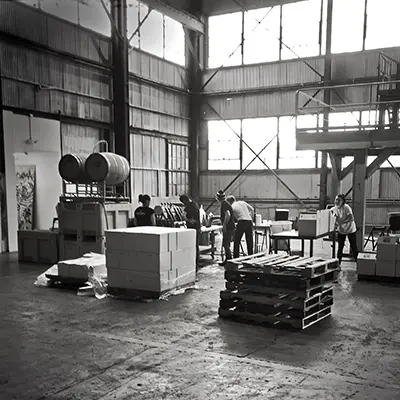
I know that I have a duty to these wines, to my profession, to everyone who has supported this project, to get to Los Angeles and get the wines into bottle.
You know the rest. Six of us gather, with the sheriff's explicit permission, and bottle the wine. We keep 6 feet apart; we have no idea how dangerous our devotion to the wine might be. No one falls ill; every ounce makes it into bottle.
A truly magical year follows, fueled by terror and hope, sometimes in combination, sometimes in alternation. We shoot thin Lone Wolf, bemasked, and with religious fervor. We lose the lease on the winery building, but we make wine in the parking lot, without a pump, every gallon moved by gravity. Day after day, our work consists of friends gathering to sweat in the open air, making wine as a celebration of our faith, or at least hope, in the future.
Napa and Lodi and Sonoma are forgotten. They are too far away— it might as well be another world. Those are someone else's vines; ours are down here. Close at hand. In 2020, we make no wine in the North, without a second thought.
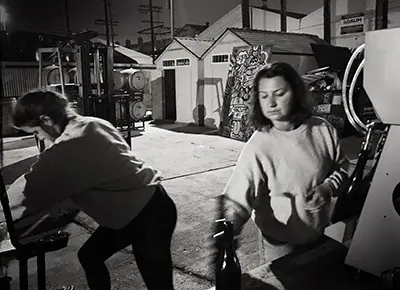
Now it's April 2021. The 2020 wines, the wines of the plague year, are in bottle, and labeled. We are beginning to ship them out. The rate of infection in Los Angeles is plummeting. On April 1, I get my first vaccine shot, bestowed on me as an Ag worker. For the first time in what feels like years, I begin to breathe easily. The time horizon, once constricted to mere days, begins expanding again.
It is now time to turn outward. I have not had the strength or courage to think about our Napa wines, not for a year. But I can shirk this responsibility no longer. I also have not set foot in the Guman vineyard in Napa since Christina and last sampled it, in September 2019. I feel like a fickle lover who cast aside the Napa Chardonnay of his youth for the novel charms of Temecula Mission.
Let me be clear about what is at stake here. The wines in Napa have been made absolutely and precisely according to my instructions. Tim, the custodian winemaker, is respectful and careful. He understands what we have wanted to do, and would never do a thing without my orders. The last thing that I told him, at the end of harvest 2019, was: "don't top the barrels. Don't add SO2. I will be back soon; we will bottle the 2018 wines, maybe top and SO2 the 2019 wines. Soon."
So, for all of this time, he has left the barrels gloriously undisturbed, carefully tucked away in his winery, safely awaiting my return.
But this was more than 18 months ago. You don't leave wines alone that long. Ever. And the 2018 wines? It's now just about two years since they would normally have been bottled. It is not likely that I am going to find anything still sound in Tim's care.
Nor have I heard from John Guman, the noble owner of the Chardonnay vineyard, since the beginning of the pandemic. I don't know for sure if he too has survived. He does not answer the phone.
I finally need to confront these wines. And I need to find John Guman. For both of these reasons, I make plans to drive to Napa.
I will tell you Thursday what I found when I got there.
Thanks, as always, for your attention.
Abe