The 2020 vintage of our Los Angeles wines: the release is wines today!
THE WINES OF THE 2020 HARVEST
THE RELEASE IS TODAY!
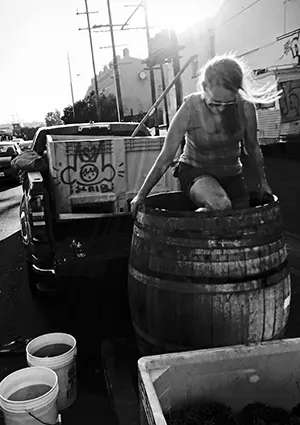
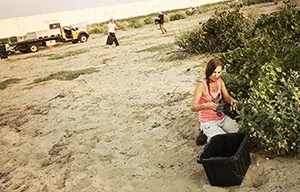
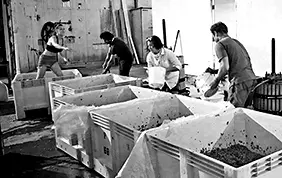
We made thirteen wines this year from six different vineyards. We picked almost all of grapes ourselves, with crews of friends and colleagues. We processed all of the fruit by hand, in a concrete yard, on a property that made wine until 1905, in Los Angeles' grape-growing heyday. We don't own a pump; we like buckets.
We found 3 new vineyards to add to the four that we worked with in 2019; all of them in Rancho Cucamonga, the once vast grape-growing area 50 minutes east of the city. All of them were brought to us by friends or fans who live or work in the area. We lost two vineyards for 2020: a heat-storm raged through the whole state at the beginning of harvest; it ravaged Cucamonga and ruined all of the fruit in Lopez and Galleano.
Four of the six vineyards we worked with were planted more than 100 years ago; 3 of these are less than an hour's drive from the city. The possibilities for making wine in Los Angeles, from local vineyards, continue to absolutely amaze us— and not just because of the history of the area, but because of its ever-disclosing living present.
We worked in tiny quantities. Often, we were constrained by the tremendous heat. We picked 3 vineyards on days that topped out above 105 degrees; we picked what we safely could. In the case of Lone Wolf, we picked the whole vineyard in 2 days, but made 4 different wines from 3 sections; one of those sections has only 204 vines. We made one barrel from here, 280 bottles.
Here are the 6 vineyards of the Los Angeles Wine Company, with brief notes on the wines that we made from them. I list them in the order that we picked them:
- PIRATE
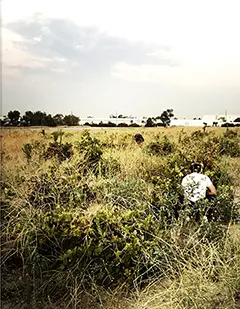
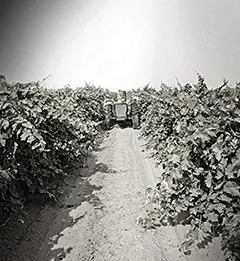
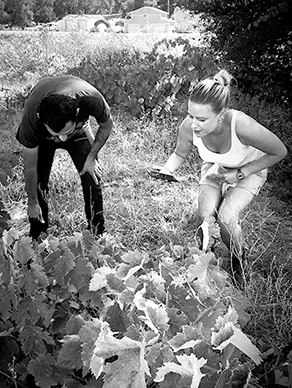
Pirate is an abandoned vineyard in Rancho Cucamonga, planted mostly to Grenache with interplants of Zinfandel, Mission, and Rose of Peru. We discovered the vineyard right before the heat spike and decided to pick it as quickly as we could, fearing that it would crash. The fruit from the severely stressed vines just was not ripe enough to make good wine and we have decided not to offer it in this release. But it is a noble vineyard, worthy of preservation. - GATEWAY
Gateway is a nearly abandoned vineyard, also in Rancho Cucamonga. There are some local zealots who have been working with the vineyard while its owners await the permits necessary to turn it into a hotel. It is planted to mostly Zinfandel in one section and Mission and Rose of Peru in another. It is beautiful and strong. We picked early and made a Rosé, mostly from Zinfandel but with a fair amount of Rose of Peru and a little Mission.
We came back two weeks later, after the heat storm, and worked twice as hard to pick healthy clusters of Zinfandel. We made a beautifully aromatic, light, red wine that we call Phulax, for the Ancient Greek word for a guardian— for instance, of a gateway. - MAGLITE
Maglite is a carefully preserved vineyard in Rancho Cucamonga, a little bit south of Gateway, planted to Grenache, Alicante Bouschet, Mission, and Rose of Peru. No one has made a single vineyard wine from it, perhaps ever. It is now surrounded by undistinguished modern buildings; We call it "Maglite" for the corporate headquarters facing its northern edge. It is part of the original Secondo Guasti plantings in Rancho, and, like the precious, walled Hofer vineyard nearby, it was uncharacteristically planted to Grenache, not Zin, as its predominant red fruit.
This is a very important vineyard for us and will be one of the main foci of our labor and attention— as long as it persists. We harvested this also in the midst of the heat storm and took off as much fruit as we could, as quickly as possible. We concentrated exclusively on the Grenache, which shows truly extraordinary potential. Like Rayas and Pignan, it makes a lightly-colored red wine, with delicacy and power at once. We made a tiny amount of Blanc de Noir from the less colored fruit (saved for friends), and about 5 barrels of red wine. We made a final blend from 3 of the 5 barrels and it is remarkable. We call it simply Maglite. - RANCHO CALIFORNIA
This is the one vineyard that we work with that has no deep historical heritage. But we cannot resist the possibility of making a really good white wine from Pecorino, from cuttings smuggled over from Abruzzo. And we made really good wine from the vineyard in 2019. So we came back.
The vineyard is on deep, sandy soil in Temecula. The wine is made from barrel-fermented juice, all of which is released by foot-treading, and most of which has 24 hours skin-contact before pressing. The wine is sharply delineated and intense, medium in body and force, more musky than fresh or floral. Our revered model for this wine is Emidio Pepe's, made in Abruzzo; and we have named it in homage to this remarkable producer: MEPPP, for "Modified Emidio Pepe Pecorino Protocol." - MARIAN FARMS
This is a remarkable old-vine, own-rooted, biodynamic vineyard, planted and farmed in Fresno, by one of the oldest biodynamic farmers in the country. The vineyard is surrounded by raisin farms, and is planted to Thompson Seedless, for eating and raisins, and Palomino, originally planted to make sherry and brandy.
Our wine is made exclusively from the Palomino, propagated from vines that the owner's grandfather planted 80 years ago. The vineyard is planted in light sand, with the deep alluvial clay of Fresno beneath. Its quality transcends its neighborhood. Raj Parr and we both make wine from the vineyard; it is for Raj the most important vineyard that he does not farm himself.
We made a beautiful, rich, white wine from the fruit, which we call Raisin City.
We also made a very fun co-fermenation of this fruit with the Pecorino. It began as a reaction to necessity-- we had run out of barrels when we were pressing the Palomino. But we had a half-full barrel of Pecorino still fermenting. We filled it with the homeless Palomino juice. Stephanie, who was working on the crush pad, named the result Disco Essence, and we liked it so much that we made another barrel on purpose. - LONE WOLF
This is our star, the irreplaceable jewel among all of the vineyards we work with. This is the second year we have had the deep honor of working with the vineyard. As we have come to know the vineyard, we have seen new ways to plumb its riches; and so this year, we made 4 wines from the vineyard, both to help us understand, and to show off, different aspects of this special place.
You should know the story of this vineyard so well by now that I will mention only a couple of points: it was planted around 1912 on a Native American reservation in Temecula; it was left alone, largely untended, beginning around 1955. Some of the vineyard has not been pruned at all since this time.
We had heard that the vineyard was mostly Mission, and so it seemed at first— but then, at pruning, we began to discern strong differences in the shape and growth of the vines. Now we distinguish three sections of the vineyard: the first, mostly robust Grenache vines; another, more modest and scraggly Mission vines; and a third section, full of wild growth, and vines that show no sign of any pruning in seventy years.
We call the section full of Grenache "Pet Cemetery." When we were pruning last year, a small group of the local kids came over to show us the nearby graves of generations of loyal dogs. They were emphatic that they wanted us to work in the vineyard, they just wanted us to understand the markers. It was an unforgettable moment. The canine and lupine world is somehow central to this place.
Many of the Grenache plants, oddly, had fully ripe clusters of yellow fruit, mostly on the bottom of the plant, and fully ripe clusters of light red fruit on the top. We harvested the two kinds of clusters separately and made two wines. We made Lone Wolf Blanc, by foot-treading then immediately pressing the yellow and pink clusters, supplemented with some of the less ripe clusters of Mission from the rest of the vineyard.
We also made a red wine from Pet Cemetery, from the more darkly colored clusters; we foot-treaded the clusters and then kept skins, seeds, stems, juice, all kept together for about 3 weeks. This is the most celestial wine we made this year: beautiful, perfumed, intense, and tannic&madash; but very light in color and in body; graceful and quiet. We call this simply Pet Cemetery.
We call the unpruned section "Wildlands." I wrote about this section extensively in my Lone Wolf Report. This section produced so much fruit that we made two barrels of red wine, in just the same way that we made the Pet Cemetery red. It is the most powerful of the three wines reds, and the most tannic. It is all Mission (and Mission crosses), and is a lesson in how tannic this fruit can be. We bottled this simply as Wildlands.
The last wine that we made from Lone Wolf is the most important, because it represents the vineyard as a whole-- no matter how fascinating any of the individual sections are. We made this from all of fruit from the scraggly mission vines in the center, harvested and fermented separately; and half of the wine from Pet Cemetery and Wildlands.We call the wine that represents the whole vineyard simply, Lone Wolf. It is closest to the Lone Wolf that we made last year, but different becasue of the important differences in the vintage. There was no heat spike in 2019; the growing season was much more long and leisurely. The wine is lighter this year, and sharper. But still magical.
We completed the blends a week ago, and confirmed them yesterday, under a different phase of the moon. We have decided on 12 different wines, including the four wines from Lone Wolf. I was going to start with bottling (and releasing) LWB alone, but they are all ready. We will bottle them by hand beginning the first of February. We will begin shipping the bottled wines on February 16.
You may purchase the wines here.
In the middle of harvest, when it was not clear that we could complete our work, I turned to our legion of supporters and asked them to take a chance and purchase and pay for wine, before some of it had even been harvested. You flocked to us and bought enough wine to allow us to complete everything. I hesitated to call these purchases "futures," but that is what they were and I am so happy to say that now is the time you will reap your reward.
I told you that I would offer 100 packages of 12 bottles of wine; I could not resist the requests of 3 more and sold 103 packages. You who bought futures will get one bottle of each wine; I will only ask you to pay for shipping.
It is the wines that remain after taking care of the futures holders that I am now offering.
The wine in the smallest amount is also perhaps the best: Lone Wolf Pet Cemetery. There will be 41 bottles left over after I satisfy the futures; I am going to offer 12 of them in twelve 12-bottle packages, identical to what the futures holders will receive. You may purchase one of these packages here .
Just as I did last year, I am going to offer the rest of the wine in packages that represent the whole of our work. There are two packages:
- a 12-bottle package with one bottle of every wine except Pet Cemetery, and two bottles of MEPPP. I am going to offer 50 of these.
- and a 6-bottle package with one bottle of Lone Wolf and the five other wines that I feel show the core of our work. 68 of these.
After these are all sold, I will offer individual bottles of what remains. It is unspeakably exciting.
Let me make a brief overall comment on the quality of the wines. We have been exacting in making blends and deciding what to bottle; we have also been incredibly fortunate. We fermented wine out of doors, in 100 degree temperatures. In a certain sense, we should not have any wine at all. We were protected by the wine gods and we are grateful.
For me, the best wine of all is Lone Wolf Blanc. It is amazing in its power and complexity, and even its acidity. No one could have predicted this from weird yellow clusters on abandoned Grenache vines. Next are the other wines made from Grenache: Pet Cemetery and Maglite. But all of the reds that we made are remarkable, especially when the finished wines are held up against what one might expect from red wines, grown in sandy desert soils, in an especially hot year. The wines are LIGHT— you might be shocked when you open them. Raj now teases me about what I am willing to call white wine (LWB is decidedly a light rosé in color) and red wine. There is nothing jammy, cooked about them: they are sharp, forceful, complex, and very insistent. And dancing lightly.
This is surely because of when we harvested the fruit: we were not willing to let anything cook. But it also reveals something surprising about the nature of these vineyards, of this terroir: this place wants to make wines of lightness and power at once. It is truly amazing to look backwards and witness the wisdom of the ancients who planted Grenache here.
Thank you so, so, much for your attention, your support. It is a terrible time; this work is meaningless without your interaction.
I look forward to hearing from you.
Abe
PS: I have not forgotten THE FOUNDERS, who stepped up years ago. I have big bottles of two other wines planned for you.